






What Technical Challenges Will Smart Factories Face in the Transition from Industry 4.0 to Intelligent Manufacturing?
The latest forecast from the McKinsey Global Institute estimates that smart factories will generate an annual economic impact valued between $1.2 trillion and $3.7 trillion by 2025. Accenture, in collaboration with Frontier Economics, has quantified the cumulative GDP impact of smart factories and the Industrial Internet of Things (IIoT) across 12 key industries in China.Boosted by China’s current policy frameworks and investment momentum, smart factories and the IIoT alone will deliver a cumulative GDP growth of $196 billion within the manufacturing sector over the next 15 years. Further scaling up the penetration of IoT technologies across all industries will unlock substantially greater economic value. Taking manufacturing as an illustration, the economic value enabled by IoT is projected to surge from $196 billion to $736 billion, marking a 276% increase.
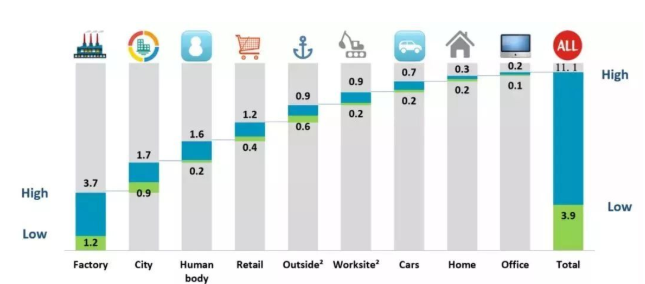
Figure 1 McKinsey 2025 IoT Value Projection Report (Unit: Trillion US Dollars)
Technological Innovations and New Challenges
Smart factories epitomize a highly connected and intelligent digital era. Factory intelligence is reflected across five core domains: interconnection, digitalization, big data, intelligent equipment and intelligent supply chains. Typical real-world applications of smart factories cover interconnected production equipment, item identification & positioning, automatic energy consumption detection, equipment condition monitoring, remote product operation & maintenance, spare parts & product traceability, production performance assessment, and factory environmental monitoring.
Compared with traditional manufacturing, smart factories feature several distinct technological innovations:
Intelligent Perception & Control
Collect industrial data anytime and anywhere via intelligent sensing technologies.Comprehensive Interconnection
Transmit collected data in real time and with high accuracy through a full range of communication standards.In-depth Data Utilization
Leverage cloud computing, big data and other technologies to model, analyze and optimize data, enabling full mining and utilization of massive datasets.Innovative Service Models
Deploy information management, intelligent terminals and platform technologies to digitally transform traditional industries, boost industrial value, optimize service resources and drive industrial innovation.Built on these technological breakthroughs, smart factories will evolve along six major technological trends: intelligent terminals, ubiquitous connectivity, edge computing, flattened networks, platform-based services and enhanced security. The accompanying management transformations include increasingly diversified equipment connections, a shift of data processing to edge nodes, corporate strategic transformation from individual enterprises to industrial ecosystems, and a shift in corporate operational focus from equipment & assets to products & customers.
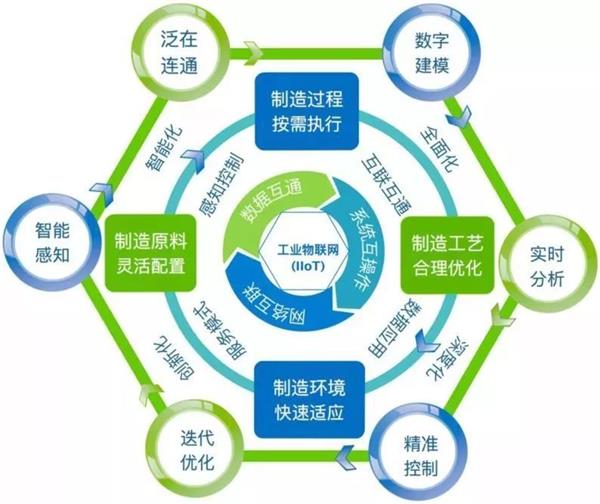
Figure 2 Schematic Diagram of Smart Factory Operation Process Led by the Industrial Internet of Things (IIoT)
The shifts in technology and industry trends have given rise to brand-new challenges. These include the lack of unified technical standards and insufficient industrial standardization. Additionally, Chinese enterprises generally suffer from low levels of industrial informatization, slow application promotion, unbalanced development among firms, and difficulty replicating successful operation models.
Notably, the issue of data ownership remains unresolved, while data security risks demand urgent solutions. At both national and corporate levels, phased implementation is required to standardize the overall Industrial Internet of Things (IIoT) framework. Fundamental technical hurdles such as network interconnection and heterogeneous data integration must be addressed, including standardized encapsulation of resource data and the establishment of a sound ecosystem for application innovation. Furthermore, a comprehensive security system for the IIoT needs to be built to prevent and mitigate industrial control security incidents.
Problems to Be Solved by Smart Factories and Corresponding Technical Implementation
As an inevitable trend of future industrial development, smart factories must tackle a wide range of technical challenges. Analysis of these pain points clarifies which technologies and products can deliver viable technical solutions.
As China’s flagship electronics and information technology exhibition of the year, the 2019 electronica China trade fair offered attendees an opportunity to explore a full spectrum of products, technologies and system solutions for smart factories at exhibitor booths.
The top priority for smart factories lies in intelligent perception and control, which capture critical industrial data through all-time, all-location data collection. This objective can be fulfilled via diverse perception and control technologies, covering sensors, equipment identification, industrial control and other relevant disciplines.
At electronica China 2019, leading industrial sensor manufacturers showcased their solutions:
BOSCH (Booth E4.4500) ams AG (Booth E4.4524) TE Connectivity (Booth E6.6508) ALPS Alpine (Booth E5.5600) Pepperl+Fuchs (P+F, Booth E1.1556) Banner Engineering (Booth E1.1560)
These suppliers deliver high-precision, high-reliability sensors to enable accurate industrial data acquisition.
For industrial control systems and components, key vendors featured in the Smart Factory Park (Booth E5.5100) and across the show floor included: STMicroelectronics (ST, Booth E4.4108) Renesas Electronics Cypress Semiconductor Analog Devices (ADI) Qualcomm Broadcom
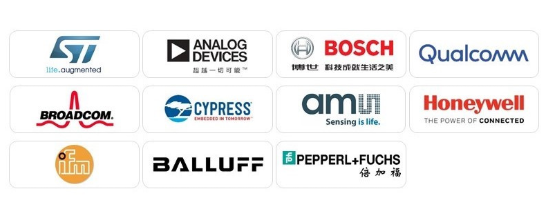
Figure 3: Partial Exhibitors of the Smart Factory Park
The second key issue to address is comprehensive interconnection. Transmitting collected data in real time with high accuracy, while guaranteeing secure, reliable signal transmission and compatibility across diverse equipment, poses a major technical challenge. Relevant technologies and solutions to tackle this problem include Industrial Ethernet, short-range wireless communication, low-power industrial wide-area networks, and other related technologies.
During electronica China, you can access cutting-edge interconnection technology solutions at the booths of manufacturers such as Honeywell (Booth E4.4559), Cypress Semiconductor (Smart Factory Park, Booth E5.5100) and TDK (Booth E5.5106).
With data acquisition and data transmission in place, the core intelligence capability of smart factories is embodied by in-depth data utilization. Cloud computing, big data and other related technologies are adopted to model, analyze and optimize data, enabling full mining and utilization of massive datasets. Beyond well-known cloud computing algorithms and device services, the data processing technologies in this scope also cover data cleansing, data analysis, data modeling and data storage.
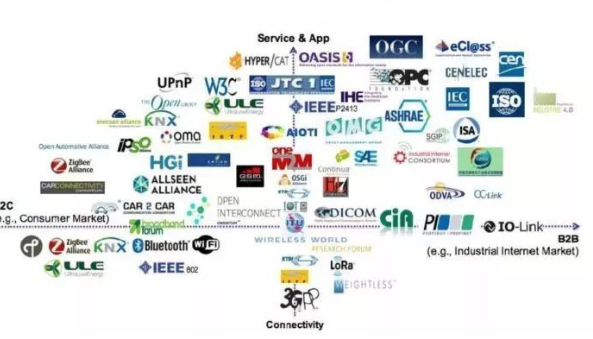
Figure 4 Diverse Standardization Organizations for the Industrial Internet of Things (IIoT)
During electronica China, Cypress Semiconductor (Smart Factory Park, Booth E5.5100) will showcase a new-generation storage platform with embedded computing capabilities, catering to the surging demand of smart factories for highly reliable intelligent technologies and fault-free storage products. Featuring standardized IP design, the platform supports rapid reconfiguration to meet emerging application requirements. Cypress’ Semper NOR Flash product family is built on this platform, equipped with an Arm® Cortex®-M0 processor to deliver reliable and durable data retention under the extreme operating temperatures of industrial scenarios.
Lastly, the most distinctive challenge confronting smart factories lies in innovative service models. Integrating information management, intelligent terminals, platform technologies and more, such innovations drive the intelligent transformation of traditional industries. This domain involves extensive service model innovations beyond pure technologies, among which security management technology stands out — including encryption authentication, firewalls, intrusion detection and other technical modules to safeguard the overall security of smart factories.
Via network connections, customers can monitor equipment operation status both on-site and remotely, exchange data, adjust production orders, and reprogram MCU storage to update device configurations. This demands system manufacturers to deliver integrated solutions that feature enhanced security, superior reliability, user-friendly human-machine interfaces and re-programmability.
Riding the wave of the Fourth Industrial Revolution, new-generation information technologies are exerting profound impacts on traditional manufacturing. From Germany’s Industry 4.0 initiative to intelligent manufacturing and the latest Industrial Internet of Things (IIoT), the transformation and upgrading of manufacturing represents an irreversible megatrend. Rising labor and raw material costs force factories to deploy more efficient automated solutions. Meanwhile, growing personalized consumer demands require manufacturers to build mechanisms for fast response to diversified requirements.
The construction of smart factories constitutes a large-scale systematic project, and developers serve as key creators responsible for developing individual components within this massive system.
Source: China Information and Software Service Network