





Calcium carbide industry
Current Industry Status
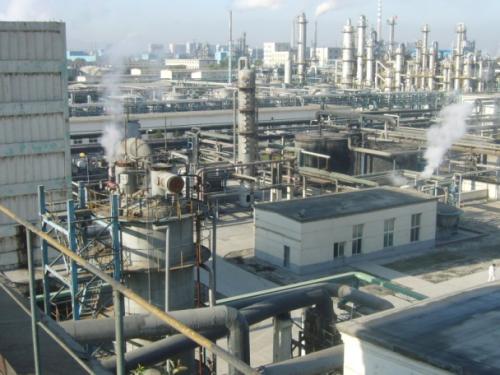
After decades of accumulation and research & development, China’s calcium carbide industry has achieved remarkable accomplishments in production scale, process technology, complete sets of equipment, safety management, energy conservation and emission reduction, comprehensive resource utilization and industrial chain extension. Especially since the start of the 21st century, driven by booming demand for downstream products amid rapid socioeconomic growth in China, the calcium carbide industry has advanced by leaps and bounds and entered a period of rapid expansion. China has become the world’s largest producer and consumer of calcium carbide, drawing worldwide attention.
(1)Rapid growth of production capacity and outputFrom 2000 to 2014, domestic calcium carbide production capacity rose from 4.8 million tons per annum to 41.83 million tons per annum, while 8.6618 million tons of backward capacity was phased out during this period. Annual output increased from 3.4 million tons to 26 million tons.
(2)Domestic manufacture, large-scale design and complete set supply of equipmentBack in the 1980s, China imported five core complete production lines known as the "Five Golden Flowers". At present, all equipment required for calcium carbide production has been fully localized. The domestic calcium carbide production equipment covers large enclosed furnaces ranging from 25,500 kVA to 87,000 kVA. The full set of process units, covering raw material crushing and drying, finished product packaging and transportation, as well as furnace gas recovery and utilization, has realized localization, large-scale production and complete set supply.
(3)Diversified downstream calcium carbide productsIn recent years, the calcium carbide sector has actively developed and expanded downstream products based on calcium carbide feedstock. Traditional downstream products including polyvinyl chloride (PVC), vinyl acetate, polyvinyl alcohol, neoprene rubber, calcium cyanamide and acetylene carbon black maintain steady growth; 1,4-butanediol has achieved explosive growth and formed large-scale production capacity. R&D on acrylic acid synthesis from acetylene has succeeded and is now undergoing industrial trials. While diversified downstream product layout has basically taken shape, new progress has also been made in the comprehensive utilization of calcium carbide furnace gas and the development of related products. The industrial production of chemical products such as dimethyl ether, ethylene glycol and LNG from calcium carbide furnace gas has been realized.
Industry Situation
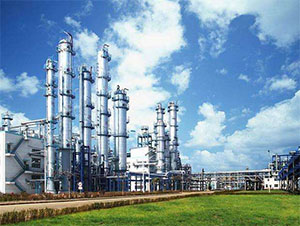
With increasingly tight resource and environmental constraints and persistent downward economic pressure, the calcium carbide industry has seen excessive expansion, blind pursuit of large-scale production and severe overcapacity, with structural contradictions and deep-rooted problems becoming more prominent. Currently, the calcium carbide market stays depressed; selling prices fall below production costs, making normal operation unsustainable. The domestic calcium carbide industry is now standing at a crossroads. We must maintain two clear understandings of the current industry situation.
First, we must clearly recognize the severe challenges facing industrial development.Internationally, there are three major challenges. First, low-cost petrochemical products from Middle Eastern countries create fierce competition. Ethylene-processed PVC from the Middle East boasts lower costs, superior quality and strong competitiveness. Second, sharp falls in international oil prices deal an obvious blow to the calcium carbide industry, as PVC is mainly produced via ethylene and calcium carbide routes. Third, stricter mercury pollution control for calcium carbide-based PVC brings heavy pressure. In October 2013, China signed the Minamata Convention on Mercury, a mandatory international treaty on mercury emission reduction. Calcium carbide-processed PVC production is one of the key mercury-consuming processes regulated by the Convention. China is currently the world’s only country adopting this technology, which accounts for over 70% of the nation’s total mercury consumption. One regulatory clause of the Convention bans new calcium carbide-based PVC production capacity, which strikes a fatal blow to the calcium carbide sector.
Domestically, the first challenge lies in severe overcapacity, persistently low prices and corporate losses. In 2014, China’s calcium carbide capacity hit 41.83 million tons, up 10.4% year-on-year; output reached 26 million tons, a 13% year-on-year increase; apparent consumption stood at 25.84 million tons, with a capacity utilization rate of only 62%. Statistics predicted that the national capacity would rise to 54 million tons by the end of that year, and the operating rate would fall below 60%. All traditional downstream calcium carbide products also suffer from overcapacity. PVC is the largest downstream consumer of calcium carbide, taking up over 80% of total calcium carbide consumption. In 2014, China’s total PVC capacity was 23.81 million tons, including 19.06 million tons of calcium carbide-processed capacity; total PVC output was 16.296 million tons, among which calcium carbide-processed output was 12.71 million tons, accounting for 78%. Vinyl acetate ranks second in calcium carbide consumption, with a domestic capacity of 2.88 million tons in 2014, 1.785 million tons of which adopted the calcium carbide-acetylene route. By the end of that year, domestic vinyl acetate capacity was expected to reach 4.5 million tons, with calcium carbide-acetylene capacity approaching 3 million tons. Traditional downstream products including polyvinyl alcohol, 1,4-butanediol, neoprene rubber and calcium cyanamide all face overcapacity. Oversupply of calcium carbide paired with sluggish downstream demand inevitably drags down product prices. Since last year, prices have lingered at a low level, leaving enterprises running at a loss and barely able to maintain production.
Second, environmental regulations have grown more stringent. The rollout of carbon tax on industrial enterprises is drawing near. As a high-energy-consumption and high-emission bulk chemical product, calcium carbide will be greatly affected. Back in 2007, the Chinese government clarified the reform target of researching and levying an environmental protection tax. In June 2013, the Legislative Affairs Office of the State Council released the Guidelines for Greenhouse Gas Emission Accounting and Reporting for the First Batch of Ten Industries (Trial), which covers carbon dioxide emissions from calcium carbide production. The carbon tax will swallow up the thin profit margins of calcium carbide manufacturers and severely dampen corporate vitality and development momentum.
Third, energy conservation and consumption reduction tasks remain arduous. The newly revised Access Conditions for Calcium Carbide Industry issued in 2014 sets clear limits for new, reconstructed and expanded calcium carbide production facilities: power consumption per ton of calcium carbide (calculated at a gas yield of 300 L/kg) shall not exceed 3,200 kW·h, and comprehensive energy consumption shall not exceed 1.0 ton of standard coal. All existing production lines were required to meet these standards by the end of 2015. Higher market access thresholds help curb blind investment, resolve overcapacity and guide standardized and healthy industrial development. Nevertheless, cash-strapped enterprises amid the current market slump need substantial capital and technological investment to comply with the standards, which poses tangible difficulties.
At the enterprise level, the first problem is outdated overall processes and equipment. Although China’s calcium carbide industry has developed a set of mature new processes and technologies through years of research, their large-scale promotion remains limited, and few research achievements have been fully industrialized. Advanced energy-saving and eco-friendly closed furnaces, the industry’s benchmark equipment, only account for 75% of total capacity. The sector lacks core key technologies, while enterprises have weak technology integration capabilities and insufficient innovation drive, failing to provide solid support for sustainable industrial development.
Second, product portfolios are single and industrial chains short. More than 300 calcium carbide manufacturers operate nationwide, yet only roughly 100 own supporting downstream product lines, less than one-third of the total. The remaining over 200 manufacturers rely entirely on the ups and downs of downstream industries and enterprises for survival.
Third, extensive management prevails and technical talent is scarce. Past growth of China’s calcium carbide industry relied on extensive capacity expansion, with market competitiveness derived mainly from low labor costs or preferential local government policies. Extensive management and a shortage of professional technical personnel have long been bottlenecks restricting sound and sustainable industrial growth.
Extensive management and the shortage of technical personnel have long been the weak links hindering the sustained and sound development of the industry.Second, we must clearly recognize that the industry is blessed with new development opportunities. The law of the unity of opposites tells us that hope lies within difficulties, and challenges and opportunities always emerge side by side. Comrade Mao Zedong pointed out: "When our comrades encounter difficulties, they must see our achievements, see the bright prospects ahead, and heighten their courage." Despite the grim situation confronting the calcium carbide sector, we must also clearly realize that it is full of new opportunities for growth.
The new opportunities available to the calcium carbide industry are as follows:
First, the steady yet slow recovery of the global economy will positively drive China’s calcium carbide industry. Authoritative international institutions projected that the global economic growth rate hit 3.4% in 2014 and would reach 4.0% in 2015. It is also predicted that the consumption center of petrochemical products will keep shifting eastward, with demand growing rapidly in China, India and Southeast Asian countries. Global economic recovery will further energize the market, boost demand growth and fuel the rapid development of related industries.
Second, driven by China’s new-type urbanization and consumption upgrading, demand for energy, building materials, home appliances, food, apparel, vehicles and daily necessities has risen, creating new market space for the calcium carbide industry and spurring robust growth in demand for calcium carbide and its downstream products.
Third, China vigorously advances the Belt and Road Initiative and free trade zone strategies to support domestic economic entities to go global, and the calcium carbide industry should follow suit. This brings two major benefits: it enables the transfer of excess capacity overseas and opens up new markets for products, thereby advancing the development of the domestic calcium carbide sector.
Fourth, the electricity price reform carried out by the State Grid constitutes major good news for power-intensive calcium carbide manufacturers. Calcium carbide enterprises can conduct direct transactions with power generators with mutual selection for win-win results, which substantially cuts electricity costs. Meanwhile, it facilitates fair competition among enterprises and accelerates industrial optimization and upgrading.
In Conclusion
Calcium carbide is a vital basic chemical raw material, and its industry plays a pivotal role in the advancement of China’s chemical industry as well as social economy. Given China’s energy mix, resource endowments and future development trends, especially alongside technological breakthroughs in modern coal chemical engineering, the calcium carbide industry will assume an increasingly significant position in the coordinated development of the domestic chemical sector over the long run. Judging from its development in recent years, the annual output of calcium carbide has kept rising and market demand maintains steady growth, fully proving that the calcium carbide industry is an indispensable pillar of China’s national economy.
The challenges, opportunities and evolutionary trends confronting the calcium carbide sector indicate that the industry’s economy is evolving toward a more advanced form and a more rational structure. Its growth model is shifting from extensive expansion driven by scale and speed to intensive development prioritizing quality and efficiency; the industrial structure is transforming from incremental expansion to in-depth readjustment featuring stock optimization and high-quality increments; and growth drivers are being converted from traditional growth engines to new ones. This represents the "new normal" of the industry’s development.
We must understand, adapt to and lead this new normal. We shall strengthen our confidence, stay sober-minded, assess the situation rationally, capitalize on favorable factors while avoiding risks, leverage our strengths and circumvent weaknesses, and act in line with market trends. Greater emphasis shall be placed on analyzing market and consumer psychology, advancing technological progress and all-round innovation, and pursuing green development and ecological civilization construction, so as to realize stable and sound industrial growth under the new normal and usher in a new landscape for the sector.
The overall development guideline for China’s calcium carbide industry during the 13th Five-Year Plan period is as follows: take technological and institutional innovation as driving forces, take the transformation of development patterns as the main line, focus on industrial structural adjustment and optimization, boost industrial competitiveness, and transform China from a major calcium carbide producer into a powerful one. The development model shall shift from scale expansion to quality improvement. The development path features intensive industrial layout, diversified and high-end product mix, as well as eco-friendly energy conservation and emission reduction. The core development goals include total output control, advanced technologies and optimized industrial structure, achieving the transformation from a large calcium carbide-producing country to a strong one.