







MES: Lean Execution, Smart Manufacturing Future
I. Commercial "Groundwork Laying" for Intelligent Transformation
In recent years, numerous intelligent manufacturing forums and scenario simulation activities have been held in the packaging and printing industry, serving to lay preliminary groundwork for the sector’s intelligent upgrading.
Nevertheless, these events feature a strong commercial atmosphere while ignoring the substantial gaps between simulated scenarios and actual production practices. Most demonstration scenarios are launched solely by equipment manufacturers with no proven successful customer cases. These simulations simply realize basic equipment interconnection without taking into account practical bottlenecks arising from diverse product types and complex working procedures, resulting in severe disconnection from real production scenarios. Notably, some enterprises showcasing their so-called smart factories at industry events have not yet deployed MES systems and even consult professionals about relevant deployment solutions, reflecting the prevalent industry misconceptions.
Driven by commercial interests, many software vendors label ordinary products as standard MES systems for market sales. Solutions focusing on production hardware, barcode management, production dashboard monitoring, or those with only a few fragmented MES functions are essentially not complete MES systems. Such disordered commercial operations have created numerous obstacles and impeded the sound development of intelligent transformation in China’s packaging and printing industry.
II. Redefining MES
As defined by Baidu Baike, MES is a production information management system targeting the workshop execution layer of manufacturing enterprises. It covers comprehensive management modules including manufacturing data management, production scheduling, workshop operation arrangement, inventory management, quality management, human resource management, work center and equipment management, tooling management, procurement management, cost control, project dashboard monitoring, production process control, bottom-layer data integration and top-layer data decomposition, building a solid, reliable, comprehensive and collaborative manufacturing management platform for enterprises.
However, practical industrial application proves that this conventional definition is far from comprehensive and often leads to low success rates in MES implementation and deployment.
III. Breaking Through Three Core Bottlenecks of Smart Factory Construction
Enterprises must fully address practical constraints before launching smart factory construction.
1. Diversified Production Order Bottleneck
Many packaging and printing enterprises feature a wide product portfolio, complicated working procedures, and diversified material specifications. Smart factory models are not universally applicable to such complex customized production scenarios. In contrast, intelligent transformation is easier to implement for enterprises focusing on paperboard, carton and commercial printing. By comparison, factories producing high-end gift boxes, children’s books and greeting cards with sophisticated craftsmanship face far greater transformation difficulties.
2. Material Kitting Bottleneck
A typical industry case can well illustrate this problem. The chairman of a nationally renowned printing enterprise invited the author to deliver professional MES training for their company right after delivering a speech on smart factory construction. The author reserved the visit deliberately, for the enterprise’s ERP system suffered from severe drawbacks: inaccurate and delayed data in material calculation, procurement scheduling, work order issuance and production planning. The ERP vendor claimed a 5-day online deployment cycle, yet the enterprise spent an entire year barely completing system launch, even with full manpower and equipment support approved by senior management.
Most printing enterprises expand production capacity based on available on-site materials. Despite frequent material data errors, enterprises still arrange production according to preset plans. Inaccurate and unstable material arrival information causes repeated schedule delays and serious production waste.
3. Process Bottleneck
It is common to see excessive raw material and semi-finished product inventory piled up in workshops while production halts due to material shortages, a typical symptom of unbalanced production scheduling prevalent in the packaging and printing industry. This fully exposes the huge gap between simulated intelligent manufacturing scenarios and actual workshop operations. Smart factory construction is not a simple equipment interconnection project. Different products require tailored processes and dedicated production equipment. Uniform equipment interconnection in simulation scenarios forces overall production capacity to align with bottleneck equipment performance, reducing the overall production efficiency of the entire line — a problem far beyond mere equipment utilization rate fluctuations.
IV. Five Core Objectives of Smart Factory Construction
What are the fundamental goals and core priorities of smart factory construction? Combined with industry practical pain points, the core objectives are summarized into five key dimensions.
1. Full Lifecycle Quality Traceability
Quality is the core vitality of products and the primary goal of intelligent manufacturing. Beyond quality inspection equipment and systems, full-process quality traceability is indispensable. It covers full verification of qualified raw materials, traceable production stations, operators, processing procedures and production time, controllable key process parameters, and effective prevention of material mismatches and process errors.
2. Build Advantages in Production Efficiency and Product Delivery
On-time delivery is the basic guarantee of customer service, yet smart factory construction pursues higher-value advantages. As Terry Gou has pointed out, enterprises that deliver orders five days in advance can win customer orders, and those with a seven-day delivery lead can gain an extra 10% product premium. One core goal of MES implementation is to build solid delivery advantages, including stable delivery cycles, shortened order lead time, accurate delivery prediction, and emergency response mechanisms for order changes, urgent order insertion, work order adjustment and supplementary material processing. These capabilities help enterprises escape low-end price competition and evolve into strategic value partners for customers.
3. Build Advantages in Resource Integration and Cost Control
Cost control is always the top concern of manufacturing enterprises, which follows the management logic of "Two Lines and Three Cycles". The "Two Lines" refer to high resource utilization and low production loss rate; the "Three Cycles" cover planning, process control and continuous optimization. MES serves as the core execution carrier of this management system. It evaluates lean production levels, identifies capacity-limiting factors including equipment failures, scheduling errors and material shortage shutdowns, verifies the rationality of process indicators, and helps enterprises achieve industry-leading levels of equipment OEE (Overall Equipment Effectiveness) and material utilization rate.
4. Rapid Response to Customer Demands
As a typical processing industry, packaging and printing enterprises mainly face customer demands for shortened delivery cycles, real-time order inquiry, urgent order insertion, work order modification, quality assurance and full-process traceability. These requirements sound simple, yet few enterprises can achieve standardized and efficient implementation in actual production.
5. Support Real-Time Operational Decision-Making
Real-time decision-making is the foundation of operational optimization and rapid abnormal response. MES enables enterprises to real-time monitor multi-dimensional production data including work center status, product processing progress, team operation, equipment status, equipment utilization rate, OEE and product quality. Supported by big data analysis, the system realizes problem identification, early warning and real-time decision-making, driving continuous process improvement across all production links.
V. Six Major Control Centers
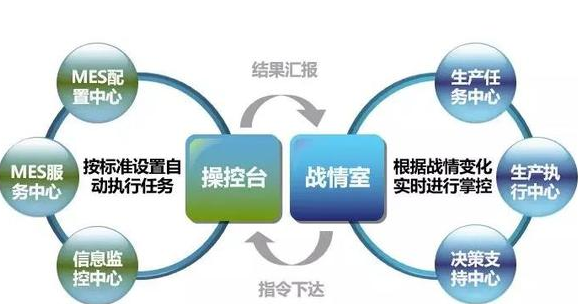
The MES console covers full-screen main display (multi-page single-screen mode), permission control, interface definition (DFM), machine and team-bound user login, connection of auxiliary devices including barcode scanners, card readers and indicator lights, diversified dashboard visualization, label printing and other functions, all of which can be summarized into six major control centers.
1. MES Configuration Center
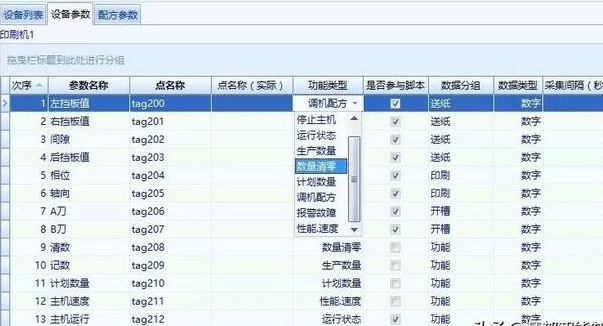
The MES Configuration Center serves as an operation configuration and management platform responsible for master data, network parameters, equipment lists, equipment parameters, formula parameters, data reading and command issuance.
2. Information Monitoring Center
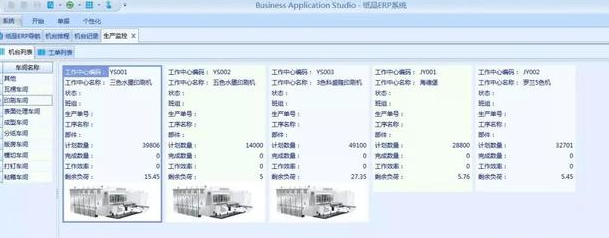
It enables real-time monitoring of equipment conditions, workshop teams, on-site operators and product quality, as well as dynamic tracking of work center status and production order progress.
3. Production Task Center
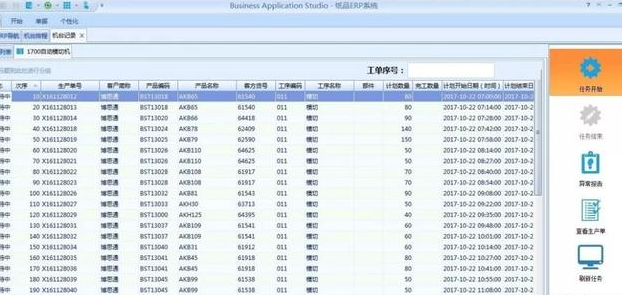
It supports flexible on-site production scheduling according to production tasks, order delivery deadlines, machine load and other actual on-site conditions.
4. Production Execution Center
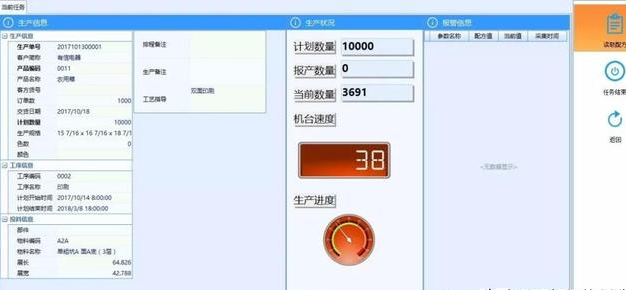
It is responsible for initiating production tasks, reading and storing equipment parameters, and providing error-proof alarm functions. It also supports equipment counting resetting and automatically generates daily production reports by collecting on-site equipment data, including production output, downtime, setup time, average operating speed and maximum operating speed.
5. MES Service Center
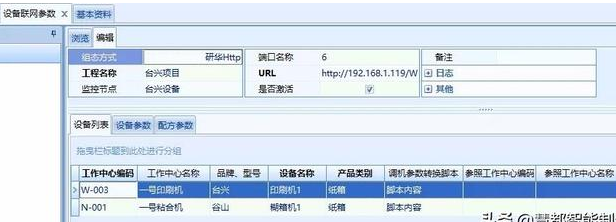
It is in charge of communication with configuration services and regularly collects equipment parameter data to support real-time monitoring on the MES console and data analysis in ERP systems.
6. Decision Support Center
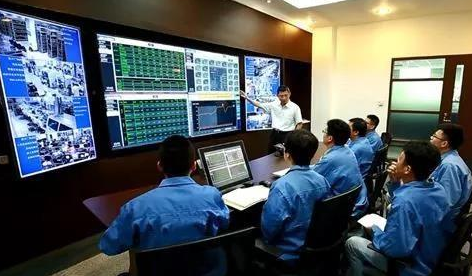
Leveraging big data processing technologies, the center supports diversified report queries and statistical analysis. Its functional scope includes work order inquiry, real-time machine production status inquiry, on-site dispatching record inquiry, job reporting history inquiry, production suspension record inquiry, defect cause analysis, OEE analysis, daily production reports, yield rate analysis, statistical reports, analytical reports, graphical visualized reports and penetrative data query capabilities.
Source: Information and Software Service Network