






How Artificial Intelligence Works in Intelligent Manufacturing & Three Steps to Achieve Industry 4.0
Artificial intelligence is essentially a technology that leverages data for deep learning to continuously optimize models and summarize underlying rules. Therefore, industries with a higher degree of datafication can more easily achieve intelligent transformation, adopt AI technologies and cut operating costs. Intelligent systems have been relatively straightforward to develop and deploy in online shopping, finance and consulting sectors. In contrast, digitalization and smart upgrading in traditional manufacturing industries require a much longer timeframe.
Even within traditional manufacturing settings, data exists everywhere. Nevertheless, data takes highly diverse forms in factories with elaborate and segmented workflows: paper-based contracts and delivery orders, empirical knowledge retained by frontline workers, attendance records from punch card machines, and process data stored in management systems (with separate software platforms often adopted by different departments). Scattered across every production link, these datasets cannot be cross-referenced or interconnected to form a unified data stream for analytical application, giving rise to the so-called data silos.
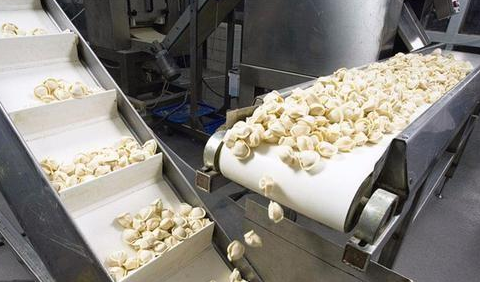
Unmanned Dumpling Factory
The vision of intelligent manufacturing, or Industry 4.0, is precisely to break down these data silos and realize global utilization of data. From my perspective, after completing essential automation, the realization of intelligent manufacturing generally falls into three steps:
The first step is to maximize automation while collecting data originally stored in various formats into a unified analysis platform via multiple information collection terminals.
The second step is to manage all such data through an integrated system.
The third step is to boost efficiency, support decision-making and achieve overall operational improvement through data analysis and application.
Information and Data Collection
Such information collection technologies can gather and preliminarily process massive unstructured data generated in traditional production. For example, visual recognition equipment from the AI field such as industrial vision cameras can be configured with predefined parameters including identification targets, features, orientation, shapes and positions. Relying on AI visual recognition technology, the system screens out products with assembly errors, surface blemishes, damage or missing features on their appearance, distinguishing defective goods from qualified products.

AI Intelligent Recognition Technology
RFID (Radio Frequency Identification) technology is adopted to record and track product circulation and logistics flow.
In conventional manufacturing, enterprises usually only keep records of output volume and final defective product quantities. With these intelligent data collection methods, manufacturers can capture a broader range of parameters and conduct more detailed monitoring and analysis of product conditions. For example, they can correlate the generation of defective products with multiple factors such as temperature, humidity and operator status.
System-based Data Management & Performance Improvement via Data Analysis and Utilization
Well-known industrial software systems and cloud computing technologies are required for this stage. They can effectively clean, manage and rationally analyze collected data.
At the 2017 Yunqi Conference Chengdu Summit, Xiao Li, Director of Alibaba Cloud, cited GCL New Energy as a case to illustrate the benefits of unified data analysis after breaking down data silos.
A more intuitive analogy comes from map applications. Such platforms integrate map data with real-time traffic information released by municipal traffic authorities. They display congestion-marked maps for users and provide route guidance, thus improving overall traffic efficiency.
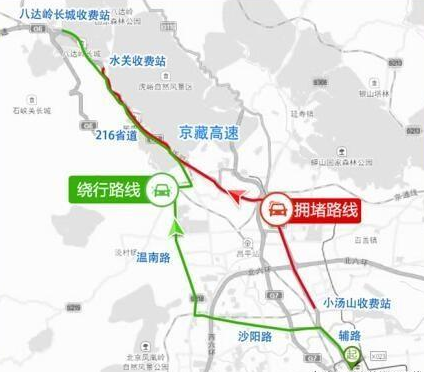
the integration of real-time traffic data and map information
In addition, Xiao Li shared another real case witnessed by Alibaba Cloud in intelligent manufacturing. As a leading enterprise in the photovoltaic industry, GCL New Energy boasts highly automated factories that can operate almost unattended. However, the company failed to make effective use of the massive volumes of data generated on site.
After analysis via Alibaba Cloud’s data platform, it was found that the product yield of GCL was correlated with more than 60 data dimensions throughout production, including equipment room temperature, workshop temperature and equipment status. Following half a year of optimization efforts, GCL lifted its product yield rate by 1%. Given the company’s enormous production scale, this 1% improvement translated into annual cost savings of over 100 million yuan, representing a remarkable leap in operational efficiency.
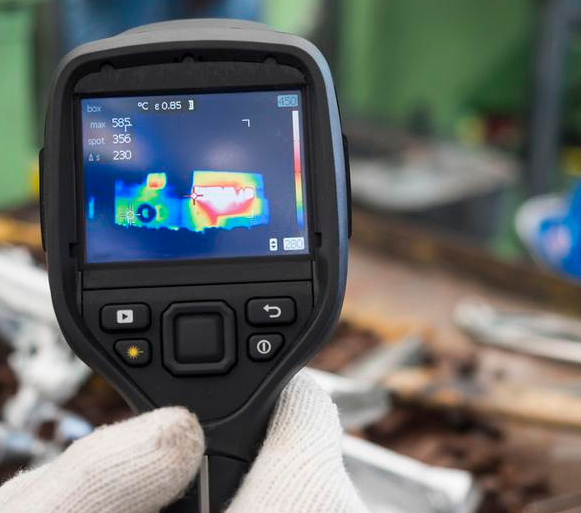
Thermal imaging technology collects temperature data of equipment and products
By connecting previously isolated data silos and conducting combined analysis, enterprises can derive new insights and rules to boost operational efficiency. In the past, this process relied entirely on human expertise and years of accumulated experience. However, with increasingly complex production processes and a growing number of technical parameters, manual work can hardly support efficient decision-making and optimization in production and management.
AI-enabled data collection technologies expand the range of data dimensions available to factory managers, while various integrated systems facilitate overall coordination and planning. In the future, the deep learning capability of artificial intelligence will unlock more possibilities for automated decision-making.
Source: Information and Software Service Network