






Key Priorities of Data Management for Industrial Internet and Smart Manufacturing
This year is hailed as the breakout year for the Industrial Internet. Following the release of national guiding documents and a series of development plans for the Industrial Internet industry, a growing number of enterprises have stepped into this sector. Participants include numerous suppliers of Industrial Internet technologies, products and services, as well as a large group of end-user enterprises with high expectations for the Industrial Internet and smart manufacturing.
At present, there are prevalent misconceptions about the Industrial Internet. For instance, some believe that networking industrial equipment alone constitutes the Industrial Internet, while others take migrating all industrial automation control systems to the cloud as its full definition. In essence, to grasp the nature of the Industrial Internet, we may start by understanding the essence of the Internet itself. The Industrial Internet is not a simple combination of industrial automation and the Internet; instead, it serves as a tool and methodology to realize in-depth integration of informatization and industrialization. Its emergence delivers a universal approach for the opening, sharing and exchange of industrial data, rather than merely one or several vertical industry applications.

Superficially, the Internet is merely a communication network that interconnects computers across the globe. However, this is only its physical manifestation. The true essence of the Internet lies in serving as a global hub for the opening, sharing and exchange of data and information. The interconnection of massive volumes of information fuels the prosperity of the Internet market and spawns an increasing number of emerging business models built on Internet infrastructure.
If the Internet interconnects data and information generated by individuals and their social activities, the Industrial Internet connects industrial object data — a general term for all data produced by industrial equipment throughout its service life and operational cycles. Horizontally, such data covers all types of information generated by or associated with equipment, primarily production data as well as operational and maintenance data of the equipment itself. Vertically, it represents a revolutionary breakthrough that liberates all information across the full data lifecycle from isolated industrial systems and places them into a brand-new open and interconnected ecosystem.
As we all know, on-site industrial technologies represented by industrial automation are closed process-oriented systems featuring high security and high real-time performance. During operation, only critical data related to human-machine interaction and process control is recorded and stored. A large amount of process data merely acts as the basis for verifying the validity of each production link within every control cycle; once a cycle completes, these data will be overwritten by new process data without being retained.
Nevertheless, in the era of smart manufacturing, a growing number of experts have recognized that continuously accumulating such previously discarded transient process data holds the key to realizing industrial intelligence and smart operations.
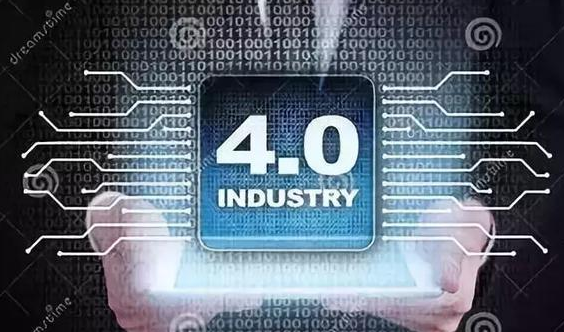
In short, smart manufacturing can be divided into three progressive phases: digitization, datatization and intelligence.
Digitization: Traditional fully manual production lines are upgraded to semi-automatic or fully automatic lines controlled by automation systems.
Datatization: Key data generated throughout production processes are quantified and visualized, and interconnected with management systems such as MES and ERP to deliver transparent, visible and quantifiable production management.
Intelligence: Massive production and operation & maintenance data are accumulated and analyzed to generate optimization strategies for every link of production lines. On top of the performance limits of automation systems, further workload reduction and efficiency improvement can be achieved.
When smart manufacturing advances to the intelligent phase, standalone OT or IT technologies alone can no longer meet its demands. The Industrial Internet serves as an optimal solution tailor-made for this latest stage of smart manufacturing.
Source: Information and Software Service Network