








Digital Factory | Intelligent Manufacturing Transformation and Upgrade Has Become an Inevitable Trend
Abstract:A digital factory relies on data covering the full product lifecycle to evaluate and analyze the entire production process with computer technologies. By integrating digital manufacturing and computer simulation technologies, it realizes virtual manufacturing and concurrent engineering to guarantee smooth production operations.
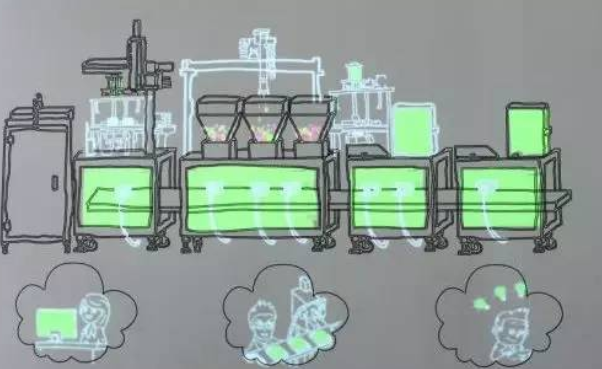
In recent years, the rapid advancement of new-generation information technologies has brought tremendous changes to China’s traditional manufacturing sector. Today, smart manufacturing and digital factories have become the core development goals for traditional manufacturers. Do you know the key elements and module transformations required to build a digital factory?
Modern manufacturing enterprises are confronted with multiple pressures including high costs, environmental compliance requirements and fierce market competition, making the transformation and upgrading toward smart manufacturing an inevitable trend. Such technological renovation essentially refers to the digitization of business processes. By deploying emerging technologies such as the Internet of Things, cloud computing and big data, enterprises can build new-generation smart factories that boost operational performance, cut manufacturing costs and flexibly respond to market fluctuations.
During digital transformation, enterprises need to master a series of core technologies:
Product Lifecycle Management (PLM): It covers the whole lifecycle management of products, ranging from initial demand definition to product obsolescence and disposal.Quality Management: Directs and controls all quality-related activities to ensure products meet customer specifications.Production Scheduling Management: Implements cyclic management following the PDCA (Plan-Do-Check-Act) methodology.Manufacturing Execution System (MES): An information management system serving the workshop execution layer of manufacturers, which monitors and manages the full workflow from order release through production execution.Computerized Maintenance Management System (CMMS): Mainly applied for the maintenance and management of production equipment and factory facilities in manufacturing scenarios.
1. Definition of a Digital Factory
A digital factory is built upon full-lifecycle product data. It leverages computer technologies to assess and analyze the entire production process. By combining digital manufacturing technologies with computer simulation technologies, it enables virtual manufacturing and concurrent engineering to ensure stable and smooth production.
In traditional manufacturing, flawed product designs may trigger massive economic losses. Virtualizing the entire manufacturing workflow is an effective solution to guarantee stable operation throughout product design, production and consumption. Therefore, a complete digital factory covers digitalized products, digitalized equipment, digitalized manufacturing processes, digitalized management and digitalized marketing.
As information technologies mature, enterprises adopting digital factories gain stronger market competitiveness. Digitization can also be regarded as a technological investment made by manufacturers to remodel business models and production workflows for greater value delivered to customers and employees. So where should traditional factories start their digital transformation?
2. Seven Core Keys of Digital Factories
The digitization of manufacturing relies on seven core keys, four of which focus on products and three on process-related factors.
The product-oriented keys cover accuracy of digital product data, on-time production, product quality and product cost. Modern factories pursue zero inventory. Supported by comprehensive informatization systems, they can formulate rational production schedules, rapidly respond to market changes, flexibly manufacture diversified customized products, guarantee reliable product quality and cut production costs.
As for process-related factors, the core concerns include equipment wear & operation/maintenance costs, environmental compliance with relevant regulations, and worker safety. Unplanned downtime will incur heavy losses for factories, so proper equipment maintenance is critical to cost control. Digitized production equipment supports real-time operation monitoring and accurate failure prediction, enabling reasonable maintenance scheduling. With rising environmental awareness, factories must adopt sustainable and eco-friendly production modes while safeguarding workers’ safety and health.
3. Modular Transformation of Factories
Digitization drives modular renovation of workshops and boosts manufacturing efficiency via new-generation information technologies. The core value of digital factories stems from the integration of these technologies. Following the logic of Enterprise Resource Planning (ERP), every factory link is built into an independent module, eliminating the barrier between physical equipment and the virtual digital environment.
PLM software automatically manages all product-related data and integrates with ERP and MES systems to unify Bill of Materials (BOM), configuration options, recurring requirements and product/material management. All project data is centralized for unified change management by administrators.
Factories need to establish a complete quality management system consisting of standardized policies and procedures covering R&D, planning and production to improve the capacity of meeting customer demands. Relevant functions include SKU & custom test plans, test result records by SKU, batch and serial number tracking, statistical process control charts for root cause analysis, non-conforming material reports, and complaint management via material review boards.
The scheduling module converts overall supply chain plans into refined daily manufacturing tasks to fulfill order targets. Its functions include capacity evaluation, cause-effect analysis, visual intuitive scheduling, customer priority classification and short-term supply decision support. This module predicts potential downtime to arrange preventive maintenance and sets multi-dimensional constraints to avoid delayed deliveries.
As the core control system for tracking work-in-progress on site, MES captures real-time manufacturing data from robots, automation controllers such as PLCs and frontline operators. It realizes full-process monitoring including machine startup/shutdown records and failure root causes, as well as production data tracking for production batches and process-level data storage.
CMMS facilitates daily maintenance operations for technicians and supports managers in equipment repair and component replacement management. It covers standardized preventive maintenance schedules to minimize breakdowns, skill reserve planning for equipment servicing, spare parts inventory management, and downtime analysis for repair or component replacement events.
Source: Kuai Zixun