






Miao Wei Attends the 2017 International Intelligent Manufacturing Conference and Delivers a Keynote Report
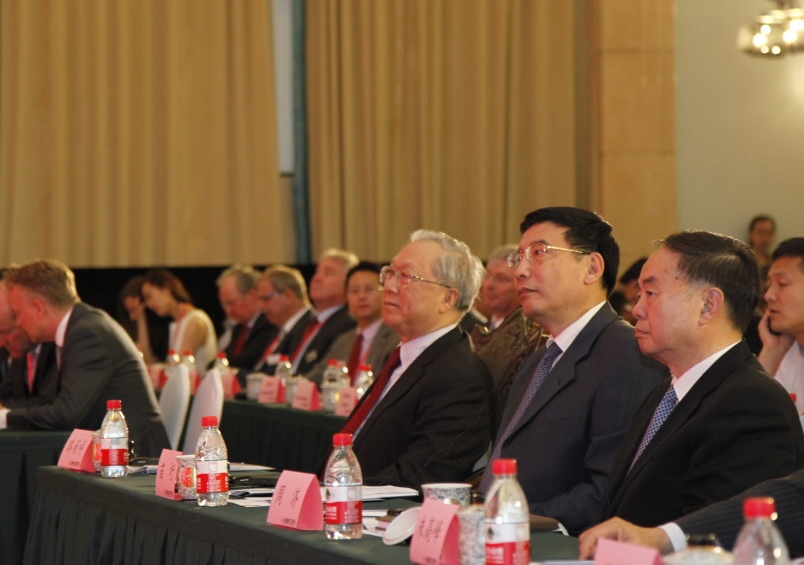
On May 10, 2017, the 2017 International Intelligent Manufacturing Conference, co-sponsored by the Chinese Academy of Engineering and the Ministry of Industry and Information Technology (MIIT), was held in Beijing. Over 500 representatives from nearly 300 organizations including intelligent manufacturing enterprises, research institutes, universities, associations, societies and news media from China, Germany and the United States attended the conference.
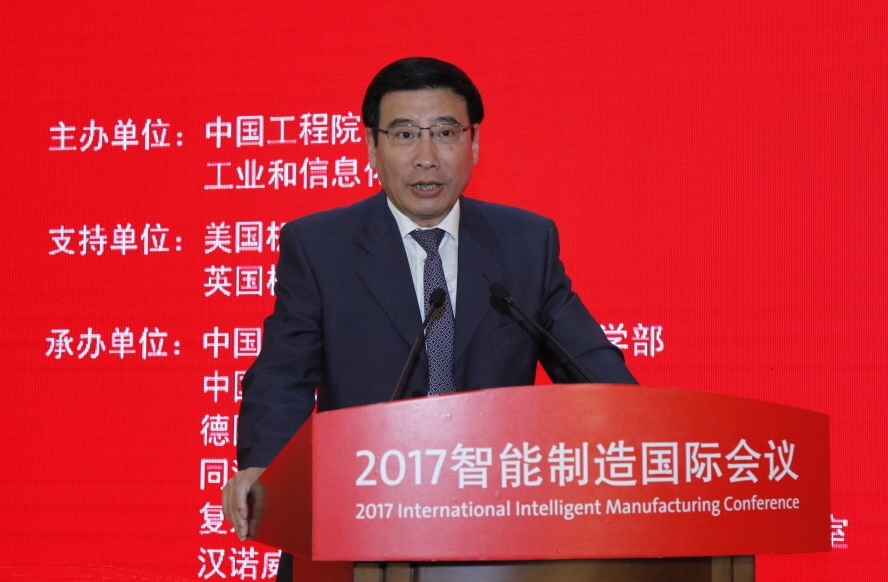
The conference was presided over by Li Peigen, Member of the Chinese Academy of Engineering and Chairman of the Chinese Mechanical Engineering Society. Lu Yongxiang, former Vice Chairman of the Standing Committee of the National People’s Congress, Eick Christophe, Minister Counsellor of the German Embassy in China, and Matthew Stokes, Deputy Director of Advanced Manufacturing and Transport Department at the UK Department for International Trade, attended the conference and delivered addresses. Miao Wei, Minister of the Ministry of Industry and Information Technology, delivered a keynote report entitled Further Advancing Intelligent Manufacturing and Accelerating the Fostering of New Growth Drivers for Global Economic Development.
Miao Wei pointed out that intelligent manufacturing holds the key to fostering new growth drivers for the global economy. The development of intelligent manufacturing will fuel the rapid expansion of emerging industries and inject powerful new impetus into economic growth. It also enables dynamic matching between production and diversified market demand for traditional industries, boosting output, cutting consumption, improving product quality and greatly lifting labor productivity. Advancing intelligent manufacturing represents the optimal pathway for China to integrate the cultivation of emerging industries with the transformation and upgrading of traditional sectors. Made in China 2025 identifies intelligent manufacturing as its primary development direction and breakthrough point. Focusing on intelligent manufacturing will exert profound and far-reaching impacts on deepening the integrated development of manufacturing and the internet and consolidating the real economy foundation.
Miao Wei noted that China has yielded positive results in intelligent manufacturing development. A series of guiding documents have been released, including the Development Plan for Intelligent Manufacturing, the Implementation Guidelines for the Intelligent Manufacturing Project, and the Guidelines for Building the National Intelligent Manufacturing Standards System. Major breakthroughs have been achieved in key technologies and equipment such as high-performance laser additive manufacturing equipment for large metal components and Distributed Control Systems (DCS). A batch of mature, replicable and scalable new intelligent manufacturing models have been explored and formed, including networked collaborative manufacturing and mass personalized customization. China has also continuously deepened international cooperation on intelligent manufacturing at national, local and enterprise levels. Overall, concerted efforts from all sides have forged broad social consensus on advancing intelligent manufacturing, with tangible results emerging steadily. Nevertheless, we must stay sober-minded: intelligent manufacturing is an emerging field, and its advancement constitutes a sophisticated systematic project. All countries are exploring relevant paths, and the whole world faces shared challenges concerning standards, industrial networks, cyber security and talent cultivation.
Miao Wei stressed that we should proactively adapt to the development trends of intelligent manufacturing and accelerate the cultivation of its industrial ecosystem to drive in-depth progress on the basis of the sound initial achievements. Four priorities were outlined: First, fully implement the Intelligent Manufacturing Project and deliver the core tasks dubbed the "Five-Three-Fifty Initiative" — developing five categories of core equipment, reinforcing three foundational pillars for intelligent manufacturing, scaling up five new development models, and promoting integrated intelligent manufacturing applications across ten key industrial sectors. Second, continue to advance intelligent manufacturing pilot demonstrations and actively develop national intelligent manufacturing demonstration zones. Third, strengthen foundational supporting capacities covering standards, industrial software, industrial internet and information security. Fourth, foster a robust intelligent manufacturing ecosystem and cultivate industry-specific system solution suppliers.
Miao Wei stated that China consistently upholds the philosophy of open development and pursues mutually beneficial cooperation in intelligent manufacturing. He welcomed enterprises and institutions worldwide to participate in the intelligent transformation of China’s manufacturing sector, share development opportunities, and jointly contribute to the shift between old and new growth drivers as well as strong, sustainable and balanced global economic growth.
After the conference, Miao Wei visited the 2017 China (Beijing) International Industrial Intelligence and Automation Exhibition, accompanied by relevant officials from the General Office and the Department of Equipment Manufacturing Industry of the Ministry.
Source: Department of Equipment Manufacturing Industry, MIIT