







Energy Conservation, Emission Reduction & Green Transformation: Application of Calcium Carbide Furnace Tapping Robot
The 14th Five-Year Plan period represented a critical transition phase for China’s economic and social development. For the energy-intensive, high-emission calcium carbide industry, its core development guidelines are "strictly controlling new capacity, optimizing existing capacity, conserving energy, reducing emissions and advancing green transformation". The industry’s development model has shifted from past capacity expansion to quality improvement and industrial chain extension.
In calcium carbide production, the tapping section of calcium carbide furnaces stands as the workshop with the highest safety risks, heaviest labor intensity and harshest working environment across the entire production process.
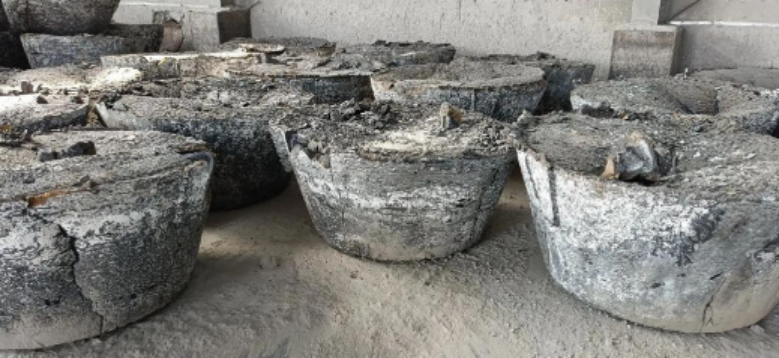
The reaction temperature for calcium carbide production reaches as high as 2200℃, which carries a high risk of splashing and scalding accidents. The furnace mouth area is a high-risk zone for carbon monoxide (CO) poisoning. Massive dust is generated throughout production, creating an extremely harsh working environment. Tapping operations in particular frequently expose workers to safety hazards such as thermal burns and mechanical injuries.
Furthermore, the production efficiency remains low, as tapping operations rely heavily on workers’ physical strength and empirical know-how. Inconsistent tapping cycles and unstable product quality have become bottlenecks restricting continuous production.
Lastly, the industry faces difficulties in labor recruitment and soaring labor costs. Young generations are unwilling to take up such arduous and dangerous jobs, leading to an aging workforce and sustained labor cost hikes. For these reasons, adopting automated and intelligent technologies to revamp the tapping process is highly necessary and urgent
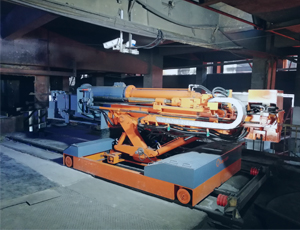
In response to national requirements for advanced development of the calcium carbide sector, intelligent robots can replace manual labor to automate and intellectualize full tapping workflows, including burning, furnace hole tapping, furnace lip cleaning and tap-hole plugging. This solution not only cuts staffing levels and mitigates safety hazards at calcium carbide furnace tapping stations, but also lifts production efficiency and slashes operational expenses. It represents an inevitable evolution of submerged arc furnace smelting equipment technology, and charts the industry’s path toward greener, fully automated, intelligent and intrinsically safe manufacturing.
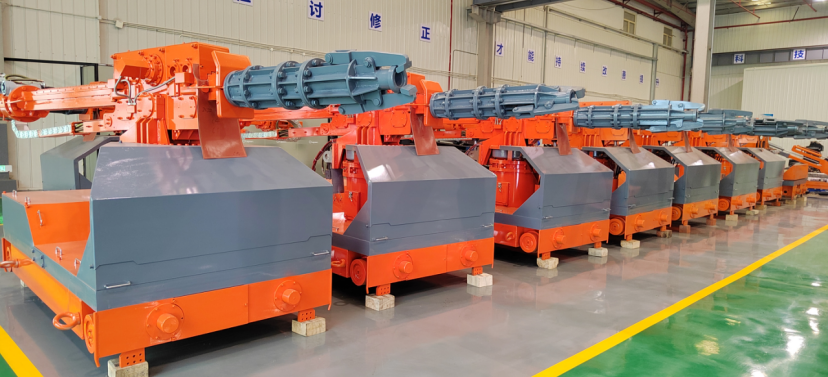
After years of development and field application, calcium carbide furnace tapping robots have delivered tangible benefits to manufacturers as follows:
Improved Safety:Tapping operators are completely freed from hazardous working conditions featuring high temperatures, toxic gases and heavy manual labor. Major personal injuries such as scalds and carbon monoxide poisoning during tapping operations are eliminated, serving as the most direct embodiment of intrinsic safety.
Non-Stop Operation Capacity: Robots operate tirelessly around the clock without being restricted by shift handovers, worker fatigue or other human factors, delivering stable and highly efficient performance.
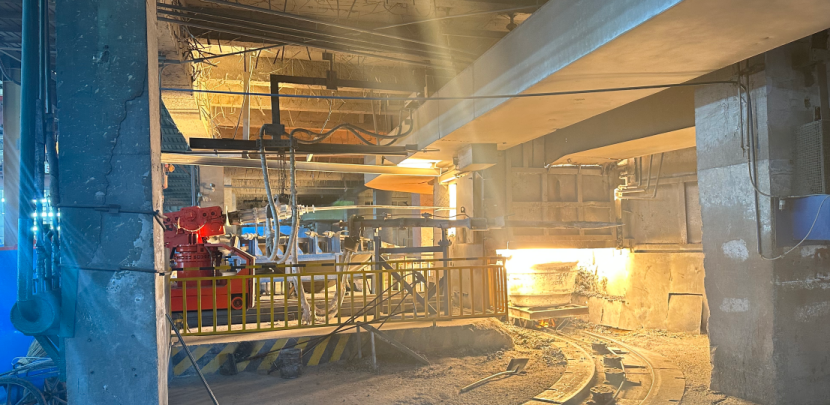
Labor Reduction & Unmanned Operation: A traditional tapping shift normally requires multiple workers. After deploying calcium carbide furnace tapping robots, only inspectors are required on-site, while operators conduct remote control from the central control room. The tapping section can cut labor by 80% to 100%, effectively resolving the labor recruitment shortage.
Energy Saving & Consumption Reduction:With standardized operation, the calcium carbide furnace tapping robot can precisely control tapping duration, reduce energy waste and tap-hole abrasion, and help cut power consumption and refractory material loss.
Environmental Improvement:The precise operation of the calcium carbide furnace tapping robot helps lower flue gas emissions during tapping.