







Intelligent Upgrade of Ladle Transport System in Calcium Carbide Workshop
Calcium carbide is a vital inorganic compound and a fundamental raw material for the organic synthetic chemical industry. It is mainly used to produce acetylene and acetylene-based chemical products. As an essential basic chemical raw material, calcium carbide occupies a pivotal position in the national economy, and it plays an irreplaceable role especially in the manufacture of products such as polyvinyl chloride (PVC).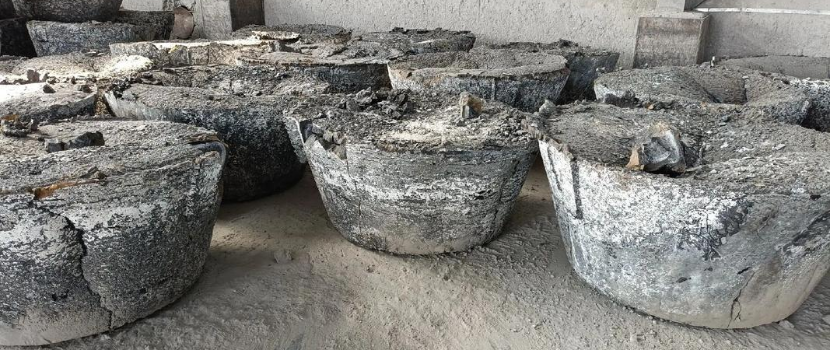
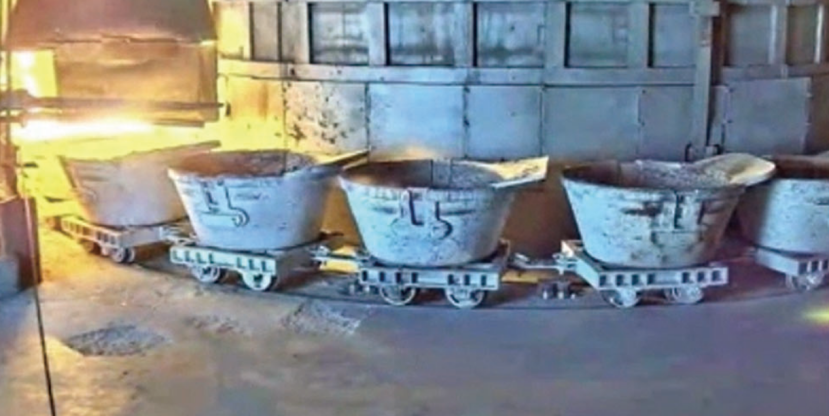
In the calcium carbide production process, the ladle hauling process is mostly carried out manually via handheld remote controllers. Operators must stay on site to constantly watch the liquid level of molten calcium carbide and control the forward and reverse rotation of the winch to adjust the ladle position. Relying on operators’ years of accumulated experience, this operation mode allows workers to quickly judge the optimal timing for ladle hauling and delivers certain flexibility, which has played an important role in past production.
Nevertheless, this fully manual operation mode has many obvious drawbacks:
Accuracy depends entirely on personal experience:The precision of ladle hauling is completely determined by operators’ experience without precise quantitative standards. In actual production, misjudgment by staff often leads to premature or delayed ladle hauling, undermining the stability of product quality.
High labor intensity:Operators have to work long hours in harsh environments with high temperatures and heavy dust, resulting in tremendous physical exhaustion. This not only reduces work efficiency but also harms operators’ physical health.
Severe safety hazards:The tapping site of calcium carbide furnaces features harsh working conditions. High heat and dense dust pose grave threats to workers, bringing hidden dangers such as scalds and pneumoconiosis caused by long-term dust inhalation.
Low intelligence level:Since ladle hauling fully relies on workers’ experience, standardized positioning cannot be realized, creating major obstacles for docking with intelligent equipment. For instance, during automatic operations such as ladle unloading and replacement by intelligent overhead cranes, workers stop the ladle trolley based on subjective judgment, resulting in parking deviations. Such errors prevent overhead cranes from accurately aligning with ladles and make full automation impossible.
The installation of an automatic ladle hauling system standardizes ladle transportation during calcium carbide tapping. The system realizes precise positioning and accurate control of ladle movement. Particularly when stopping in the cooling workshop, it eliminates positioning errors from manual operation and facilitates routine tasks including ladle unloading and replacement in coordination with overhead cranes.
The implementation of this system will bring many remarkable advantages to calcium carbide production:
(1) Improved Safety: It reduces operators’ direct exposure to high-temperature and high-dust environments, effectively lowering occupational health risks and fully safeguarding operators’ life and physical health.
(2) Higher Production Efficiency: Automated control greatly eliminates delays caused by manual operation, markedly improves the response speed and precision of ladle hauling, and thus raises overall production efficiency.
(3) Optimized Costs: It cuts reliance on skilled workers and reduces labor expenditures. Meanwhile, precise control minimizes raw material waste and realizes effective control of production costs.
The intelligent ladle hauling system standardizes factory operations and boosts work efficiency; it lowers the difficulty of deploying factory automation for ladle transportation tasks. The system replaces repetitive manual labor, eliminates safety hazards and slashes labor costs. It enables rational layout of loading areas and reduces transfer expenses. Furthermore, it lays a solid technical foundation for future intelligent and unmanned factory production, strongly promotes the upgrading of calcium carbide production processes, and enhances enterprises’ core competitiveness.