






Cost Reduction & Efficiency Boost, Safety First: Why Submerged Arc Furnace Enterprises Embrace the Wave of Intelligent Upgrading
In high-energy-consuming heavy industries including steel, ferroalloy, calcium carbide and industrial silicon, workshop operation heavily relies on workers’ experience and physical labor, accompanied by harsh working conditions featuring high temperature, heavy dust and strong electromagnetic radiation. In recent years, a growing number of submerged arc furnace enterprises have replaced traditional manual operations with advanced intelligent equipment. This quiet transformation is an inevitable choice driven by multiple factors.
一、 Internal Core Driving Forces: Solving Pain Points of Conventional Production Modes
Rigid Demand for Safe Production
Submerged arc furnace workshops are high-risk working environments. Operators face constant hazards such as high-temperature burns at the furnace front, material splashing caused by soft or hard electrode breakage, and furnace gas leakage. Deploying automated and remote intelligent equipment to take over dangerous tasks including furnace-front operation, batching and tapping completely separates workers from hazardous zones, drastically cutting the incidence of personal injuries and realizing intrinsically safe production. This stands as enterprises’ primary consideration for fulfilling social responsibilities and protecting employees’ lives.
Survival Pressure of Cost Reduction and Efficiency Improvement
Amid intensifying market competition and rising environmental compliance costs, cutting costs and boosting efficiency have become lifelines for enterprise survival.
Energy Consumption Costs:Submerged arc furnaces are notorious heavy power consumers, with electricity bills accounting for 40% or more of total production costs. Powered by AI algorithms, intelligent systems monitor furnace conditions (electrode position, burden impedance, temperature field, etc.) in real time 24/7 and perform precise automatic adjustments, keeping furnaces operating within optimal and stable energy consumption ranges to deliver substantial power savings.
Labor Costs:Despite substantial upfront investment, intelligent equipment can replace multiple posts such as furnace operators, batching workers and power distribution attendants, enabling minimally manned or fully unmanned workshops. In the long run, labor and administrative expenses are greatly reduced.
Product Quality and Output:Manual operation fluctuates due to workers’ mood and fatigue. Intelligent systems standardize and stabilize production processes to raise product qualification rate and consistency. Meanwhile, process optimization improves equipment availability and overall operational efficiency.
Mandatory Upgrades Driven by Environmental Protection Requirements
With the advancement of the national "Dual Carbon" goals, environmental regulations have grown increasingly stringent. Controlling fugitive flue gas emissions from submerged arc furnaces is a core priority. Intelligent systems achieve deep linkage with environmental protection facilities, monitor emission data in real time, and automatically adjust parameters such as air volume and pressure to ensure stable, efficient operation of pollution control equipment, meeting standard emission limits and even ultra-low emission targets.
二、 External Technical Enablers: Mature Infrastructure for Intelligent Transformation
Previously, enterprises intended to pursue intelligent upgrades but were held back by technical limitations. Today, the maturation of multiple technologies has laid a solid foundation for industrial transformation.
Sensor and Internet of Things (IoT) Technology:High-temperature resistant, anti-interference sensors are installed at critical furnace sections to collect massive real-time data including temperature, pressure, electric current and video footage, which is transmitted via IoT to cloud or edge computing platforms as the raw data foundation for intelligent analysis.
Big Data and Artificial Intelligence (AI):Serving as the "brain" of intelligent systems, AI models conduct in-depth learning on historical and real-time operational data. They accurately predict furnace condition trends, identify abnormal signs earlier than the most veteran operators, and provide troubleshooting recommendations or directly send control commands.
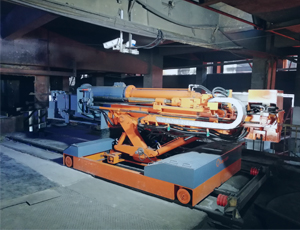
Robotics Technology:Special robots such as furnace tapping robots, burden surface treatment robots, slag raking robots and automatic electrode measuring robots fully automate high-temperature, strenuous and repetitive tasks, acting as robust mechanical arms to replace human labor.
Digital Twin Technology:A digital model fully mirroring the physical furnace is built in a virtual space, allowing technicians to conduct simulated operations, process optimization and fault rehearsal on screens, greatly boosting commissioning efficiency and scientific decision-making.
三、Future Outlook: The Inevitable Path from Traditional Manufacturing to Smart Manufacturing
Intelligent upgrading of submerged arc furnace enterprises is far more than simple manpower replacement by machines; it constitutes an all-round in-depth transformation covering the full cycle of production, management and operation & maintenance. Its ultimate objective is to build an intelligent system with self-perception, self-learning, self-decision-making, self-execution and self-adaptation capabilities.
For enterprises, intelligent transformation is no longer an optional choice but a mandatory task determining long-term competitiveness. Early adopters have already reaped benefits including enhanced safety, lower operating costs and stronger market advantages. With continuous technological advances and declining equipment costs, the wave of intelligent renovation will sweep the entire industry and reshape submerged arc furnace production.
The widespread adoption of intelligent equipment among submerged arc furnace manufacturers results from the combined effect of internal demands to address safety pressures, cost challenges and environmental obligations, as well as external impetus from mature supporting technologies. Centered on elevating safety, productivity and economic benefits, this transformation is leading high-energy-consuming heavy industries toward a safer, greener and more efficient new era.