







Application of Tapping Robots in Submerged Arc Furnace Industry: Resolving Industrial Pain Points and Boosting Production Efficiency
Submerged arc furnaces serve as core production equipment in metallurgy, chemical and other industries, widely adopted for smelting high-energy-consumption products such as ferroalloys (ferrosilicon, ferromanganese, ferrochrome, etc.), industrial silicon and calcium carbide. In conventional production processes, the tapping procedure relies entirely on manual operation, which is plagued by low efficiency and severe potential safety hazards. With the advancement of industrial automation, tapping robots have gradually become a key technology to tackle these industry pain points.
The tapping workflow of ferroalloy submerged arc furnaces mainly includes furance hole tapping, rodding, tap-hole plugging and slag cleaning. The smelting temperature of ferroalloy reaches 1500~1800℃. During tapping, workers manually pierce the taphole with steel bars and use a burn-through machine to assist molten metal flow. After tapping is completed, the taphole is sealed with refractory clay or a tap-hole plugging.
3. Calcium Carbide Industry
Characteristics of Tapping Process:
The tapping temperature of calcium carbide furnaces is approximately 2000~2200℃, and molten calcium carbide features high viscosity. Workers open the taphole via burn-through machines or electric arcs, and molten carbide flows into cooling ladles. Calcium carbide reacts violently with water to generate highly flammable acetylene gas; therefore, strict waterproof measures must be implemented throughout tapping, otherwise explosions may occur.
Summary of Core Pain Points in Tapping Procedures:
Although tapping processes vary slightly across ferroalloy, industrial silicon and calcium carbide industries, they share the following common challenges:
- Severe safety risksWorkers are exposed to high temperature, toxic gas and explosion hazards that seriously threaten their health.
- Low production efficiencyManual operation fully depends on personal experience, leading to inconsistent operating standards.
- Heavy environmental compliance pressureManual tapping generates massive dust and unorganized waste gas emissions, making it difficult to meet environmental protection standards.
- High labor costsFurnace front workers are hard to recruit with high training expenses, bringing heavy staffing pressure to manufacturers.
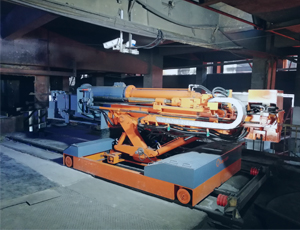
Automatic plugging:Hydraulic or pneumatic devices enable rapid tap-hole plugging and improve overall tapping efficiency.
Robots are operated via remote control, preventing direct human exposure to high temperatures and hazardous gases so as to avoid safety hazards.
2. Improved Efficiency: Precise control and standardized production for higher productivity
The equipment automatically tapping and plugging tapholes with accurate taphole positioning and precise tapping duration control.