



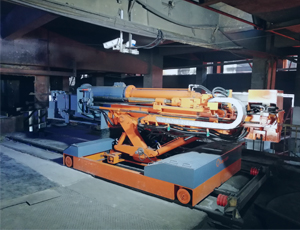





Unmanned chemical factories are an irresistible trend of the future — where will workers go from here?
Unmanned operation has become a buzzword in recent years, constantly capturing public attention and reshaping industrial mindsets. Unmanned supermarkets, autonomous driving, unmanned hotels, unmanned restaurants… The unmanned revolution, akin to a butterfly effect, has triggered sweeping transformations spanning lifestyles, employment patterns and economic restructuring.
Unmanned operation has become an irreversible major trend. Nowadays, a growing number of enterprises are piloting unmanned workshops and fully unmanned factories. Does the factory of the future still leave room for human workers?
Essentially, unmanned factories epitomize the intelligent and high-end transformation of industrial manufacturing.
At present, new technologies represented by robotics and artificial intelligence are integrating at an accelerated pace with the manufacturing sector, fueling the advancement of smart manufacturing. For traditional manufacturers, unmanned production delivers drastic cost reduction and remarkable efficiency improvement.
An unmanned chemical factory, also known as an automated factory, refers to a production facility where all manufacturing activities are controlled by electronic computers. Robots are deployed on the front production lines with no on-site manual labor required.
The fading demographic dividend and rising costs of raw materials have compelled China’s manufacturing industry to undergo transformation and upgrading to improve quality and efficiency, and accelerate the rollout of smart manufacturing. Sectors across the industry are raising levels of automated production, vigorously pushing intelligent upgrades, launching “robot replacement” pilot programs, and building model production lines, demonstration workshops and benchmark unmanned factories.
We can foresee the factory landscape in the near future: all manufacturing procedures will be handled by computer-controlled robots, CNC machining equipment, autonomous transport vehicles and automated warehousing systems. Technical staff will monitor real-time workshop production data effortlessly via the central control system at their workstations. Undoubtedly, intelligent unmanned factories will multiply and move ever closer to full unmanned production.
What Kind of Workers Will Future Factories Need?
As manufacturing sheds its labor-intensive roots and shifts toward smart production, the drive toward unmanned operation is an unstoppable trend. The rapid rollout of robot replacement and expanding coverage of unmanned factories mean numerous manual posts will be taken over by robots. This has sparked widespread concern: will factories still need human employees in the future? Will mass unemployment follow?
Globally, the ratio of robots to human workers in manufacturing is still far below the threshold required for fully unmanned factories, leaving a valuable transition window for the workforce. Future production relies on human-machine interaction, where staff remotely operate machinery to complete manufacturing processes — a role demanding far higher professional competence.
Human participation remains indispensable throughout manufacturing workflows: workers are required to commission and install production lines, program automated robotic systems, and conduct regular equipment maintenance. Instead of working on the physical production floor, employees will operate from monitoring terminals to safeguard stable production. To illustrate: a production line previously staffed by 50 manual workers may only require 5 monitoring specialists in the future, with a larger workforce assigned to robotic programming and equipment maintenance. In many manufacturing enterprises currently facing labor shortages, the greatest gap lies in technical personnel; senior skilled workers such as robotic technicians and robotics engineers are in extremely short supply.
Therefore, the “labor reduction and workforce restructuring” brought by robot replacement and unmanned transformation eliminates low-skill general workers performing repetitive tasks, while creating new demand for specialized technical talent. Demand for general laborers undertaking repetitive work will inevitably decline, yet demand for professional skilled technicians will surge significantly. In addition, improved productivity driven by automation boosts corporate profitability and expands production scale, generating new job openings.
Unmanned factories will still rely on human labor, albeit at just one-tenth, one-twentieth or even a smaller fraction of current staffing levels. Where will displaced workers find new opportunities? As robotics penetrates every industry, all sectors will require large numbers of professionals specialized in robotic application, opening new career pathways for laid-off laborers.
Although fully unmanned factories represent an irresistible long-term trend, this shift does not equate to the complete elimination of human workers. Instead, it liberates staff from strenuous physical labor and monotonous simple mental work, allowing them to take on roles featuring greater creativity and intellectual challenge.