






Silicon Metal Enters a Boom Period: Analysis of Leading Players in Its Three Major Downstream Segments
In terms of the overall landscape of the silicon metal industry, China’s top ten silicon metal manufacturers account for 53% of the country’s total output, representing a relatively low industrial concentration ratio.

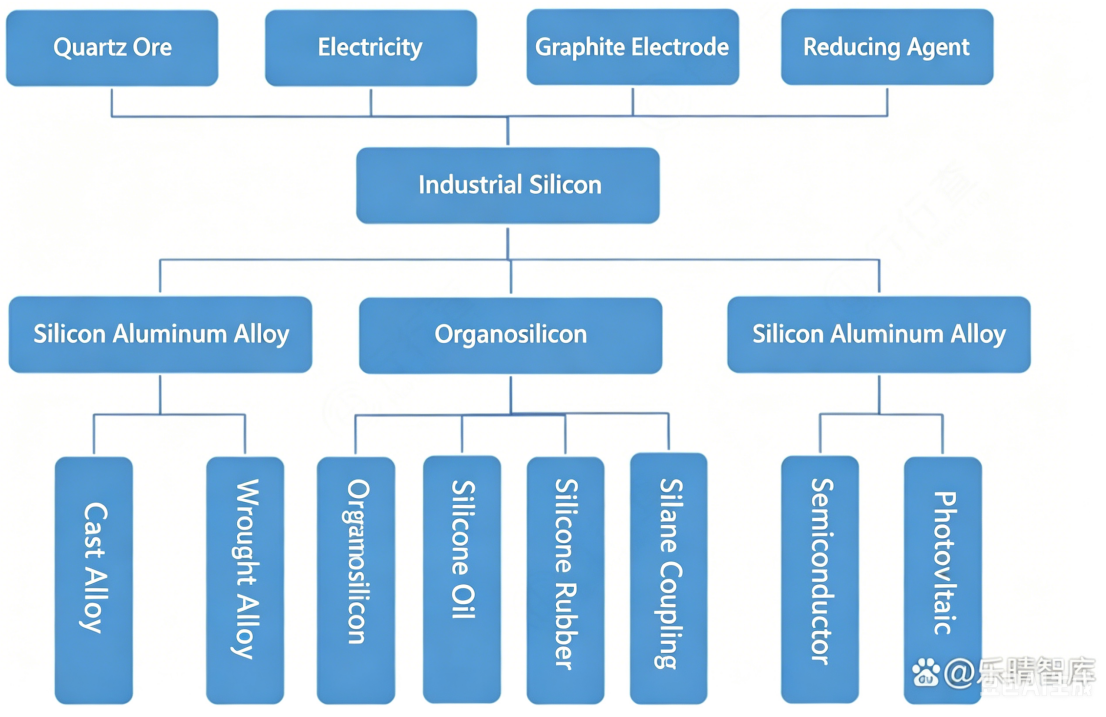
The downstream consumption sectors of silicon metal cover aluminium-silicon alloys, silicones and polysilicon, which accounted for 24%, 41% and 32% of total silicon metal consumption respectively in 2021. Demand for silicones and polysilicon in China maintains rapid growth, providing strong driving force for silicon metal consumption, while demand for aluminium-silicon alloys remains stable.

Silicone

The silicone industrial chain mainly consists of silicone intermediates and deep-processed silicone products.
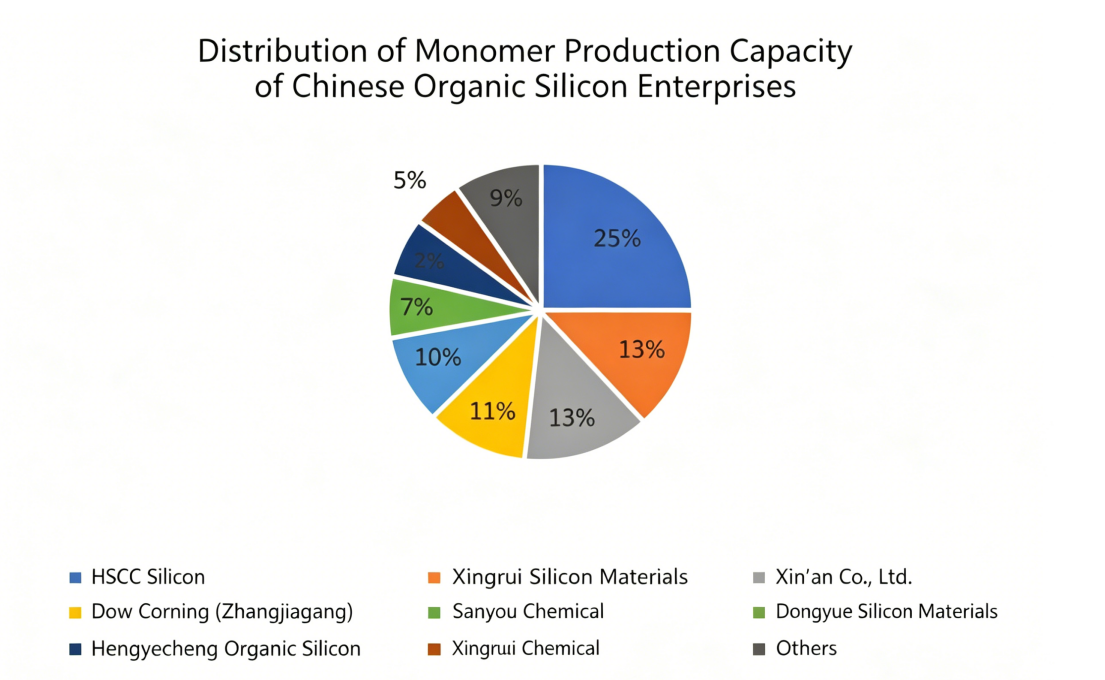
The global production of silicone intermediates is relatively concentrated with large single-enterprise output scales. The concentration ratio of China’s top five manufacturers stands at 72%, while that of the top five non-Chinese overseas manufacturers reaches 87%.
Given the wide range of application scenarios and diverse product categories, there exists a large number of enterprises engaged in deep processing based on silicone intermediates, which endows silicone intermediate producers with stronger bargaining power.
Globally, the total silicone capacity is projected to hit 3.64 million tons in 2023. New capacity additions are predominantly located in China, mostly driven by capacity expansions of leading manufacturers.
As overseas silicone production capacities are phased out, China’s silicone exports will maintain upward momentum. Emerging industries including 5G, new energy vehicles, photovoltaics, renewable energy, chips and semiconductors will further boost market demand for silicone over the long run.
Polysilicon
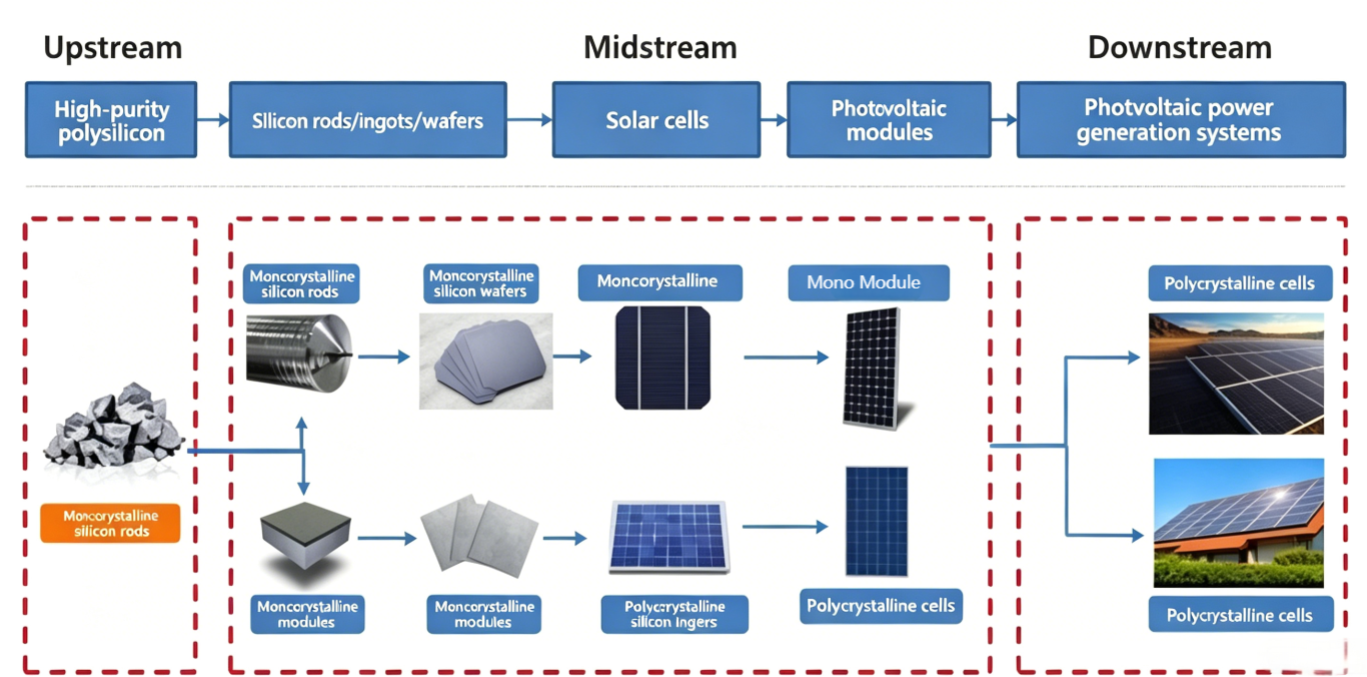
The photovoltaic industrial chain covers links including high-purity polysilicon, silicon ingots/silicon rods/silicon wafers, photovoltaic cells, PV modules and photovoltaic power generation systems. The upstream segment focuses on the production of high-purity polysilicon; the midstream links encompass polysilicon ingot casting, monocrystalline rod pulling, wafer slicing, photovoltaic cell manufacturing and PV module packaging; the downstream segment consists of centralized photovoltaic power stations, distributed photovoltaic power stations and other photovoltaic power generation systems。
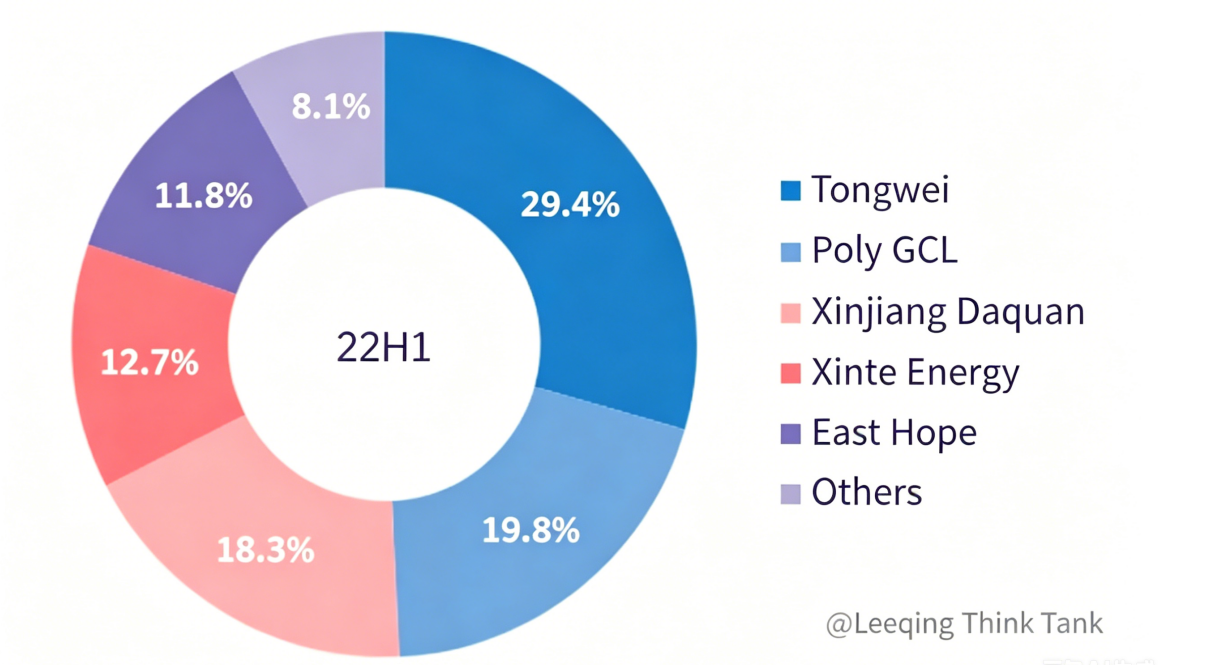
Competitive Landscape of China’s Polysilicon Industry in H1 2022 (Measured by Output Volume):
According to forecasts from the China Photovoltaic Industry Association (CPIA), China’s new photovoltaic installed capacity will reach 90–110 GW in 2025, while global new PV installed capacity will hit 270–330 GW. Sustained growth in PV installation volume will drive up demand for polysilicon, which will in turn boost consumption of silicon metal.

Aluminum Alloy
As an additive in non-ferrous alloys, industrial silicon can boost the strength, hardness and wear resistance of base metals.
Demand for industrial silicon from aluminum alloys is expected to resume growth in 2023.
Aluminum alloys fall into two major categories by processing method: wrought aluminum alloys and cast aluminum alloys.
Cast aluminum alloys generally contain 6.5%–13% silicon. Wrought aluminum alloys normally have a silicon content below 0.5%; metal silicon is indirectly consumed to produce aluminum-silicon master alloys, and silicon is only added separately into aluminum for welding materials.
The development of cast aluminum alloys is critical to demand for industrial silicon.
Boasting excellent castability, cast aluminum alloys can be made into various intricately shaped components without large auxiliary equipment. They also save metal materials, cut costs and shorten processing hours, so they are widely used in transportation, aerospace, consumer electronics and other sectors. The automotive industry is the largest downstream consumer of cast aluminum alloys.
Cast Aluminum Alloy Industrial Chain
In China’s domestic market, Lizhong Group holds a 6.29% market share in recycled aluminum business, followed by Huajin Group and Xinge Group.
Automotive lightweighting reduces fuel consumption of gasoline vehicles and extends the driving range of electric vehicles. Expanded aluminum alloy application is a key route to advance automotive lightweighting.
China’s Technology Roadmap for Energy-Saving and New Energy Vehicles (Version 2.0) proposes that a lightweight vehicle system dominated by light alloys shall take shape in the medium term. By 2035, the lightweight coefficient of gasoline passenger vehicles is projected to drop by 25%, and that of battery electric vehicles by 35%. Aluminum boasts high cost performance and will see accelerated penetration in multiple auto components. The aluminum usage ratio in automobiles is forecast to rise from 31% in 2018 to 56% by 2030.
Source: Internet