






Drive Green Transition of Energy-intensive Industries|Lapsen Helps Ferroalloy Enterprises Shake Off the Label of High Energy Consumption & High Emissions
In 2021, the Ministry of Ecology and Environment issued the Guiding Opinions on Strengthening Source Prevention and Control of Ecological Environment for High Energy Consumption and High Emission Projects (Huan Huan Ping〔2021〕No.45). The Fifth Plenary Session of the 19th CPC Central Committee put forward guiding requirements on strengthening source ecological environment control over high energy consumption and high emission (hereinafter referred to as "Two Highs") projects, aiming to resolutely curb the blind expansion of such projects and drive industrial green transformation and high-quality development.
The "Two Highs" industries mainly refer to the six major energy-intensive industries specified in the National Economic and Social Development Statistical Communiqué released by the National Bureau of Statistics, namely the processing of petroleum, coal and other fuels, the manufacture of chemical raw materials and chemical products, the manufacture of non-metallic mineral products, the smelting and rolling processing of ferrous metals, the smelting and rolling processing of non-ferrous metals, as well as the production and supply of electric power and heat power; while "Two Highs" projects mean investment projects covering 16 high energy consumption and high emission production links within the above six major energy-intensive industries, including steel, ferroalloy, electrolytic aluminum, cement, lime, architectural ceramics, flat glass, coal-fired power, oil refining, coking, methanol, nitrogen fertilizer, acetic acid, chlor-alkali, calcium carbide and asphalt waterproof materials.
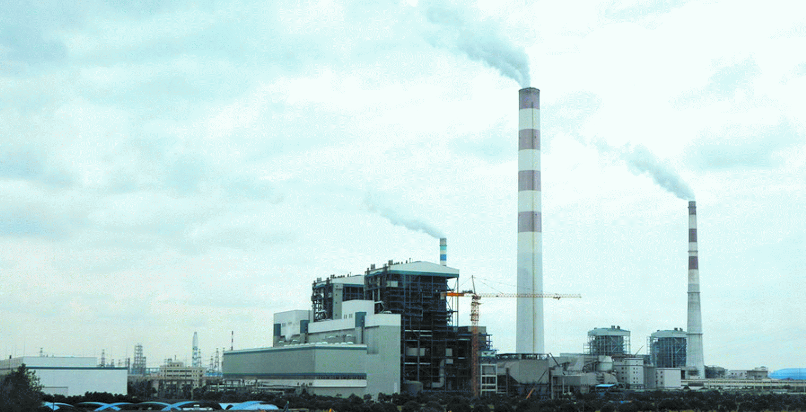
"Two Highs" projects stand as the key targets of national rectification policies and prominent pain points across relevant industries. Taking ferroalloy, a typical energy-intensive sector, as an example, China is a major producer and exporter of ferroalloys with its output maintaining consistent year-on-year growth; though the growth rate has slowed slightly, production volume still keeps rising steadily. Nevertheless, the ferroalloy industry is plagued by a host of challenges including outdated production processes, obsolete equipment and inadequate environmental protection facilities. To comply with national policy requirements, accelerate internal corporate transformation and achieve high-quality development at an early date, it has become imperative for ferroalloy manufacturers to shake off the "Two Highs" label.
The "Two Highs" characteristics of ferroalloy enterprises are prominently reflected in their production operations. Submerged arc furnaces come with high construction costs, so some small-scale manufacturers opt for semi-closed or open furnaces to cut expenses, relying entirely on manual or semi-automatic operations. Such working scenarios are fraught with hazards including extreme high temperatures and various safety risks. Problems of environmental pollution and excessive energy consumption persist throughout the whole production flow. Even though a number of enterprises have deployed submerged arc furnaces with relatively low energy consumption and fully enclosed furnaces, the industry-wide "Two Highs" dilemma cannot be fundamentally resolved. Hence, transforming the operational modes of ferroalloy manufacturers is of vital importance.
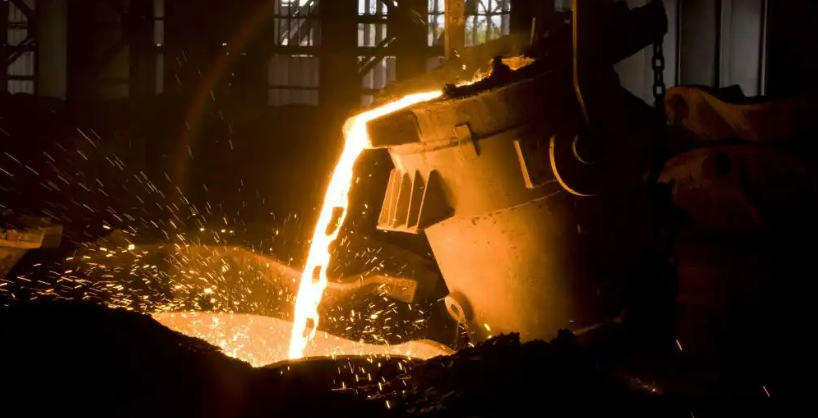
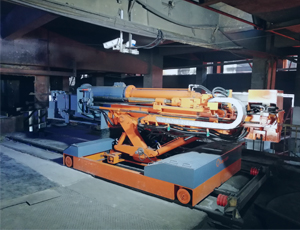
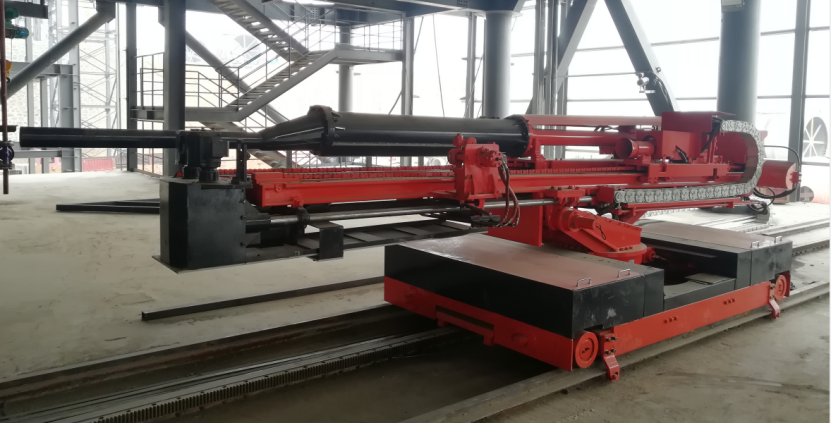
Removing the "Two Highs" tag for ferroalloy enterprises starts with overhauling traditional production workflows, and ferroalloy furnace-front robots represent a groundbreaking innovation for such transformation. Lapsen Technology concentrates on the R&D of industrial robots for heavy industries, whose products are mainly deployed in high-risk working conditions involving heavy labor, high altitude, extreme heat, heavy dust and toxic substances across calcium carbide chemical engineering, iron and steel metallurgy, ferroalloy smelting, industrial silicon smelting and chemical raw material sectors. Our self-developed ferroalloy furnace-front robot fills a domestic technological gap and has gained extensive adoption within the ferroalloy industry. Featuring high operation efficiency, flexible manipulation and reliable safety performance, the robot gives full play to its precise, flexible and intelligent strengths to replace conventional manual production modes in the ferroalloy sector. It boosts on-site operation safety and eases labor intensity, while realizing workforce reduction, efficiency improvement, energy consumption cut and output growth simultaneously.
Local authorities nationwide have actively responded to the Party’s initiatives and delivered satisfying results in rectification campaigns to implement the country’s new development philosophy. The whole industry needs to collaborate and strive jointly to advance along the environmentally friendly, high-quality development path advocated by the state. Lapsen stands side by side with all enterprises to make the breakthrough of shedding the "Two Highs" label an achievable reality!