







Prospect Outlook for Smart Factories in the 5G Era
Intelligent manufacturing originates from research on artificial intelligence, and it covers both intelligent manufacturing technologies and intelligent manufacturing systems. Intelligent manufacturing systems can continuously enrich their knowledge bases through practical operation. At present, the adoption of 5G technology has further boosted the production efficiency of smart factories.
1. 5G Technology Empowers Intelligent Manufacturing via Industrial Scenarios
As a new generation of mobile communication technology, 5G meets the wireless network demands of traditional manufacturers undergoing intelligent transformation, and satisfies requirements for equipment interconnection and remote interaction in industrial environments. 5G serves as a fundamental supporting technology for a wide range of industrial applications, including the Internet of Things, industrial automation control, logistics tracking, industrial AR, and cloud-based robots.

(1) Internet of Things: As factories advance toward intelligent transformation, the Internet of Things, a core supporting technology linking people, machines and equipment, has attracted extensive attention from enterprises. Such market demand accelerates the practical deployment of IoT applications and greatly fuels the development of 5G technology.
(2) Industrial Automation Control: It is a fundamental application in manufacturing plants, with closed-loop control systems at its core. 5G delivers ultra-low latency, high reliability and massive device connectivity, making closed-loop control over wireless networks feasible.
(3) Logistics Tracking: Warehouse management and logistics distribution call for connectivity technologies featuring wide & deep coverage, low power consumption, massive connections and low cost. Furthermore, end-to-end integration of virtual factories covers the full product lifecycle. Connecting widely distributed sold products requires networks with low power consumption, low cost and broad coverage. Horizontal integration within and between enterprises also demands ubiquitous network access, all of which can be well satisfied by 5G networks.
(4) Industrial AR: Human operators will play an increasingly important role in the production processes of smart factories. Future factories feature high flexibility and multi-functionality, which impose higher requirements on on-site workshop staff. Augmented Reality (AR) will serve a critical role in quickly addressing the demands of new tasks and production activities, with wide applications across intelligent manufacturing scenarios including process monitoring, step-by-step guidance for production tasks such as manual assembly, and remote expert support for equipment maintenance. For these use cases, auxiliary AR devices must be flexible and lightweight to ensure high-efficiency maintenance operations.
(5) Cloud-based Robots: Robots are required to possess self-organization and collaboration capabilities to support flexible manufacturing within intelligent production environments, which generates strong demand for robot cloudification. 5G networks represent the ideal communication infrastructure for cloud-based robots and act as the core enabling technology for this solution.
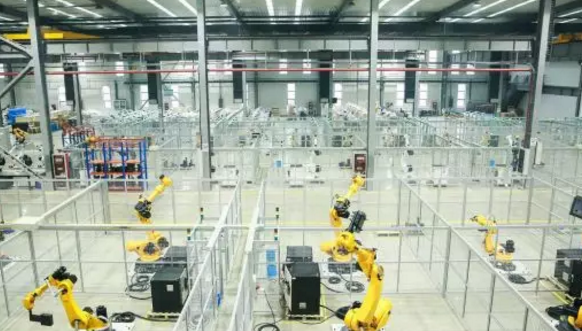
Summary: As a key enabling technology underpinning the transformation of intelligent manufacturing, 5G technology can connect widely scattered and fragmented personnel, machinery and equipment to build a unified interconnected network. The advancement of 5G helps manufacturers eliminate the messy deployment of previous wireless network technologies, which is of positive significance for advancing the implementation of the Industrial Internet and deepening the transformation of intelligent manufacturing.
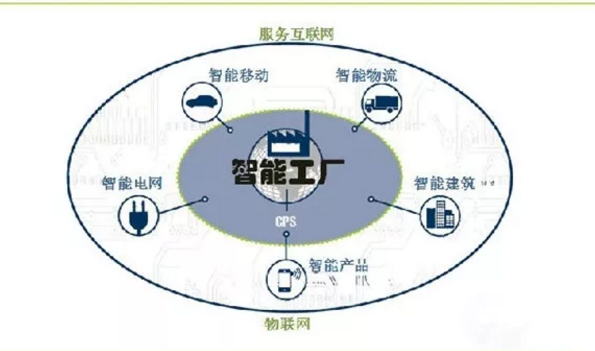
2. Smart Factories: The Core of Intelligent Manufacturing
The information revolution is advancing rapidly. Manufacturing elements including machinery, equipment, workers and products are no longer isolated individuals. Closely interconnected via the Industrial Internet of Things (IIoT), they form better coordinated and more efficient manufacturing systems.
The ongoing transformation of the manufacturing industry represents an integrated upgrade of automation and information technology. It is far more than simple automation and manpower replacement by machines. Factories are capable of autonomous decision-making, flexible production of diversified goods, and rapid responses to volatile market shifts.
The integration of artificial intelligence and manufacturing systems is an inevitable trend. Algorithm models such as machine learning, pattern recognition and cognitive analysis can strengthen factory control and management systems to realize intelligent manufacturing, enabling enterprises to gain competitive edges in today’s fierce marketplace.
Intelligent manufacturing revolves primarily around smart factories, where artificial intelligence plays a pivotal role. The Internet of Things links all machinery and equipment online, including controllers, sensors and actuators. AI then analyzes the data uploaded by sensors — this constitutes the core of intelligent manufacturing.
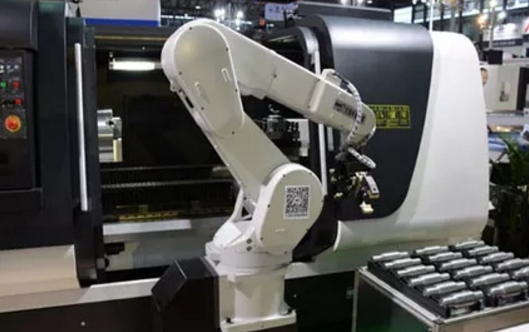
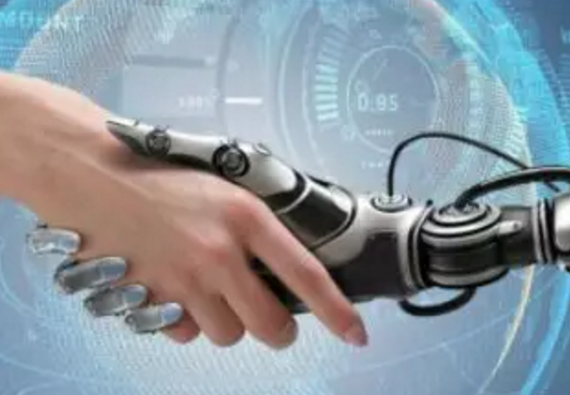
With the development and application of the Industrial Internet of Things (IIoT), networks will be tightly integrated with physical systems. The IIoT connects processors and sensors on production sites to enable communication between robots, breaking rigid job boundaries between human staff and machinery. Future manufacturing systems will achieve seamless human-machine integration.
Digital twins play a vital role in this paradigm. Every link of intelligent manufacturing corresponds to a digital twin model that replicates all physical assets in the real world, along with supporting materials such as applications and operation manuals.
In addition, intelligent manufacturing systems feature human-machine interaction for communication between operators and robots. Artificial intelligence is also deployed to optimize products and production workflows. Smart factories support an expanding array of advanced functions including predictive maintenance and equipment energy consumption forecasting.
3. Prospect Outlook for Smart Factories in the 5G Era
China’s basic R&D and testing of 5G technology have undergone three phases: trials on 5G related technologies, verification of 5G technical solutions, and system-level validation of 5G networks.
China’s three major telecom operators — China Unicom, China Mobile and China Telecom — have released their rollout schedules, targeting official commercial launch of 5G networks by 2020. Driven by 5G-enabled industrial scenarios, China’s manufacturing sector will accelerate its transformation toward intelligent production, and smart factories will soon become standard infrastructure for Made in China. It is foreseeable that with automated production widely adopted across low, medium and high-end manufacturing segments, Chinese goods will possess unmatched global competitiveness compared with products from other countries.
3.1 Boost Flexible Manufacturing to Realize Customized Production
To meet diversified and personalized product demands from global markets, manufacturers must upgrade traditional production workflows, and flexible manufacturing has become an irresistible industry trend.
On one hand, flexible production imposes stringent requirements on industrial robots in terms of flexible mobility and capacity to handle customized tasks. Leveraging its unparalleled technical strengths, 5G facilitates the large-scale rollout of flexible manufacturing. Deploying 5G inside factories cuts wiring costs between machines. Supported by continuous, highly reliable network coverage, robots enjoy unrestricted movement ranges, traveling to designated workstations on demand to conduct uninterrupted operations and smoothly switch between different tasks.
5G networks also accommodate differentiated service requirements for diverse industrial scenarios. Different production lines within large factories demand distinct network quality of service (QoS): high-precision processes prioritize ultra-low latency, core manufacturing tasks require guaranteed network reliability, and mass data analysis calls for high throughput. Relying on end-to-end network slicing, a single 5G core network can deliver multiple tiers of QoS with flexible on-demand configuration — for example, assigning high service priority to equipment status data reporting.
On the other hand, 5G enables the construction of an all-dimensional information ecosystem centered on humans and machines both inside and outside factory premises, allowing unrestricted information sharing between any person or asset at any time and location. As consumers pursue personalized goods and services, the relationship between enterprises and customers is reshaped: end users can participate directly in manufacturing workflows, and remotely take part in product design via 5G networks regardless of geographic distance.
3.2 Comprehensive Upgrade of Factory Maintenance Modes
Production operations of large enterprises often involve cross-factory and cross-regional equipment maintenance, remote fault location and other scenarios. The application of 5G technology in these scenarios can boost operation and maintenance efficiency while cutting costs. Beyond enabling the Internet of Everything, 5G facilitates all-scenario information interaction, breaking factory boundary limits for maintenance work in future smart factories. Depending on task complexity, factory maintenance can be completed by industrial robots independently or through human-robot collaboration as actual conditions require.
In the future, every object inside a factory will serve as a unique IP terminal, endowing raw materials across production links with inherent "information attributes". Raw materials will trigger automatic production and maintenance actions based on their embedded data. Human operators will also become IP-enabled terminals that interact with uniquely identified raw materials, equipment and finished products throughout the entire production flow. While industrial robots oversee factory operations, on-site staff thousands of miles away can receive real-time data promptly and execute interactive remote operations.
Imagine a 5G-covered smart factory of the future: once equipment failure occurs, the fault signal is reported to industrial robots with zero priority latency. In most cases, robots can complete repairs autonomously by referencing self-learned experience databases without human intervention. For complex malfunctions judged to require manual handling by robots:
Even if technicians are on the opposite side of the globe, they can remotely guide on-site industrial robots to fault locations via simple VR devices paired with remote haptic feedback technology. Robots replicate human operators’ movements in real time across vast distances, delivering an immersive on-site operation experience for remote personnel.
5G empowers humans and industrial robots to tackle highly complex tasks effortlessly. For multi-person collaborative repairs, specialists scattered across different continents can virtually converge at fault sites simultaneously through VR and haptic equipment. The high throughput of 5G networks supports massive data transmission of high-definition VR visuals, while ultra-low latency ensures human movements are transmitted to factory robots without deviation, allowing multiple operators to control separate robots for follow-up repairs. Supported by the Internet of Everything, humans, robots, finished goods and raw materials are all connected to diverse knowledge and experience databases. During fault diagnosis, both humans and robots can draw on extensive professional data to enhance the precision of fault localization.
3.3 Industrial Robots Take Over Management Work
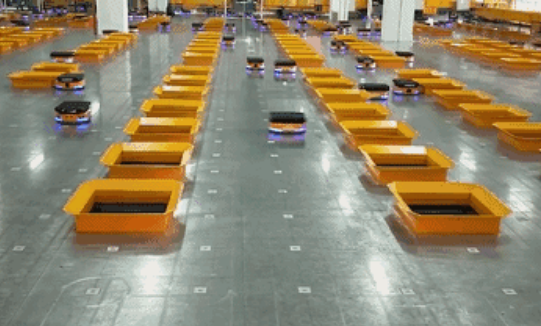
Future smart factories rely on 5G cloud networks for logistics, feeding, warehousing judgment and decision-making. Mass sensors collect real-time industrial data via 5G to build big databases. Combining cloud computing, industrial robots realize self-learning and precise decision-making to generate optimal solutions.
Supported by 5G D2D communication, devices exchange data directly, cutting end-to-end latency, easing network load and boosting manufacturing efficiency.
Within a decade, 5G will cover all factory areas. Freed from isolation, 5G-controlled robots work around the clock to inspect equipment, deliver materials and conduct high-precision production. They act as mid-level and grassroots supervisors to coordinate production, leaving only a small number of staff for monitoring and senior management, enabling human-robot collaborative production.
3.4 On-Demand Resource Allocation
5G network slicing delivers customized, low-latency, energy-efficient solutions for diverse manufacturing scenarios and simplifies deployment.
Network slicing dynamically allocates and releases network resources to match varying demands on latency, bandwidth and connection density. End-to-end slicing generates dedicated network features such as ultra-low latency and ultra-high reliability for specific applications.
A smart factory prototype deploys three independent slices sharing one infrastructure without mutual interference: critical service slices (low latency & high reliability), mobile broadband slices and massive connectivity slices. The multi-layer modular slicing system coordinates access, transmission and cloud resources to offer shared or isolated infrastructure flexibly.
To further reduce latency, 5G adopts local traffic offloading. Functional modules of slices can be deployed in distributed data centers close to production terminals to guarantee real-time production control.
5G smart factories improve working conditions and cut manual labor. Digital technologies connect design, production and sales links, integrate resources, and lift overall production efficiency and product quality.