







5G will revolutionize traditional manufacturing and drive intelligent manufacturing into a smarter and more advanced stage.
5G networks are extremely vital to the traditional industrial system and represent a technology capable of triggering disruptive transformation. Up to now, wireless technologies deployed in industrial systems worldwide fail to meet industrial operational requirements, while 5G opens up tremendous new possibilities, thus bringing about revolutionary changes in the 5G era.

5G networks support three major application scenarios: enhanced mobile broadband, massive IoT and the Industrial Internet. Put simply, they deliver faster network speeds, support far more connected devices, and achieve much lower latency. Compared with 4G, 5G will bring tremendous changes to people’s daily lives and work — the transformation can well be described as earth-shaking. Of course, the impacts of 5G on our life and work go far beyond that. In the future, mobile office, live conference streaming, video surveillance, intelligent buildings, drone monitoring, ocean exploration, smart factories, smart cities and many more applications can all be realized via 5G.
Within the global manufacturing industry, 5G networks will maximize their inherent network strengths, revolutionize traditional manufacturing, push intelligent manufacturing to an even smarter and more advanced level, and advance the development of the Industrial Internet to a certain degree.
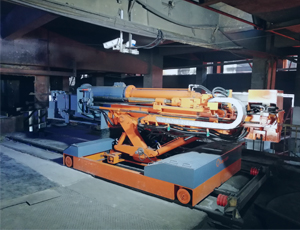
The use of robots in modern production is nothing new. Long before the arrival of 5G, countless factories worldwide had been making full preparations to achieve full plant intellectualization. A prominent feature of intelligent manufacturing is replacing part of manual labor with industrial robots to boost factory production efficiency. However, in the 4G era, intelligent manufacturing was held back by inherent network limitations and could not reach its full potential.
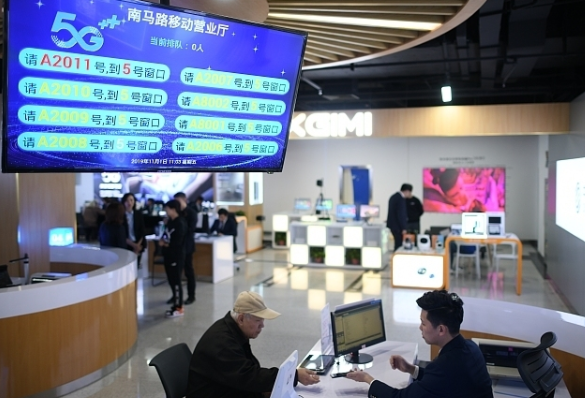
Leveraging its unparalleled unique advantages, 5G networks fuel the large-scale popularization of flexible manufacturing. Deploying 5G inside factories cuts cabling costs between machines. Supported by seamless coverage of highly reliable networks, robots gain unrestricted moving ranges. They can travel to designated positions on demand, perform continuous operations in diverse scenarios, and switch between different tasks smoothly.
5G networks deliver fiber-equivalent access speed, millisecond-level end-to-end latency, 99.999% reliability, connection capacity for tens of billions of devices, ultra-high traffic density of dozens of Tbps per square kilometer and ultra-high mobility to suit various scenarios. Breaking geographical and single-industry boundaries, 5G fosters brand-new production models covering the whole chain from design to consumption, drives the upgrading of social production structures, and opens up a brand-new blue ocean for the manufacturing sector.
5G enables the construction of an all-round information ecosystem centered on people and machines both inside and outside factories, allowing information sharing between any person and any object anytime and anywhere. As consumers pursue personalized goods and services, the relationship between enterprises and customers is reshaped. End users are able to participate in corporate production processes. Regardless of geographical distance, consumers can take part in product design and check product status information via 5G networks.
5G also builds a comprehensive information ecosystem connecting personnel (including factory staff and consumers) and machines inside and outside plants, enabling unrestricted information exchange between all people and objects at any time and location. Therefore, consumers can join manufacturers’ production workflows through 5G, such as participating in product design and checking real-time production progress.
In future smart factories, workers, industrial robots, finished goods and raw materials will all become perceptive, responsive entities capable of communicating with one another. If any component malfunctions, the fault signal will be instantly reported to industrial robots. Robots can carry out autonomous repairs by drawing on self-learned experience databases. If the robot cannot resolve the failure, technicians can remotely guide its operations via VR devices. This will exert an extremely far-reaching impact on global manufacturing.
Source: Information Technology and Software Service Network