







AIoT Empowers Smart Cities to Achieve Application-Oriented Intelligence
As technologies including artificial intelligence, big data, the Internet of Things and cloud computing gradually penetrate various application scenarios, industry transformations driven by such technologies are clearly visible. Sectors such as government services, smart policing, smart healthcare, smart education and smart transportation are undergoing continuous intelligent upgrading from conceptual design to practical implementation. The steady improvement of these segmented industries also reflects the rapid advancement of smart city construction.
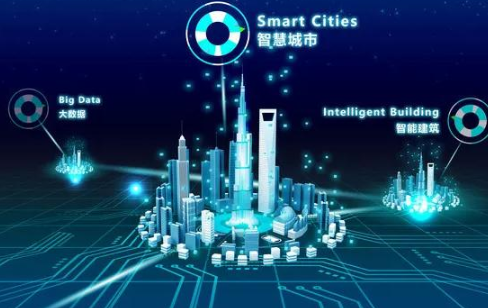
Technological advances fuel urban operation, yet this is far from a straightforward process. While all stakeholders forge ahead at full speed, they also need to sort out their strategies to avoid detours. Recently, the author attended a forum themed The Integration of AIoT and Smart City Applications, where participants discussed ways to realize the on-site implementation of AIoT technologies in smart cities.
Since 2017, the term "AIoT" has gone viral and become a buzzword in the Internet of Things industry. Short for "AI + IoT", AIoT refers to the integrated deployment of artificial intelligence and the Internet of Things in real-world scenarios. Nowadays, an increasing number of practitioners view AI and IoT as an integrated whole. As an essential pathway for the intelligent upgrading of traditional industries, AIoT represents an inevitable trend in IoT development. The integration of AI and IoT has steered artificial intelligence toward application-oriented intelligence.
Deploy IoT Sensing Infrastructure First for AIoT Adoption
Gan Quan, Director of Market Strategy at Semtech, stated that robust AIoT implementation hinges on massive data collection and analysis. At present, however, the deployment of front-end sensors remains insufficient, resulting in limited data acquisition. In addition, user habits and characteristic data accumulation have not reached a sufficient scale. These two areas will therefore be the core priorities for the industrial rollout of AI and IoT technologies in the future.
"When data volume expands tenfold or even a hundredfold from current levels, the value delivered by AI and IoT services could surge a hundredfold or even ten thousandfold — this will be a continuous growth curve," Gan Quan remarked. "LoRa technology will play an increasingly pivotal role in enabling data connectivity and the interconnection of all physical devices."
Both LoRa and NB-IoT feature long-distance transmission and low power consumption, making them two core wireless communication technologies for IoT applications. According to Gan Quan, LoRa delivers lower deployment costs compared with NB-IoT.
For instance, constructing an NB-IoT base station costs over 100,000 RMB, while a LoRa base station only ranges from several thousand to 10,000 RMB — merely one-twentieth of the cost of an NB-IoT base station. To achieve network coverage for a single building, operators may charge more than 100,000 RMB, whereas LoRa only costs a few thousand RMB. This is a key reason why LoRa technology has been rapidly deployed across diverse IoT scenarios in recent years.
It is learned that LoRa has been widely applied to water, gas, electricity and heat meters in numerous smart communities. LoRa-based smart water, electricity and gas meters can automatically collect real-time data and transmit it to management platforms, lifting operational efficiency and ensuring reliable service. Furthermore, LoRa technology is extensively adopted across various smart city sectors including energy management, smart buildings, logistics, smart manufacturing and smart agriculture.
Gan Quan pointed out that data collection and automatic transmission via LoRa is only the first step; reverse automatic control based on data can be realized in the next stage. For example, abnormal readings from water, gas and electricity meters can be identified through data analysis, which enables automatic judgment of potential gas leaks, water or power outages, allowing timely intervention to safeguard users' lives and property. Similarly, in major application scenarios such as urban management, logistics and agriculture, building more sensing-enabled IoT nodes with LoRa technology can facilitate the operation of smart cities.
Qu Xiaofeng, postdoctoral researcher at Tsinghua University Shenzhen International Graduate School and algorithm engineer at Aqara, shared a similar view that the insufficient number of end-side IoT sensors has created obstacles to deploying AI functions on IoT devices. Nevertheless, market sectors covering smart communities and smart homes have demonstrated a clear trend toward AIoT transformation. In the smart home industry, a wide range of AI-powered smart terminals have been launched, including star products such as smart speakers and smart door locks.
Qu Xiaofeng also mentioned that from the perspective of smart homes, market demand for the integration of artificial intelligence and the Internet of Things has been cultivated throughout this year, forcing manufacturers to launch more mature cloud-based products and complete solutions to meet user demands.
Advanced technologies should pursue cutting-edge breakthroughs, while practical applications must be implemented on the ground. Intelligent upgrading of communities and households enables the public to directly perceive the empowering value of AIoT technology. When talking about the practical implementation of AIoT, Pan Jiangyu, Co-founder of Kangxing Technology, stated frankly that although artificial intelligence technology is extremely popular, products equipped with genuine AIoT technologies are rarely seen in residential compounds across China. The core reason lies in the following:
“A product can only gain market recognition if users perceive its practical value. No matter how fancy the marketing gimmicks are in the early stage, they are merely impractical concepts. Technologies can strive for top-tier innovation, yet products have to be rooted in real-life scenarios,” Pan Jiangyu emphasized.

How to Achieve Practical Implementation?On this question, Pan Jiangyu holds the view that terminal devices are essential whether for data acquisition or service delivery. Terminals must be deployed within real scenarios, which constitutes the foundation and core of the Internet of Things. Manufacturers need to strive to deploy intelligent terminals into various scenarios to serve real-world demands in the AI era, and this is also the general requirement of the times.
Tap into Data Value to Drive Upgrade from Intelligence to Wisdom
As mentioned above, laying a solid IoT sensing foundation is the prerequisite for implementing AIoT technologies. The establishment of IoT nodes aims to gather massive volumes of data, which creates the premise for AI and big data to deliver value.
Building on this viewpoint, Pan Zijian, General Manager of the Real Estate Division at HHT Control, further pointed out that the development of the Internet of Things starts with connectivity, then shifts focus to data, and subsequently computing. Such computing capacity and services essentially belong to artificial intelligence, through which the IoT can realize its full value.
Source: Informatization and Software Service Network