







Discussion | Scope of Smart City Application Scenarios
Smart cities are no longer a brand-new concept for most people. Their construction will boost urban development and improve residents’ quality of life. At present, cities across China are actively advancing smart city construction. The adoption of information technologies such as artificial intelligence and the Internet of Things has accelerated the building of smart cities and made cities more intelligent.
A city is a large residential agglomeration formed by population concentration and the area with the most intensive human activities. Massive human activities are intertwined with operational data from all urban sectors. Driven by socioeconomic progress and rising living standards, China has entered a stage of rapid development. Traditional living modes can no longer adapt to the new landscape, making it an urgent task to raise urban operational efficiency through transformation. Furthermore, the thriving Internet of Things has reshaped public perceptions of urban intelligent development and accelerated the shift from traditional urban construction to smart city development.
First, what exactly is a smart city?
The concept of smart cities originated in the media industry. It refers to applying diverse information technologies and innovative ideas to develop and integrate urban systems and services, boost resource utilization efficiency, optimize urban governance and public services, and elevate citizens’ quality of life. Built on next-generation information technologies including the Internet of Things and cloud computing, as well as tools and methodologies such as wikis, social networks, Fab Labs, Living Labs and integrated approaches, smart cities foster an innovation-friendly ecosystem featuring comprehensive perception, ubiquitous broadband connectivity, integrated intelligent applications and sustainable innovation. They are characterized by user-led innovation, open innovation, mass innovation and collaborative innovation.
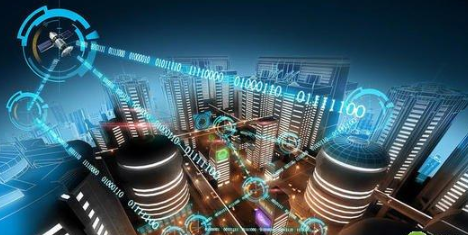
Scope of Smart City Application Scenarios
Smart Community
Centered on community residents and oriented toward residents’ well-being, smart communities deliver convenient services to fully satisfy residents’ living, development and daily demands by providing safe, efficient and convenient intelligent management and services. The rapid advancement of technology will further integrate cloud platforms with terminal devices within communities, enabling on-demand intelligent services accessible anytime and anywhere, including smart property management, intelligent parking and smart elderly care.
Smart Campus
Smart campus has become a core concept in campus digital construction in recent years. Transforming conventional campus operation models with modern information technologies such as big data and artificial intelligence, smart campuses are equipped with various functions including one-click emergency response systems for campus security. Such systems can detect suspicious and dangerous incidents in a timely manner and automatically send early warnings to higher authorities, comprehensively boosting risk prevention and prediction capacity inside and outside the campus to safeguard students. The smart education management system simplifies teaching and auxiliary work for teachers, promotes equitable education, and encourages students to take initiative in learning rather than learning passively. Meanwhile, the Internet of Things system elevates the overall intelligent management of campuses and creates a high-quality learning environment.
Smart Transportation
As the core artery of a city, transportation constitutes a vital component of smart city development. Built upon intelligent transportation systems, smart transportation adopts cutting-edge technologies including the Internet of Things, cloud computing and the Internet to collect traffic data, supervise and regulate all links of transportation operations and the whole process of transport infrastructure management. It endows urban traffic systems with stronger capabilities in perception, interconnection, data analysis, risk prediction and automatic control. For instance, traffic monitoring and operation systems leverage IoT technology to realize unified traffic control and command for multiple road intersections, road sections and key zones via a single integrated portal, resolving difficulties in data integration and coordinated urban traffic control, command and congestion management. Traffic light power monitoring systems track the operating status of traffic light power supplies and emergency power supply equipment at intersections and feed back real-time operational data to the cloud management platform once faults occur, enabling rapid troubleshooting and improving government service image. Smart transportation fully guarantees traffic safety, maximizes the efficiency of transport infrastructure, upgrades the efficiency and management capacity of traffic systems, and serves public travel and economic development.
Smart Sanitation
Relying on Internet of Things and Internet technologies, smart sanitation realizes real-time supervision of personnel, vehicles, equipment and supplies involved in sanitation management, serving as a key guarantee for improving sanitation service quality. Smart public restrooms, for example, adopt sensors to realize stall occupancy detection, environmental monitoring and passenger flow statistics, tackling prevalent pain points such as difficulty in locating restrooms, poor sanitary conditions, long queues and complicated management. The smart sanitation monitoring platform supports SOS emergency alarms and real-time data collection via monitoring devices. With video footage of sanitation facilities, the platform also enables electronic dispatching, track playback and incident reporting, lifting sanitation operation quality while cutting operational costs.
Smart cities enable information sharing and collaborative operation across various urban departments and systems, facilitate rational allocation of resources, optimize urban development and governance decisions, and support timely prediction and response to emergencies and disasters. Backed by favorable policies and improved digital infrastructure, smart city application scenarios keep expanding and diversifying.
Source: Informatization and Software Service Network