






The Role of Industrial Engineering Technologies in Smart Manufacturing Under the Background of Industry 4.0
The in-depth integration of new-generation information technologies such as artificial intelligence and the Internet of Things with traditional manufacturing technologies has accelerated the transformation of the manufacturing industry, making smart manufacturing the development goal for traditional manufacturers. The rollout of Germany’s Industry 4.0 and China’s Made in China 2025 has further boosted the advancement of smart manufacturing in China.
The objective of Industrial Engineering is to maximize the effective utilization of all input elements within a production system, cut costs, guarantee product quality and production safety, lift productivity, and achieve optimal overall economic benefits.
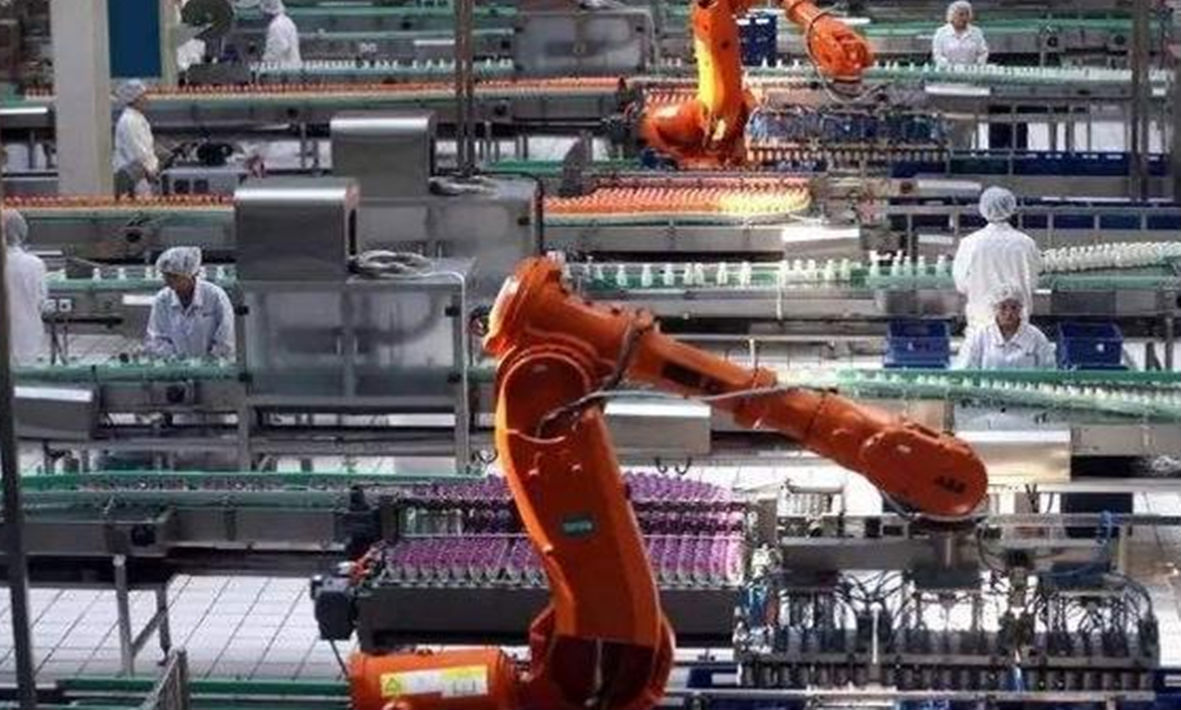
A smart manufacturing system is a human-machine integrated system jointly built by intelligent machines and human experts. In all manufacturing links, it adopts a highly flexible and integrated approach to simulate human intelligent activities including analysis, judgment, reasoning, conception and decision-making via computers. It replaces and extends part of human mental work in manufacturing scenarios, while collecting, storing, optimizing, sharing, inheriting and advancing the manufacturing intelligence of human professionals.
Smart manufacturing has become a pivotal production mode dominating the future development of the manufacturing industry and global economy. The smart manufacturing system serves as the application environment for the integrated deployment of intelligent technologies, as well as the core carrier for realizing smart manufacturing models.
I. Current Status of Smart Manufacturing Implementation
China is currently in a critical stage of industrial transformation. The country has issued the Made in China 2025 initiative to standardize and drive industrial upgrading through advanced smart manufacturing technologies. A growing number of enterprises have formulated smart manufacturing implementation strategies to enhance core competitiveness with digital and intelligent technologies.
The author has provided consulting services for numerous enterprises undergoing smart manufacturing transformation. In practice, it is observed that a number of enterprises proceed with systematic and phased industrial upgrading based on their actual operational conditions, starting with fundamental improvements, and have achieved remarkable results and enhanced market competitiveness.
Nevertheless, the majority of enterprises follow the trend blindly in smart manufacturing transformation. Without thorough self-assessment and solid foundational construction, they invest massive capital in digital and informatization renovation.
For instance, a mechanical processing enterprise invested heavily in smart manufacturing upgrading. However, its production workshop failed to meet even basic 5S management standards, featuring unreasonable workshop layout, inadequate ergonomic design, unplanned material handling routes and chaotic on-site management. Under such rudimentary conditions, smart manufacturing transformation can hardly generate equivalent practical value. This phenomenon is prevalent among a large number of manufacturing enterprises.
II. The Role of Industrial Engineering Technologies in Smart Manufacturing
Without solid foundational management, smart manufacturing transformation is merely theoretical, and capital investment cannot deliver corresponding efficiency gains. As a core guarantee for standardized enterprise operation, industrial engineering (IE) technologies focus on fundamental and systematic optimization. Therefore, enterprises need to adopt IE technologies to standardize full operational processes and achieve lean operational indicators. Only on this solid foundation can smart manufacturing upgrading generate substantial practical benefits.
2.1 Standardization Implementation
Standardization, the highest form of institutionalized management, is an efficient working method applicable to production, R&D, design and corporate management. The practical value and strategic status of enterprise standardization are determined by its ability to empower market competition.
Essentially, enterprise standardized management refers to the establishment and implementation of a complete standard system consisting of technical standards, management standards and working standards. Technical standards formulate unified technical criteria for standardized and coordinated technical activities. Based on prevailing scientific and technological levels and practical experience, they provide optimal solutions for common and repetitive technical problems in production.
Management standards define specific norms for various operational and managerial activities to ensure and improve product quality and achieve overall quality objectives. Working standards specify unified rules for coordinated operational tasks within enterprises, clarifying the scope, responsibilities, authority and quality requirements of individual and team work.
As a core component of industrial engineering, standardization enables efficient implementation of smart manufacturing and maximizes its practical value.
2.2 Application of Ergonomics
Ergonomics studies anatomical, physiological and psychological factors affecting humans in working environments, the interaction among humans, machines and environments, and the balanced optimization of work efficiency, human health, operational safety and comfort in work, daily life and rest scenarios.
With the advancement of science and technology, automated equipment has gradually replaced manual labor in manufacturing. Many believe that ergonomics has become less important, which is inaccurate. Equipment and tooling fixtures designed without ergonomic optimization fail to adapt to human operating habits, potentially causing safety accidents, operational errors or cumbersome manipulation, which severely restricts equipment efficiency.
As equipment automation continues to improve, ergonomic principles must be fully integrated into the design and layout of production equipment, tooling and station auxiliary facilities, so as to realize optimal performance of the entire manufacturing system.
2.3 Logistics Facility Planning and Optimization
At present, most manufacturing enterprises have built or plan to build intelligent stereoscopic warehouses, deploy warehouse management systems, and adopt Automated Guided Vehicles (AGVs) for material handling and supply management. Intelligent logistics systems rely heavily on scientific planning and design.
For example, AGV cruising routes must be optimized via industrial engineering methods such as operations research and theory of constraints to determine the optimal distribution routes and frequency. Without systematic IE optimization, AGV equipment cannot deliver its maximum operational value.
2.4 Lean Improvement
As an advanced extension of industrial engineering, continuous lean improvement serves as a core driver for sustained enterprise efficiency growth. Enterprises should build a two-way lean improvement system integrating top-down deployment and bottom-up innovation. Starting with basic 5S management, enterprises need to optimize workshop layout, formulate standard operating procedures, eliminate the eight major manufacturing wastes, and optimize the P-Q-D (Production-Quality-Delivery) combination to realize overall lean operation.
Only on the basis of lean management can MES, ERP and other information systems function effectively. Smart manufacturing technologies can then realize cross-system data interconnection, eliminate information silos, minimize operational waste and comprehensively improve enterprise operational benefits.
III. Conclusion
The industrial revolution has undergone four developmental stages from Industry 1.0 to the current Industry 4.0, with the application of science and technology in manufacturing becoming increasingly mature. China’s manufacturing industry has achieved rapid development in recent years. At the national level, the Made in China 2025 strategy has been issued to guide and standardize industrial upgrading.
Smart manufacturing has become a core trend and key pillar of future manufacturing development. It is a crucial initiative to transform industrial development modes, promote the high-end upgrading of the manufacturing industry, and build a strong manufacturing country, as well as an inevitable choice for China to cultivate new international competitive advantages under the new economic normal.
Nevertheless, the promotion of smart manufacturing is a complex and systematic project. As an emerging development model, it requires continuous exploration and trial-and-error, and cannot be achieved overnight or through impetuous advancement.
Enterprises should seize technological opportunities to improve operational efficiency, while proceeding from practical conditions and avoiding blind trend-following. By consolidating foundational management, applying industrial engineering technologies to realize lean operation, implementing automated transformation step by step, advancing digital and informatization construction, and optimizing manufacturing systems continuously, enterprises can achieve sustained efficiency growth and gain competitive advantages in the market.
Source: Informatization and Software Service Network