







What is edge computing, and how does it empower smart manufacturing?
Mainstream manufacturers in both IT and OT sectors have set their sights on edge computing. This focus is not merely a pursuit of buzzwords. For OT vendors, traditional control systems prioritize real-time responsiveness and operational stability. Yet rising demand for data calls for integration of data covering machinery, production lines, processes, as well as logistics, quality, energy, maintenance and other infrastructure indicators to achieve global optimization. This requires a more open, high-capacity data processing architecture to underpin new business growth. Hence OT vendors are expanding into IT domains and launching edge computing solutions to tackle such challenges. Meanwhile, IT vendors leverage their strengths in communication networks and software technologies to integrate digital resources with industrial scenarios, expand market share and explore new revenue streams.
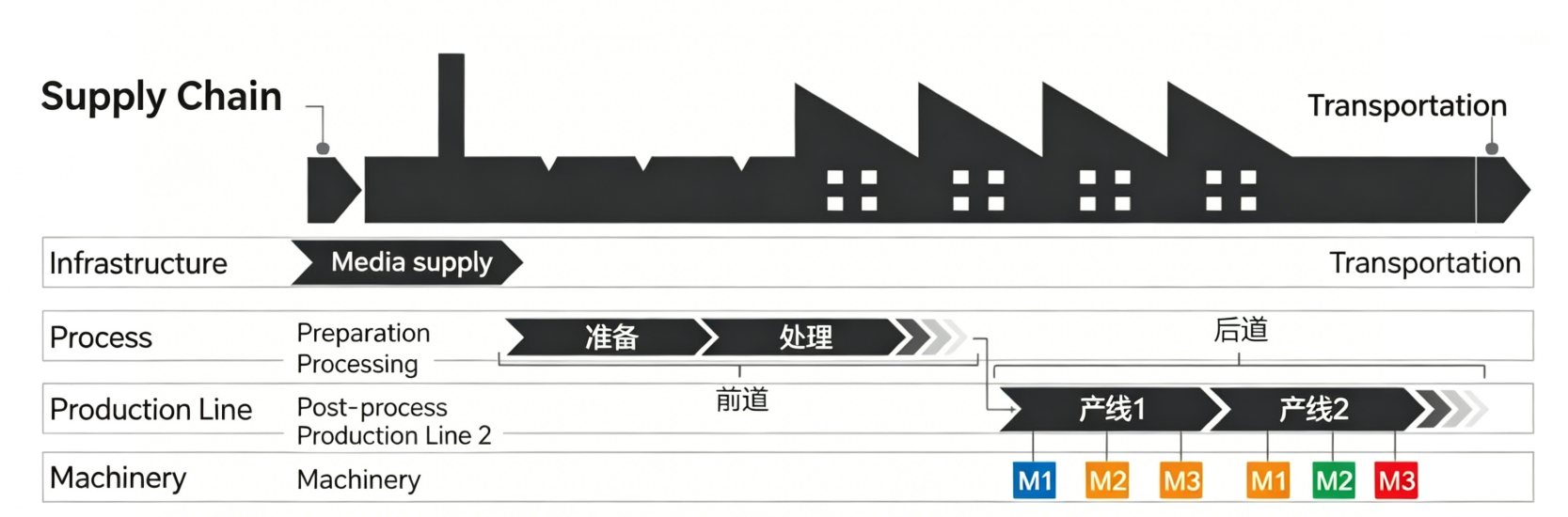
Figure 1 Hierarchical Integration of Factory Data
This article explains edge computing in plain language without overly specialized jargon or complicated models.
Dimensions to Simply Understand Edge Computing
1.Edge Computing from Control and Computing Perspectives
The difference between control and computing can be illustrated with an AGV example. A single AGV’s travel precision and speed are managed by a standalone controller, which collects real-time speed and position signals to dynamically adjust movement.
However, for a fleet of 100 AGVs deployed across a factory, calculating collision-free shortest paths for all vehicles relies on computing algorithms. Such scheduling logic develops global strategies and distributes unified instructions for every AGV. Instead of single-unit local control, it operates on a factory-wide level while requiring real-time collection of each vehicle’s operational parameters.
Similar use cases are widespread, including train dispatching and flight scheduling. Optimization tasks that pursue maximum efficiency, cost savings or profit also fall under this category. All of them center on global planning, optimization and scheduling.

2.A Layer Operating at the Boundary Between Physical and Digital Worlds
From the layered architecture of smart manufacturing, digital twin modeling maps physical production systems to virtual digital counterparts. The edge layer collects real-time field data and feeds actual production status back to upper information systems.During testing, operation and maintenance phases, production processes, parameters and strategies can be optimized within virtual systems, then deployed down to physical equipment. Virtual models also adjust dynamically according to changes on the production floor. Serving as the interactive medium linking physical and digital domains, edge computing acts as a collaboration layer bridging the two worlds.
3.Cloud Deployed Close to the Production Floor
Cloud computing has gained wide popularity, so how does it differ from edge computing? Simply put, edge computing is cloud infrastructure situated right beside industrial sites, which can be broken down into two dimensions:
Time dimension: Its processing cycle sits between long-cycle cloud computing (seconds, days, weeks, months) and ultra-short-cycle field control (microseconds to milliseconds). Tasks running at the 100-millisecond level — such as multi-robot coordination cycles — fall under edge computing’s scope.
Functional dimension: Edge computing is deeply familiar with on-site production environments. As a layer adjacent to OT, it supports access to diverse fieldbuses to resolve cross-device data interconnection issues. It also incorporates core IT capabilities including real-time & historical data storage and web-based data publishing. Edge computing acts as an intermediate architecture connecting field control and cloud platform services.
In short, edge computing handles information-based strategy and optimization coordination between factory-level scheduling software and field equipment layers.
Applicable Scenarios for Edge Computing
1.Asset and Data Management
Since the rollout of Industry 4.0, industrial data asset management has become critical. Raw materials, work-in-progress goods and finished products within logistics and warehouses all require full monitoring. Customized manufacturing demands precise tracking of quality, energy, equipment and labor consumption for every single product.Additionally, real-time visibility of equipment asset status is mandatory. Without transparent operational data, manufacturers cannot calculate daily output or establish basic production benchmarks, making efficiency improvement impossible.
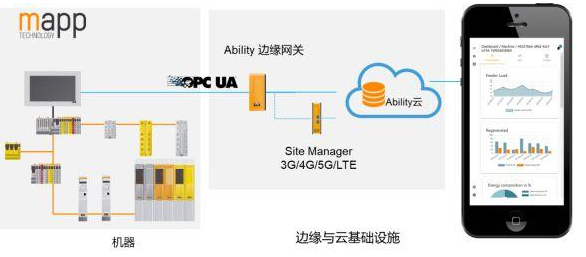
Figure 2 Edge Computing Architecture for Asset Performance Monitoring
Figure 2 shows an asset performance monitoring framework integrated with ABB Ability and field devices. The edge node collects and stores on-site data before synchronizing it to the cloud. Data can be displayed locally in real time or accessed remotely via mobile terminals. This edge architecture draws on mature IT network and software technologies.
2.Production Operation Monitoring
OEE serves as the simplest example of such calculations. You may think it is overly straightforward, as it merely multiplies three indicators: Availability, Performance and Quality, requiring nothing more than basic arithmetic operations. Indeed, computation works exactly like this—calculation does not have to involve calculus, high-order functions or nonlinear equations to qualify as computation.
OEE is critically important for manufacturing enterprises because this metric directly mirrors production efficiency. Suppose you invest one billion yuan to build a production line, yet its OEE stands at only 50%. This means the line generates revenue during half of its operating hours, while the other half incurs losses, and the rate of losses often outpaces revenue generation. This fully illustrates the immense significance of OEE.
Naturally, various production quality analysis tools, including SPC (Statistical Process Control) and Pareto charts, can all be visualized and generated via such computational logic.
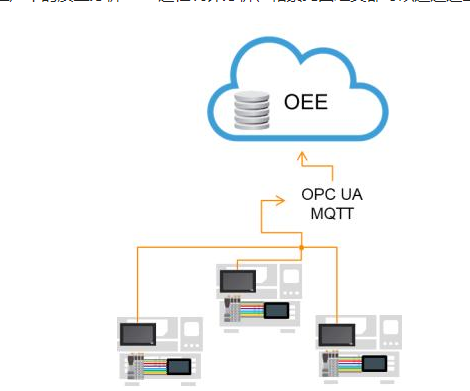
Figure 3 Unified Integration of Performance Data for Legacy Factories
Figure 3 presents a multi-modal data integration solution for older manufacturing plants. Edge computing enables unified aggregation and statistical analysis of full-line indicators including OEE, supporting production managers to adjust workflows and lift operational performance.
3.Strategy Optimization
Take a printing factory receiving mixed orders of A4, B5 and other paper sizes, equipped with quarto four-color printing presses. An edge computing nesting algorithm maximizes paper utilization to cut material costs by matching multiple orders onto one sheet.
Another example is online glass cutting. Large-format glass off production lines undergoes real-time quality inspection via edge systems. The platform matches glass quality grades to separate automotive and architectural glass orders, realizing real-time alignment between production output and customer demand.
4.Intelligent Collaboration
The value of edge collaboration can be seen in autonomous vehicle traffic control. Traffic jams often originate at intersections: inconsistent driver reaction times delay vehicle startup after green lights switch on. Edge-based vehicle-to-vehicle data synchronization allows all cars to launch simultaneously for smooth traffic flow. Real-time data exchange also maintains safe vehicle spacing and eliminates collision risks.
Similarly in factories, edge coordination synchronizes multi-device movement, avoids collisions and delivers highly efficient, congestion-free production scheduling.
5.Predictive Maintenance
Traditional predictive maintenance relies on mechanism modeling and mechanical failure analysis, requiring complex modeling workflows and specialized technicians. Edge computing enables data-driven machine learning maintenance.
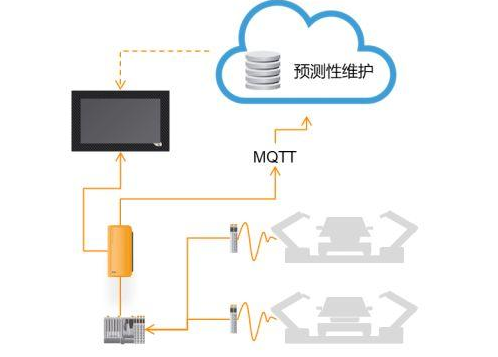
Edge nodes collect and process real-time equipment data, select optimal feature values based on industry attributes, field working conditions and operational indicators, then train iterative models to generate accurate fault early warnings. This boosts equipment utilization and reduces downtime losses.
Source: Informatization and Software Service Network