






What benefits can the development of intelligent equipment bring to the manufacturing industry?
At present, the development of intelligent equipment is mainly oriented toward production and manufacturing applications in industries such as automobiles, machinery, electronics, chemical engineering and light industry. In terms of technology, we have broken through technical bottlenecks including core components like reducers, controllers, sensors and drivers, as well as technologies for system integrated design and manufacturing.
Over the next decade of manufacturing development, China has identified smart manufacturing as the primary development focus. First, it will boost the industrialization and application of industrial robots and intelligent equipment in manufacturing to meet the urgent demands for the transformation and upgrading of China’s manufacturing sector. Second, a batch of intelligent equipment featuring breakthrough core technologies will be developed to actively tackle the challenges brought by the new round of technological revolution and industrial transformation.
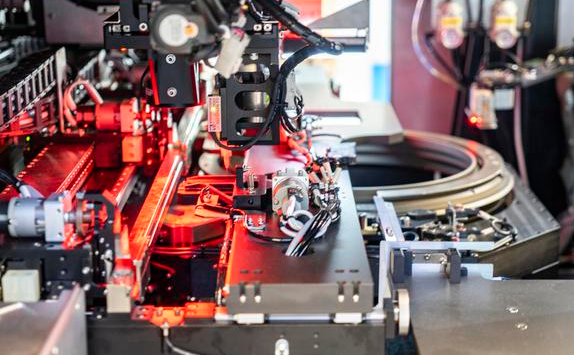
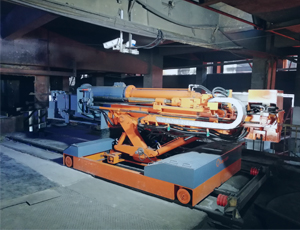
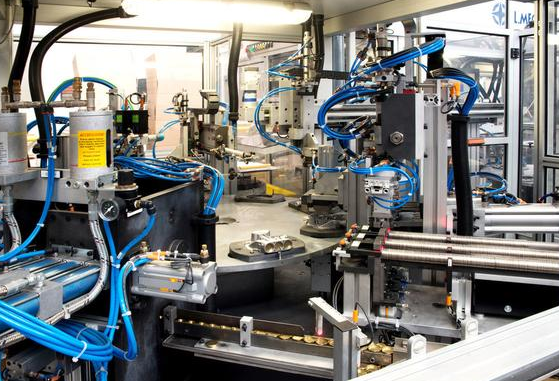
Industrial intelligent equipment mainly refers to multi-joint manipulators or multi-degree-of-freedom robots for industrial manufacturing scenarios, which are applied to handling, welding, assembly, machining, coating, clean production and other industrial production processes.
Products manufactured by industrial intelligent equipment feature stable and superior quality. Such equipment can replace manual workers and reduce labor intensity. Statistics show that the annual growth rate of intelligent equipment deployment in manufacturing has exceeded 30%. Rapid growth is particularly seen in assembly, dispensing, handling and welding production lines, with surging adoption across electronics, metal products, rubber and plastics, food, building materials, pharmaceuticals and other sectors.
A higher level of industrial intelligence can, on the one hand, strengthen the innovation capability of domestic manufacturing enterprises, drive standardized, modular and systematic industrial development, cut production costs, improve product quality and further expand market space. On the other hand, it can realize the transformation and upgrading of traditional manufacturing industries in a ripple effect by popularizing the application of intelligent equipment.

Source: Information and Software Service Network