







What factors need to be considered when implementing smart manufacturing?
The development of intelligent manufacturing has long attracted widespread attention; intelligent manufacturing covers intelligent manufacturing technologies and intelligent manufacturing systems, and such systems can continuously enrich their knowledge bases through practical operation while featuring self-learning capabilities, yet despite how advances in intelligent manufacturing have transformed people’s lives, many still have limited understanding of its three core pillars.
How to implement intelligent manufacturing? Three core pillars must be taken into account: products, equipment and processes.
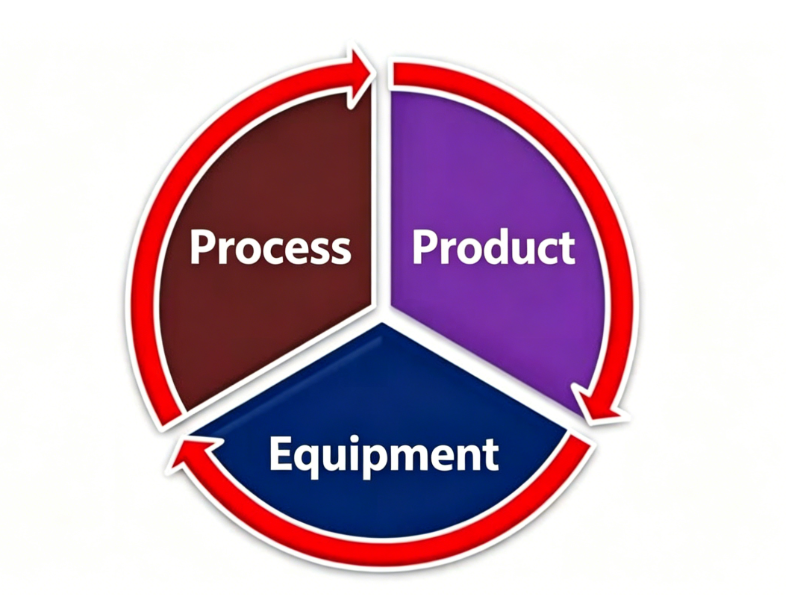
Figure 1 Three Core Pillars of Intelligent Manufacturing
The first factor to consider is the goal of advancing intelligent manufacturing. Clearly, enterprises focus on their products rather than pursuing superficial modernization. When selling products, companies do not showcase how sleek or advanced their production lines are; instead, they must highlight the value embedded in their products. Products are the medium through which enterprises present themselves to society. The ultimate goal of intelligent manufacturing lies in products, not the manufacturing technology itself. Accordingly, product intelligence stands as one of the top priorities for enterprises to address. If intelligent manufacturing fails to deliver intelligent products, it loses its contemporary significance. Furthermore, enterprises manufacturing non-intelligent products face a high risk of being phased out in the future.
The second core pillar is equipment. All equipment deployed in key links of production workflows (including R&D and design) must be intelligentized. Without such intelligence, labor productivity and operational efficiency cannot achieve substantial improvements, eroding the enterprise’s competitiveness. Production equipment lacking digitalization, connectivity and intelligence cannot be classified as advanced manufacturing equipment for the current era. Additionally, non-intelligent equipment may be incapable of manufacturing the intelligent products an enterprise aims to produce.
Intelligent Products as the Primary Pillar
Therefore, when enterprises plan the development of their intelligent manufacturing systems, they must first figure out how to endow their products with intelligence. Even if partial or full workflow intelligence has not yet been achieved, enterprises should still prioritize product intelligence as long as intelligent products can be manufactured.
Product intelligence is realized by integrating computer systems of varying complexity, especially embedded systems, into products. Embedded systems represent not only the most vital and representative technology for intelligent manufacturing but also support a massive industrial chain. Despite an early start, the development of embedded systems in China has proceeded at a relatively slow pace. Most embedded systems deployed in products do not demand high-end chips; chips with process nodes ranging from tens to over a hundred nanometers, or even lower-grade alternatives, often suffice, meaning the associated technical barriers are relatively low.
Intelligent products constitute a major emerging trend in the evolution of computing technology. Computing technology was originally invented for scientific computing, and later evolved to support information processing and communication across all human commercial activities, a field known as business computing whose scope far surpasses that of scientific computing. After the 1990s, fueled by the growth of the Internet, platforms such as QQ, WeChat and Facebook emerged. Computing technology permeated people’s social lives and greatly boosted the advancement of social computing, further expanding the application boundaries of computing technology.
Today, computing technology is penetrating all categories of products to elevate their intelligence levels. There are hundreds of billions, even trillions, of intelligent products worldwide, making product computing ubiquitous and poised to trigger sweeping transformations across the entire IT industry. Consequently, product computing will emerge as the next hot frontier for computing technology applications. Virtually all products will adopt intelligence to varying degrees, with computing capabilities integrated into their design and function. This trend aligns closely with the surging demand for the Industrial Internet.

Figure 2 Development Stages of Computing Technology Applications
Today’s intelligent products differ from traditional embedded systems in functional requirements, with core capabilities falling into three categories. The first is sensing: products must perceive external environmental changes or collect internal operational data. The second is computing, covering the product’s built-in operating system and diverse application software, ranging from basic data analysis to advanced computing such as artificial intelligence. The third is networking. Driven by the global Internet of Things, modern products can interconnect with fog computing, edge computing and cloud computing platforms. Accordingly, the new generation of intelligent products bears little resemblance to the traditional definition of embedded systems.
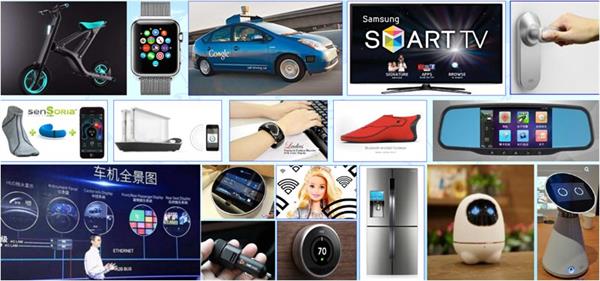
Figure 3 Ubiquitous Intelligent Products
Equipment represents the biggest bottleneck in smart manufacturing. Production equipment is generally highly complex, often produced in small batch sizes, and supported by sophisticated industrial software. These factors lead to high manufacturing costs paired with narrow market demand, resulting in very few enterprises capable or willing to engage in intelligent equipment production. Additionally, the long R&D cycles of equipment bring substantial operational risks to manufacturers.
Furthermore, a large share of the challenges in equipment manufacturing lie in soft equipment—software-centric industrial tools such as CAD and CAE platforms. Digitalization, connectivity and intelligence are entirely unattainable without soft equipment; all achievements of informatization collapse once industrial software is removed. Industrial software is first and foremost an industrial product, and more often a high-end industrial product. This constitutes a core challenge for Made in China 2025, yet the industrial sector still lacks sufficient awareness of this reality.
Intelligentization of Full Industrial Processes
Manufacturers in developed economies hold a dominant lead in intelligent production equipment. Japan and Germany, in particular, have largely monopolized the global market for core heavy manufacturing equipment. The next frontier of smart manufacturing is full-process intelligentization, shifting development focus from individual equipment (single "points") to complete production workflows (continuous "lines").
The pursuit of full-process intelligentization is the core objective shared by Industry 4.0 and the Industrial Internet. Industry 4.0 advocates the integration of enterprise information systems through vertical and horizontal integration. Vertical integration refers to an enterprise’s internal industrial network, as discussed in the Three Essays on Smart Manufacturing series. Horizontal integration corresponds to an enterprise’s external collaborative network. The ultimate goal is to fully unify internal and external networks and enable unrestricted cross-system data flow.
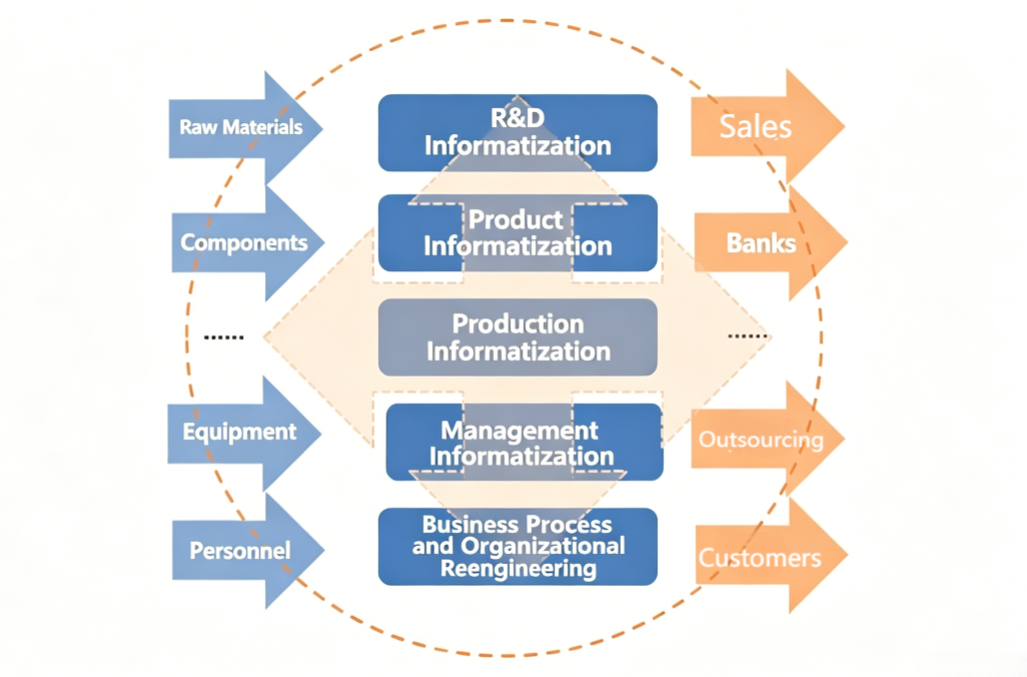
Figure 4 Integration of Internal and External Networks
In addition, the integrated system should be built into a Cyber-Physical System (CPS). The term "Cyber" here refers to computers or computer networks. In many modern enterprises, internal and external networks remain isolated computer networks or systems with only preliminary integration achieved. How to deeply integrate them with the physical entity of the enterprise for efficient operation is a complex and sophisticated subject.
A 2006 report released by the U.S. National Science Foundation (NSF) pointed out that existing system science developed in the industrial era (including systems engineering theories) cannot adequately address such challenges. It argued that research on how an enterprise’s physical entity and its embedded computer and network systems can work in synergy with high efficiency and precision, as well as how to improve the adaptability, autonomy, functionality, reliability, security, availability and efficiency of such systems, will evolve into a new branch of systems engineering — a cutting-edge research priority for the United States. In fact, the U.S. has produced numerous research reports on CPS, reflecting great attention to this field.
Realization of Full-Process Intelligentization
The goal of both Industry 4.0 and the Industrial Internet is not merely to interconnect internal and external networks, but to form a Cyber-Physical System (CPS). Both concepts can be illustrated by the unified 5C (five-layer) architecture.
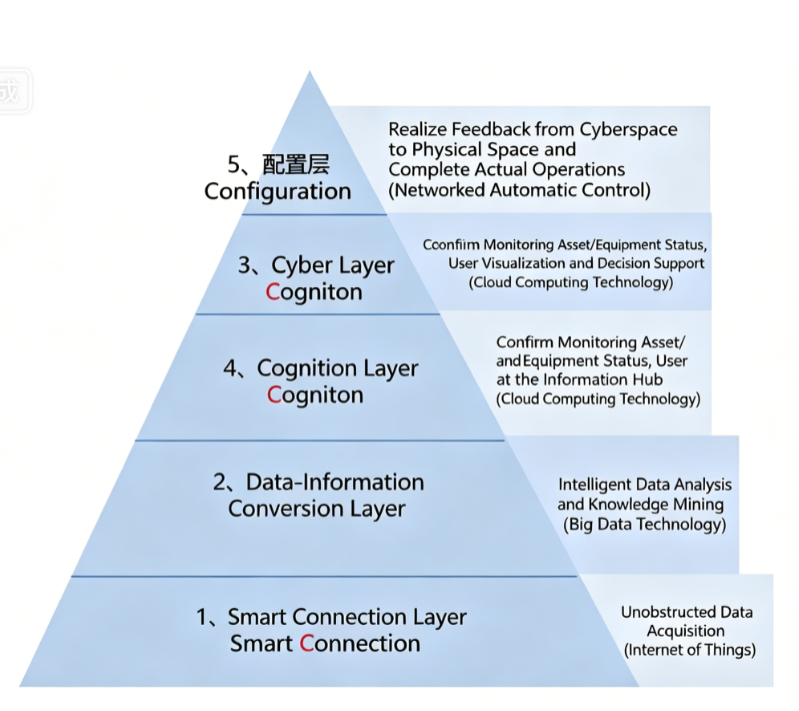
Figure 5 The 5C (Five-Layer) Architecture of Industrial Internet and Industry 4.0
The bottom layer serves as the intelligent connection layer. The second layer converts raw data into usable information. The third layer is the Cyber layer, functioning as the enterprise’s cloud computing data center. Within this layer, valid data processed from the second layer is compared and analyzed against the expected values stored in the enterprise’s computer systems. The fourth layer is the cognition layer, which identifies root causes and corresponding solutions based on deviations from the comparison; essentially, this layer acts as the decision-making layer. The fifth layer is the configuration layer, which reconfigures or adjusts personnel, physical assets and computer systems via computer networks in accordance with decisions made at the cognition layer.
This five-layer framework forms a standard feedback control system that delivers real-time feedback and control over all enterprise-controlled objects, namely staff, machinery, computer systems and all physical entities. The technical support corresponding to each layer of this feedback system is illustrated in Figure 5. By leveraging these cutting-edge advanced technologies, the Industrial Internet enables intelligent control across the full spectrum of an enterprise’s business operations.
Following this logic, Industry 4.0 and the Industrial Internet each finalized their respective system architecture designs in 2015. The Industrial Internet Reference Architecture clearly defines system components and their interconnections, and provides an open "Industrial Internet System Design Guide". It is important to emphasize that this document acts merely as a guide that aligns industry participants toward a shared development direction, rather than a mandatory standard.
This architecture defines a three-tier industrial Internet system. Analogous to a sphere, the outer edge tier consists of on-site equipment gateways for multi-source data collection; the middle platform tier (core industrial Internet platform, with a broader definition emerging recently) processes and analyzes collected data; the innermost enterprise tier hosts corporate application systems.Enterprises conduct targeted analysis and decision-making on the data received, then send feedback data back through the platform and edge tiers to all connected internal and external departments.
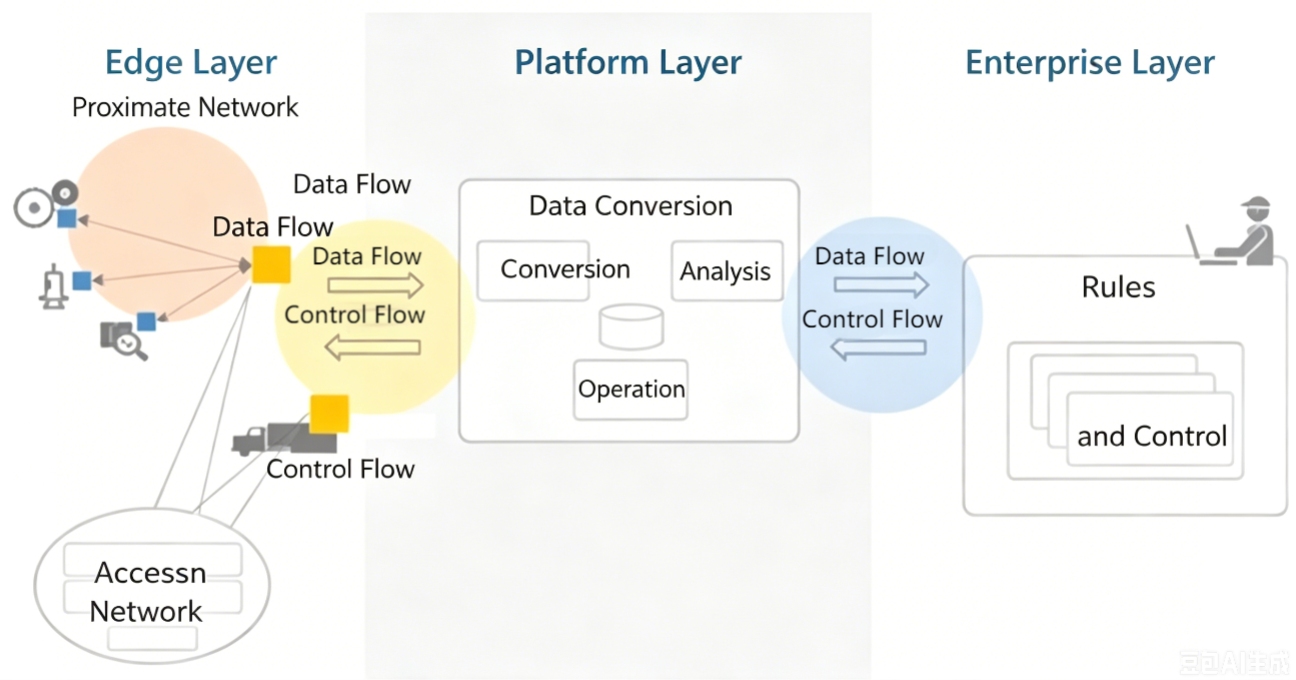

Figure 6 Three-Tier Internal and External Architecture of Industrial Internet
Data analysis is central to industrial Internet systems, covering data collection, processing, model calculation and result output supported by modeling and algorithms, with full safeguards for security and privacy.
Domestic industrial Internet platforms are enterprise-specific rather than one unified industrial public platform. Large firms build their own exclusive platforms and do not share core businesses with rivals. The only cross-industry shared platform is the global IoT platform for all industries and individuals.
Though ideal for full-process intelligence, industrial Internet platforms are highly complex and differ widely across sectors; one enterprise’s system cannot be directly applied by another. Chinese manufacturers should build platforms step by step based on real needs instead of blind pursuit, as full process intelligence is still far from reality in China.
Overinvesting in industrial-wide shared platforms misdirects smart manufacturing. At present, China’s key task is to realize intelligent products and equipment.