







9 Implementable Business Models of Intelligent Manufacturing
After the release of the Made in China 2025 strategy in 2015, enterprises spent four years exploring and gradually shaping implementable business models for intelligent manufacturing. Relevant companies have rolled out intelligent manufacturing projects tailored to their own operational characteristics.
Nine models have been summarized as follows:
1.Mass customization model oriented to meeting customers’ personalized demands
2.Digital integration model covering the full product lifecycle centered on shortening product development cycles
3.Remote operation and maintenance service model based on the Industrial Internet
4.Networked collaborative manufacturing model focusing on supply chain optimization
5.Smart factory model dedicated to breaking down enterprise-wide information silos
6.Full-lifecycle product traceability model with quality control at its core
7.Energy optimization management model for the whole production process targeting higher utilization efficiency of energy and resources
8.Socialized collaborative manufacturing model built on cloud platforms
9.Flexible manufacturing model enabling rapid response to diversified market demands
8 major development directions, 69 functional modules and 451 knowledge points are covered in total.
We will first introduce the functional concepts of these nine business models to give readers a basic understanding, and later invite industry specialists to deliver systematic explanations for each specific model.
1. Flexible Manufacturing Model for Rapid Response to Diversified Market Demands
As defined by China’s national military standard: "A flexible manufacturing system is an automated manufacturing system composed of CNC processing equipment, material handling and storage devices, and a computer control system. It consists of multiple flexible manufacturing cells, can be quickly adjusted to adapt to changes in manufacturing tasks or production environments, and is suitable for multi-variety, small-and-medium-batch production."
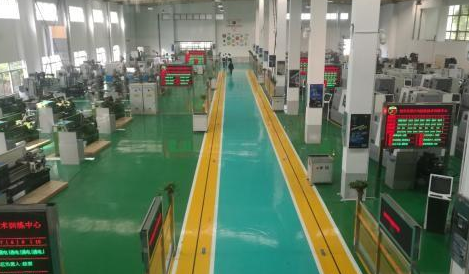
In short, an FMS is an automated manufacturing system made up of several CNC equipment, material handling and storage devices, and a computer control system, capable of rapid adjustments in response to shifts in manufacturing tasks and product varieties.
Flexible manufacturing models are widely applied, with customization as a typical example. This consumer-oriented, demand-driven production mode contrasts with the traditional mass production model. Flexible manufacturing tests the response speed of production lines and supply chains.
Flexibility is measured in two dimensions:
First, the system’s capacity to adapt to external environmental changes, measured by how well it meets the requirements of new products.
Second, the system’s capacity to adapt to internal disruptions, measured by the ratio of its actual productivity under disruptions (such as machine breakdowns) to its expected productivity under normal, disturbance-free conditions.
2. Mass Customization Model Focused on Meeting Customers’ Personalized Needs
Mass Customization (MC) integrates enterprises, customers, suppliers, employees and the environment under systematic thinking and holistic optimization. Supported by standardized technologies, modern design methodologies, information technology and advanced manufacturing technologies, it fully leverages existing corporate resources to deliver customized products and services at the low cost, high quality and high efficiency characteristic of mass production, in accordance with customers’ individual requirements.

The basic idea of mass customization is to restructure product architectures and manufacturing workflows, adopt a series of high technologies including modern information technology, new material technology and flexible manufacturing technology, and convert all or part of customized product production into batch production. It can deliver customized products of any quantity for individual customers or small-batch multi-variety markets at the cost and speed of mass production.
The core of mass customization lies in the sharp growth of diversified and customized product varieties without a corresponding rise in costs. Its scope covers the mass production of personalized customized products and services, and its greatest merit lies in delivering strategic advantages and economic value.
Its fundamental logic relies on the similarity and generality of product family parts and product structures. Standardization and modularization are adopted to reduce internal product diversity while enhancing customer-perceivable external diversity. Through product and process reconstruction, customized product manufacturing is fully or partially transformed into batch production of components, enabling fast delivery of low-cost, high-quality customized products to customers.
Mass customization incorporates the essences of multiple management philosophies such as time-based competition, lean production and micromarketing. Supported by modern technical platforms covering production, management, organization, information and marketing, it outperforms traditional production modes and better adapts to competition amid the network economy and international integration of economy and technology.
3. Digital Integration Model of Full Product Lifecycle Centered on Shortening Product Development Cycles
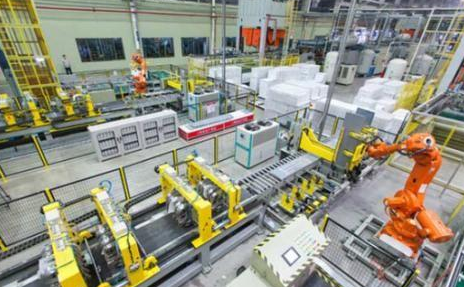
Product Lifecycle Management (PLM) is an enterprise informatization strategy that effectively integrates personnel, processes and information across the whole enterprise. It covers the entire product lifecycle from concept design to scrapping, and supports the collaboration, R&D, management, distribution and application of product definition information related to products.
1) Objectives of Product Lifecycle Management (PLM) System
To build a unified collaborative platform covering product R&D, design, process engineering and technology project control, so as to boost R&D efficiency and product quality. On this basis, businesses can be gradually expanded to realize full lifecycle management spanning preliminary planning, R&D & design, manufacturing, maintenance and repair. This shortens product development cycles, strengthens product innovation capacity, meets the evolving demands of scientific research and manufacturing industries, and enhances enterprises’ core competitiveness.
2) Core Functions of PLM
PLM integrates the product data platform centered on Product Data Management (PDM) and the production-supply-marketing-service resource management platform centered on Enterprise Resource Planning (ERP). It eliminates redundant intermediate links and enables newly developed products to better match market demands. On one hand, it shortens the cycle from R&D to mass production; on the other hand, it supports timely access to cross-departmental data as reliable grounds for product development and optimization. Overall, taking the full product lifecycle as the main thread and focusing on manufacturing integration, providing enterprises with integrated design, production, sales and service applications represents the development trend of PLM.
4. Remote Operation and Maintenance Service Model Based on Industrial Internet
Many people simply equate this model with connecting equipment to the cloud, yet few clarify its practical value. We can analyze this from the perspective of operation and maintenance demands:
Conduct online intelligent monitoring of equipment in existing factories, with system early warning and optimized control;
Achieve global real-time transmission of factory production and equipment data, enabling barrier-free collaboration between factory managers and socialized technical resources regardless of geographical restrictions, cutting labor costs and lifting management efficiency;
Adopt predictive maintenance to reduce equipment failure rates and raise factory productivity.
This integrated intelligent production solution supports full real-time oversight of production processes, timely fault warnings and data-backed decisions on production costs.
It covers equipment management, maintenance management, operation management, inspection management, material management, safety supervision management, project management and group-wide control.
5. Networked Collaborative Manufacturing Model Centered on Supply Chain Optimization
Collaborative Production Commerce is a modern manufacturing paradigm of the 21st century, and a core component of agile manufacturing, collaborative commerce, intelligent manufacturing and cloud manufacturing. Leveraging Internet-based network and information technologies, collaborative manufacturing transforms serial workflows into concurrent engineering. It enables cross-enterprise cooperation within and across supply chains covering product design, manufacturing, management and commercial activities, ultimately maximizing resource utilization by reshaping business operation modes.
Breaking the constraints of time and geography, the Internet allows all enterprises and partners along the supply chain to share customer, design, production and operational data. Shifting from traditional serial workflows to parallel work drastically shortens time-to-market and production cycles, speeds up responses to customer demands, and improves flexibility in design and production. Design for Process, Design for Manufacturing, Design for Cost and supplier involvement in design collectively elevate product design standards, manufacturability and cost controllability. This helps lower operational costs, improve product quality and boost customer satisfaction.
Three Hierarchies of Collaborative Manufacturing
1)Collaboration among internal departments or systems within a manufacturing enterprise
2)Collaborative manufacturing across multiple factories under one enterprise
3)Supply chain-based collaborative manufacturing
The collaborative manufacturing model simplifies internal information transmission, organically integrates data flows between departments and factories, and replaces manual data transfer and statistics with event-driven collaborative manufacturing management workflows. Separate control loops of individual factories evolve into a unified complete enterprise-wide control loop.
6. Smart Factory Model (Eliminating Information Silos)
Smart factories apply digital and automated technologies to integrate office, management and production processes. They realize automatic data collection, analysis, prediction and self-optimization, break internal information barriers, and achieve efficient, safe and human-machine collaborative intelligent manufacturing.
7. Full Lifecycle Traceability Model Centered on Quality Control
Product Lifecycle Management (PLM) covers all data and activities throughout product design, production and scrapping. As an upgraded system of PDM, PLM realizes full-process quality tracing and data management across the whole supply chain to improve product quality and reduce costs.
8. Full-process Energy Optimization Management Model
The hierarchical energy management system collects and analyzes electricity, water and gas consumption data. It monitors energy usage, decomposes energy-saving targets, manages key energy-consuming equipment, and improves overall energy utilization and operational benefits.
9. Cloud-based Social Collaborative Manufacturing Model
The cloud manufacturing platform solves the difficulties of insufficient enterprise trading channels, high small-business innovation costs, low industrial resource coordination and insufficient government supervision data. It empowers enterprises, individuals, industries and governments by optimizing resource allocation, reducing transaction costs, promoting industrial collaboration and supporting industrial governance.