







How Much Do You Know About the Bottlenecks and Difficulties Involved in Intelligent Manufacturing?
The deep integration of information technologies such as artificial intelligence and big data with traditional manufacturing technologies has not only driven the transformation and upgrading of manufacturing enterprises, but also made intelligent manufacturing the core development goal of the manufacturing industry. At present, as manufacturing enterprises expand rapidly, they have also encountered various bottlenecks and difficulties in advancing intelligent manufacturing.
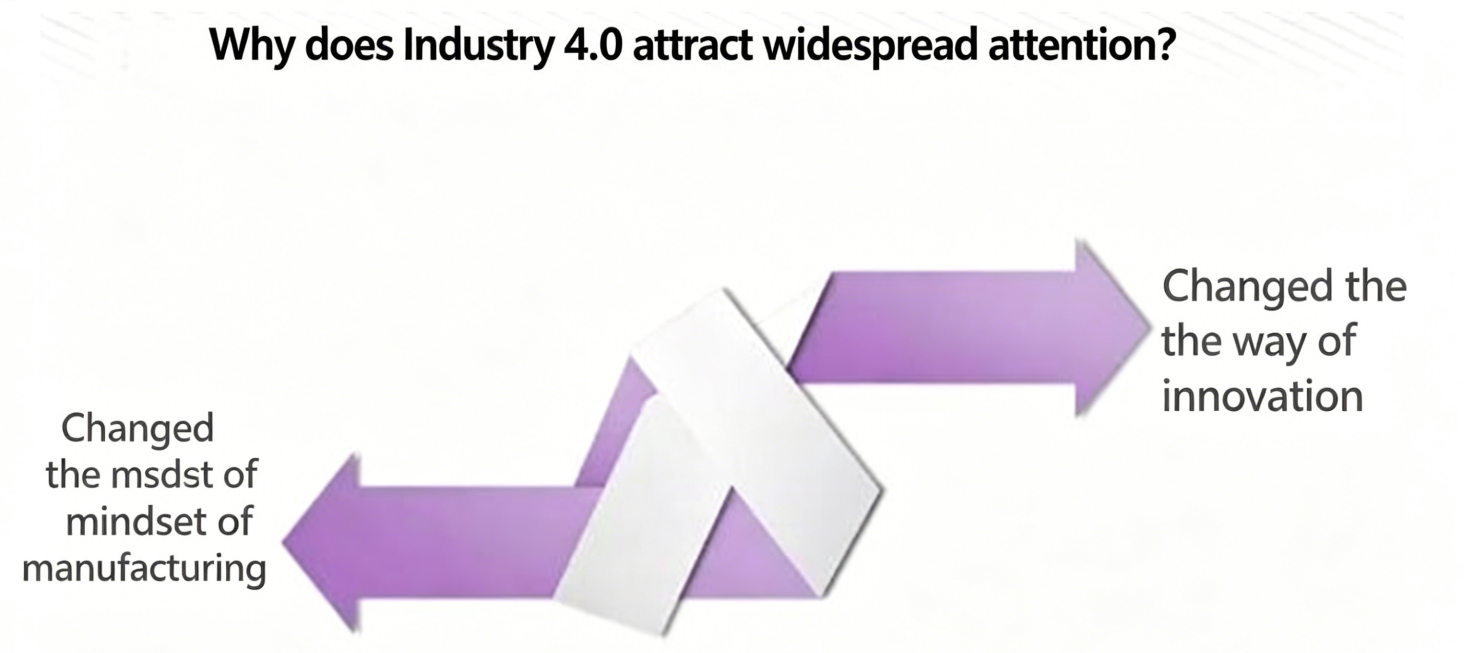
Intelligent manufacturing theory involves an overwhelming number of concepts, all centered on practical application: how technologies are deployed, who the users are, when implementation takes place, and under which scenarios they apply. Three types of feasibility must be assessed in this process: technical feasibility, economic feasibility and practical feasibility. Practical feasibility primarily stresses that we must not overestimate human capabilities when designing systems and solutions.
We frequently discuss intelligent manufacturing from disparate perspectives, which often creates confusion.
Intelligent manufacturing is commonly linked with industrial transformation and upgrading. For an individual enterprise, however, intelligent manufacturing generally falls under technical dimensions, while transformation and upgrading are strategic corporate initiatives. Theoretically speaking, transformation and upgrading refer to the restructuring of organizational structures, workflows, business models and other core elements.
Intelligent manufacturing is sometimes simply defined as "the in-depth application of ICT technologies within the industrial sector". The term "in-depth application" specifically refers to transformation, upgrading and industrial restructuring, rather than merely supporting existing business operations. This emphasis stems from the new opportunities unlocked by foundational technologies, representing a technical-tool-based definition of intelligent manufacturing. It can also be defined by external corporate outcomes and strategic objectives, such as enhancing an enterprise’s rapid response capability. From a business perspective, rapid responsiveness is achieved through three core approaches: collaboration, resource sharing and resource reuse. Sharing and reuse focus on the preparation of resources, while collaboration governs how resources are utilized.
From a business standpoint, the Internet boosts cross-party collaboration; from an economic perspective, it optimizes resource allocation. For this reason, the Internet enables collaboration, sharing and reuse. Per Schumpeter’s theory, innovation consists of entrepreneurs reconfiguring resources. Therefore, intelligent manufacturing represents technology-intensive innovation led by entrepreneurs, manifested strategically as corporate transformation and upgrading. Sharing and reuse involve resource access rights, which rely on business or commercial model innovation driven by entrepreneurs. Information integration, by contrast, lays the technical IT foundation for collaboration. Collaboration itself is a business function, yet IT integration must comply with OT technical standards. Notably, collaborative activities first need to be standardized into formal business workflows to enable further standardization and ultimately intelligent operation. In essence, workflows themselves constitute a form of knowledge.
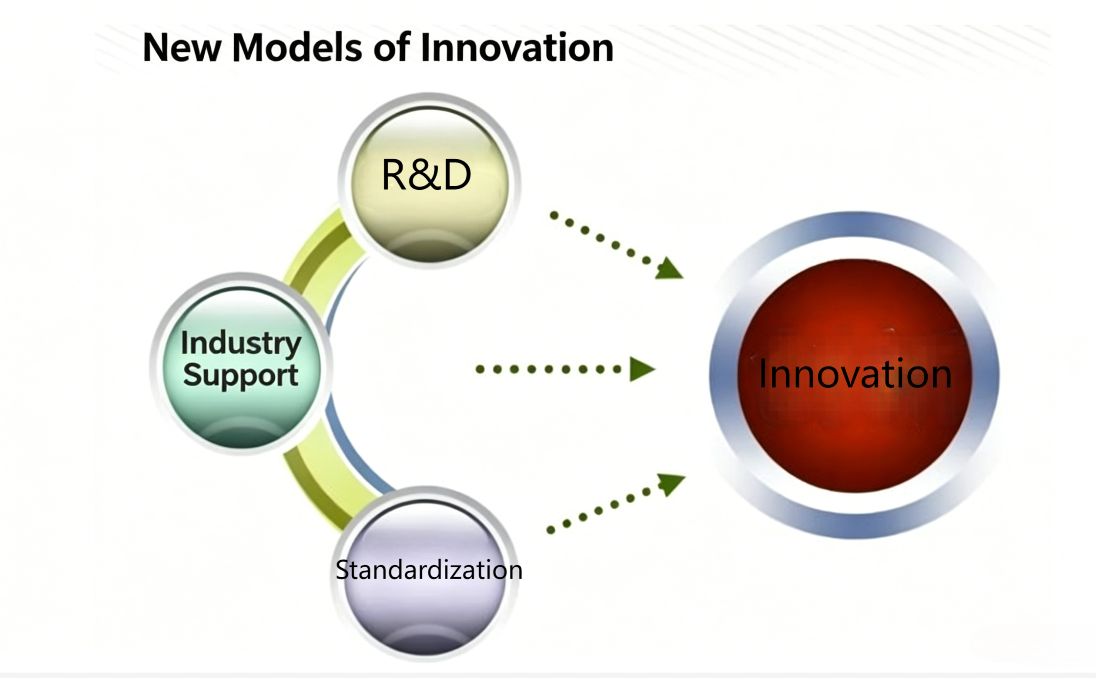
Collaboration delivers rapid response, and its implementation mechanism lies in the application of intelligent principles. This is how "intelligent manufacturing" becomes linked to the concept of "intelligence". The three fundamental, integrated elements of intelligence are perception, decision-making and execution, a viewpoint first put forward by Wiener. This represents one of the three major schools of artificial intelligence, yet it has long been a non-mainstream school, as mainstream theories focus on methodologies and theories surrounding complex decision-making. The Internet strengthens capabilities in perception and execution, thereby driving the development of intelligent manufacturing. In a sense, the ideology of intelligent manufacturing can be traced back to Wiener and shares the same origin as automation; however, today’s technical landscape differs drastically from the past, and this theory has regained vitality amid the Internet era.
Intelligent manufacturing constitutes a revolution in decision-making.
Through resource sharing and reuse, the Internet enables the allocation of a far broader range of resources, and resource allocation itself is a decision-making process. This expands the scope for optimized resource allocation and amplifies economic value, while simultaneously increasing the complexity of optimization. As a result, human operators often rely on machines to assist with resource allocation. Machine-aided decision-making enhances human capacity to manage complex problems and unlocks new space for industrial innovation. Mass customization on production lines is a typical embodiment of Industry 4.0, which in turn drives advances in a full spectrum of technologies including digital design.
Decision-making relies on knowledge, which can be derived from human cognition in multiple forms: humans leverage personal expertise to operate cyber space, translate human logic directly into machine code, reference successful cases recorded via big data, or enable machines to autonomously learn knowledge. In short, the sources and utilization modes of knowledge have diversified dramatically under the Internet and big data ecosystem. Academic artificial intelligence primarily focuses on decision-making, while the new generation of artificial intelligence centers on machine learning—especially deep learning, which excels at processing experiential perceptual knowledge that cannot be easily coded into fixed rules.
The Internet generates massive volumes of big data; big data advances intelligent decision algorithms and artificial intelligence technologies; intelligence in turn unlocks the commercial value of big data and the Internet, further accelerating their widespread industrial adoption.
We consistently emphasize the human-machine relationship in intelligent manufacturing, namely leveraging human expertise while compensating for human limitations from an implementation perspective. This approach is the only technically feasible path in practice, and it implicitly opposes over-reliance on machine learning and automated machine decision-making. We reject the narrow interpretation of intelligent manufacturing as simply "replacing humans with machines", because this mindset limits strategic vision, discards numerous development opportunities, and often proves economically unviable.
The primary bottleneck of intelligent manufacturing usually lies in economic feasibility, which covers two dimensions: benefits and costs. The aforementioned optimized resource allocation is a key source of benefits. In the medium and long term, gains stem from corporate transformation and upgrading; short-term benefits arise from improved management efficiency.
Intelligent manufacturing delivers substantial improvements to corporate management. The Internet enables flattened organizational structures and remote operation; big data brings full operational transparency; intelligent algorithms prevent staff from being overwhelmed by excessive data volume. Due to historical industrial development trajectories, huge opportunities for intelligent manufacturing lie in the integration of management and control, or the convergence of informatization and industrial automation. This "historical factor" refers to the abundant untapped potential within this integrated field.
To start transformation from a management perspective, enterprises must first identify internal management pain points, where methodologies such as lean management, Six Sigma and PDCA cycle prove invaluable. These tools help enterprises first identify potential value from the operational technology (OT) dimension, then deploy intelligent solutions via information technology (IT) to realize tangible returns—an approach fully aligned with technical and economic feasibility. This also explains why standardization, process formalization and lean management serve as the foundation for intelligence.
The second major source of value for intelligent manufacturing is cost reduction: sharing and reuse cut production costs; big data lowers the cost of knowledge acquisition; Industrial Internet platforms reduce expenses for management and continuous process improvement. Industrial APPs and digital twin technology are the core enablers that drive down the cost of sustained optimization on Industrial Internet platforms.
Source: China Informationization and Software Service Network