






Intelligent manufacturing is an irresistible general trend. How should factories and enterprises respond to it?
In the future, the Internet of Things (IoT) will generate tremendous value for the manufacturing industry, with its potential value reaching tens of trillions of US dollars. It is estimated that the market will grow at an annual rate of 6% over the next five years, approaching 70 billion US dollars by 2020. Its extensive application scenarios cover sectors including automotive and transportation, mining, electronics, chemical engineering, pharmaceuticals, oil and natural gas. How will manufacturing scenarios transform in this new era, and how can factories and enterprises embrace this trend?
Intelligent manufacturing has become a pivotal trend in the global manufacturing sector. As the demographic dividend gradually fades, factories and enterprises need to adopt brand-new production models to offset surging labor costs and keep pace with rapidly evolving product demands. The emergence of the Industry 4.0 paradigm offers a breakthrough solution for manufacturing. By connecting all phases of the product lifecycle via the IoT — from raw material procurement and production to delivery and end-user consumption — the entire workflow can be managed with full visibility.
This is the landscape of the Fourth Industrial Revolution. The IoT builds connections across the whole manufacturing chain and fosters an integrated, cohesive production ecosystem. Raw material suppliers gain real-time visibility on delivery timelines, manufacturers are empowered to stabilize product quality, and customer feedback delivers fresh insights into products and market demands. The IoT eliminates information silos between suppliers, manufacturers and consumers, and smart factories elevate the service capacity of manufacturing to an unprecedented level.
How will manufacturing scenarios evolve in this new context, and what steps should factories and enterprises take to ride this wave?
Transformation of Manufacturing Supply Chains
Shifting consumer market demands pose severe challenges to traditional manufacturing. Rising real-time customer expectations and increasingly complex supply chains make manual analysis and outdated management tools incapable of meeting current market requirements. Smart factories leverage massive volumes of real-time data collected via intelligent sensors and the Internet of Things (IoT). Supported by high-computing cloud servers for data analysis, they build flexible production workflows to keep up with dynamic customer demands.
The intelligent manufacturing model differs fundamentally from traditional manufacturing. Powered by advanced digital manufacturing technologies, factories adopt demand-driven production and source raw materials from global suppliers to eliminate risks of overstocked inventory. Manufacturers also collect customer feedback through social media to deliver customized products, enabling faster, more agile and more efficient product delivery.
Driven by the IoT and digital technologies, intelligent manufacturing unlocks new capabilities for factories. While upgrading to a smart factory is not mandatory, it delivers remarkable value. An optimized supply chain shortens lead times and cuts costs. In addition, full visibility of market data reduces defective output during production.
Consistent Product Quality
In traditional manufacturing, by the time factories obtain workshop data or customer survey feedback, defective products have already reached end users, causing irreversible damage to brand reputation. The new manufacturing model, enabled by IoT technology, allows factories to collect and transmit operational data in real time, identify issues promptly, and implement corrective actions before severe defects emerge.
Future products will be equipped with smart sensing components that guarantee consistent quality across all units, whether consumer electronics, household appliances or industrial equipment. Sensors transmit abnormal operational data back to manufacturers to enable timely after-sales service. Factories can also analyze product weaknesses from collected data and incorporate improvements into subsequent production batches to continuously enhance overall product quality.
This practice prevents customer complaints and brand erosion while generating substantial cost savings. Historically, major automotive defects often trigger large-scale product recalls, which damage brand image and incur massive financial losses for enterprises.
A core advantage of IoT-connected manufacturing workflows is the ability to self-correct faults before they escalate into serious failures. With breakthroughs in artificial intelligence, potential hazards can be analyzed instantly to deliver near real-time production quality control, resulting in superior products and minimized losses.
Core Value of Predictive Maintenance
Unplanned production line shutdowns and unscheduled maintenance incur heavy financial losses for manufacturers. No piece of production equipment operates flawlessly indefinitely. Unexpected downtime not only cuts production output but also drags down overall operational efficiency. Amid rising operating costs, fault diagnosis and repair can take extended periods and carry exorbitant expenses — a burden especially unaffordable for small and medium-sized enterprises.
The Industry 4.0 framework introduces predictive maintenance. Various sensors installed on production equipment within smart factories automatically monitor equipment wear and tear around the clock. Combined with machine learning algorithms, the system accurately predicts the service life of spare parts and machinery.
Predictive maintenance allows enterprises to schedule component replacements proactively during machine idle hours, avoiding disruption to normal production. This preserves production line efficiency and improves the overall operational agility of factories.
How to Build a Smart Factory?
Smart factories represent an inevitable trend for the future development of manufacturing. At present, there are many outstanding practical cases. Major global manufacturers such as General Electric, Siemens, Honeywell, Mitsubishi Electric, Rockwell Automation, Schneider Electric and General Dynamics are all experimenting with innovative manufacturing models. Nevertheless, the transformation into a smart factory must be tailored to an enterprise’s own demands and operational environment. Different companies need to adopt differentiated approaches to achieve their expected outcomes.
Enterprises generally pursue several core transformation goals: easing the pressure of rising labor costs and cutting overall factory expenses; boosting production line efficiency and shortening product delivery cycles; enhancing factory agility to rapidly respond to shifting market demands, among others. Companies can formulate comprehensive upgrade plans based on their unique requirements.
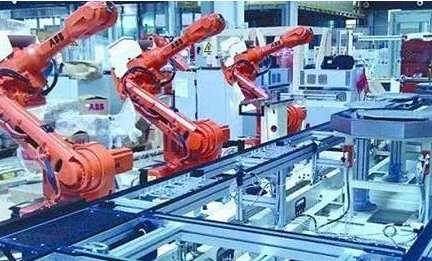
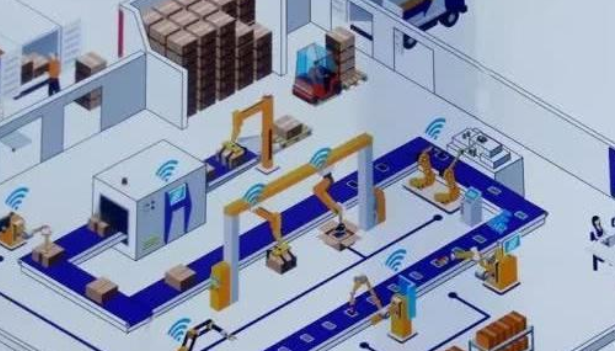
First of all, establish an Internet of Things (IoT) network to connect sensors, motors, switches and various other small devices. Smart factories in the Industry 4.0 era cover production lines, industrial robots, IoT systems, remote automation and more. In addition, they also involve production networks, customized production systems, virtual product planning, on-site production and remote maintenance services.
Furthermore, smart factories demand a new generation of workforce. Enterprises need to recruit professionals proficient in both information technology (IT) and operational technology (OT). Robots will take over repetitive manual tasks on the shop floor, while human employees will focus more on product design, process optimization and production monitoring.
Source: China Informationization and Software Service Network