








Redefined MES? These Standards Define True Intelligent Manufacturing
Against the backdrop of Industry 4.0, to advance intelligent manufacturing and build systems for smart factories, smart production, smart logistics and smart services, we need to redefine the MES system, which is elaborated mainly from the following aspects:
MES Deeply Integrated into Enterprise Operational Links
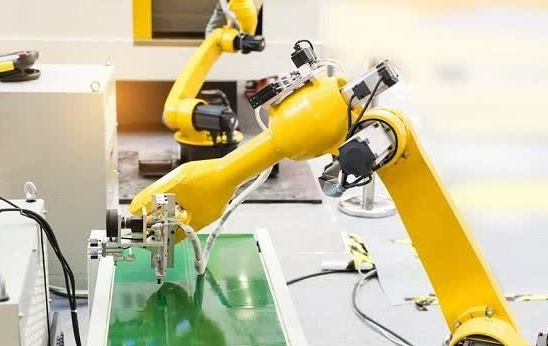
All equipment in smart factories will be controlled by software. Workers can complete all production tasks via on-site MES operating computers or mobile terminals. Integrated with other industrial software for enterprise operation, MES forms a highly collaborative production system. It precisely schedules, issues, tracks and monitors every manufacturing-related instruction across design, procurement, sales, planning, production, operation and maintenance links, as well as the entire production process affected by these instructions, serving as the fundamental technical enabler for intelligent workshop production processes.
MES collects and aggregates business data across the entire smart factory. Through analysis and integration of industrial big data, it realizes full industrial chain visualization, ultimately achieving optimized production, streamlined workflows, maximum efficiency, minimized costs and superior product quality.
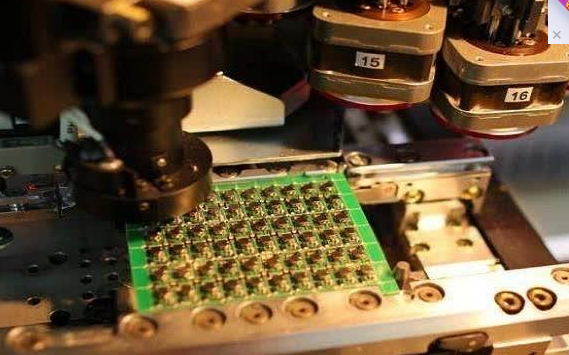
As manufacturing enterprises evolve, they will inevitably evolve into software companies with an ever-growing array of software systems deployed. In this context, MES will serve as the cornerstone of enterprise operations for manufacturers.
The redefined MES holds equal strategic importance alongside other business modules. In a networked and flat organizational structure, it re-plans enterprise production schedules, issues commands to coordinate or synchronize the operation of production equipment, delivers real-time responses to product manufacturing workflows, and carries out timely adjustments, modifications and interventions to production processes based on real-time accurate data.
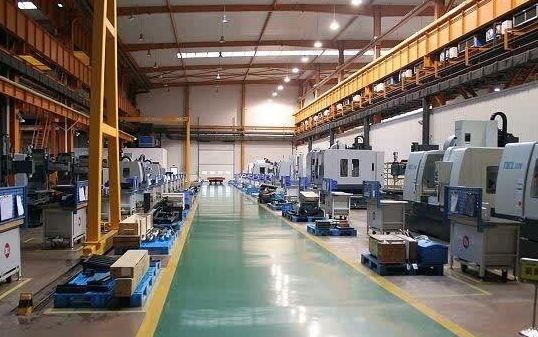
It adopts multi-directional direct communication across the enterprise’s entire product supply and demand chain: it conveys corporate expectations (production plans) to on-site production staff, feeds back real-time manufacturing status to relevant departments, and delivers processing rules as well as mutual working status between underlying workshop equipment.
Distinct from enterprise operation systems such as ERP and plant process control systems, practical experience with MES proves that it is no longer limited merely to optimizing manufacturing processes. Its functions extend to other business segments of the enterprise, helping shorten product R&D cycles, lift production efficiency, cut unit manufacturing costs, lower product defect rates and improve energy utilization efficiency.
Broader and In-depth Business Application Scope of MES
Traditional MES is designed to deliver uninterrupted information flow within enterprises. By transmitting and processing information, it optimizes the whole production process from order release to finished product delivery. MES contains eleven core functional modules. Effective collaboration among these modules bridges the planning layer and control layer of an enterprise, delivers precise real-time data via information technology, and ultimately optimizes management and production activities. In practice, enterprises from various industries can develop customized functional modules tailored to their industrial characteristics and actual operational conditions.
MES delivers far more real-time data than ERP. If the real-time response coefficient of the control layer is defined as 1, the coefficient of MES stands at 10, while ERP reaches 100. However, the core competitive edge of the redefined MES lies not merely in real-time data provision, but also in precise self-learning and flexible scheduling of real-time instructions, which reduces MES’s response coefficient to 1.
Data generated by MES will become the core competitiveness of enterprises in the future, converting raw data into corporate knowledge; MES also serves as a platform for knowledge management and inheritance.
MES will integrate more AI algorithms into business workflows to simulate expert decision-making logic, partially replace manual operations, and feature self-organizing capabilities to realize integrated process optimization of personnel, equipment and resources.
MES will define and implement control indicators for smart factories, enabling more refined and accurate data communication and scheduling coordination.
Through intelligent data mining and analysis, MES constructs data models at enterprise, factory, workshop, work center and work cell levels, allowing instant adaptation to changes in manufacturing environments and workflows.
MES establishes constraint and rule-trigger mechanisms to restrict operational behaviors or activate specific business operations under diverse business scenarios and environmental conditions.
Future Market Benefits of MES
Beyond eliminating enterprise information silos and serving as a vital hub connecting upper planning systems and lower control systems as well as cross-functional business modules, MES captures real-time on-site production data to realize real-time shop floor control and provide granular decision support for management teams. It schedules various production resources through real-time instructions to boost productivity. By collecting and analyzing live production data, MES optimizes production scheduling, rationally allocates manufacturing resources, upgrades production processes, improves product quality, and enables timely resolution of customer complaints. Its key values are summarized as follows:
Real-time collection of production data drastically cuts manual data entry workload for ERP and other systems.
Supports instant inquiries, historical record retrieval and refined data analysis of production metrics.
Full traceability of defective products: on one hand, it enables immediate repair of defective goods and continuous process improvement to lower defect rates; on the other hand, it quickly traces relevant batches and accurately recalls defective finished products after sales, lifting service quality and cutting recall costs.
Aggregates process parameters and optimizes process datasets to shorten product R&D cycles.
Facilitates production process upgrades and improves overall product quality.
Boosts production efficiency, monitors operator performance and stimulates workforce motivation.
Accurately traces non-compliant suppliers to avoid unnecessary economic losses.
Optimizes allocation of production resources including labor, materials and production lines.
Ensures on-time delivery and builds stable, sound supplier-customer partnerships.
Supplies robust data foundation for comprehensive cost reduction initiatives.
Enables zero-inventory management and accelerates corporate capital turnover.
Coordinates manufacturing equipment scheduling with energy monitoring systems to raise energy utilization efficiency.
Unifies time and measurement standards, calculates and statistically analyzes unit manufacturing costs to drive cost reduction via targeted optimization.
The industrial sector is playing an increasingly vital role worldwide, acting as a key engine driving scientific and technological innovation, economic growth and social stability. At the same time, market competition is growing fiercer than ever. Customers demand new, high-quality products and faster delivery of customized goods tailored to their unique requirements. Furthermore, enterprises must continuously lift productivity levels. Only manufacturers capable of producing goods with less energy and resource consumption can withstand mounting cost pressures.
The comprehensive intelligent manufacturing solution integrates virtual production with physical production environments. By deploying innovative industrial software, automation technologies, drive technologies and supporting services, it enables MES to penetrate all operational workflows within enterprises. This helps manufacturers shorten product R&D cycles, boost production efficiency, cut unit manufacturing costs, lower product defect rates and improve energy utilization efficiency.
Source: Information Technology and Software Service Network