







An In-depth Analysis of the Relationship Between 5G and Smart Manufacturing
The dawn of the 5G era has sparked widespread imagination about future transformations. 5G applications have become a hot topic, including 5G-enabled AR/VR, 5G-connected Internet of Vehicles, and the high-profile highlight — 5G smart manufacturing. So what exactly is 5G smart manufacturing, and what significance does 5G hold for smart manufacturing?
Manufacturing plays an indispensable role at both the national and global societal levels. Smart manufacturing has evolved into a global and national strategic priority, with numerous countries rolling out dedicated plans and initiatives in this field. Representative examples include China’s Made in China 2025, Germany’s Platform Industrie 4.0, and the United States’ Industrial Internet Program.
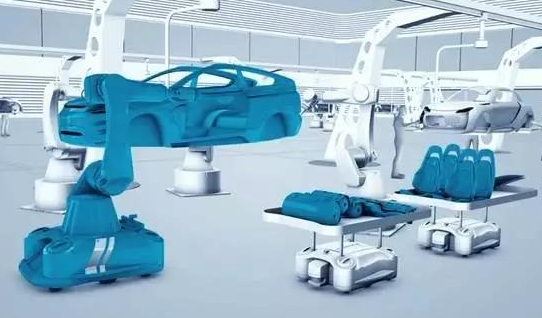
Among them, the upgrade of information and communication systems constitutes a vital link in smart manufacturing, and 5G boasts unparalleled strengths in enabling diverse demands of smart factories.
Huawei Wireless X Labs has researched the diverse requirements of smart manufacturing for 5G networks through typical smart manufacturing application scenarios and use cases. As an innovative research platform, X Labs brings together telecom operators, vertical industry partners and industrial leaders to jointly explore future mobile application use cases, drive corporate and technological innovation, and foster an open industrial ecosystem. The following section introduces the joint demonstration delivered by Huawei and Deutsche Telekom regarding end-to-end low-latency 5G networks applied in smart manufacturing.
01 Why Do All Countries Attach Great Importance to Smart Manufacturing? What Exactly Is It?
In a broad sense, smart manufacturing is a general term for advanced manufacturing processes, systems and models equipped with functions such as information perception and collection, intelligent judgment and decision-making, and automatic execution. Specifically, smart manufacturing manifests itself in the integration of information technologies including big data, cloud computing, artificial intelligence and the Internet of Things into every link of manufacturing procedures.
In short, smart manufacturing features the following attributes: it takes smart factories as the carrier, intelligence of core manufacturing links as the core, end-to-end data streams as the foundation, and communication networks as the underlying support. Relying on self-organized flexible manufacturing systems, it achieves the goal of efficient personalized production.
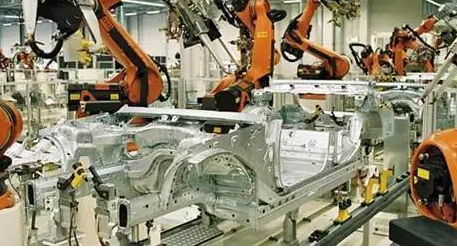
Take automotive production lines as an example. During flexible production under smart manufacturing, customized vehicles move autonomously on dynamic production lines under the scheduling of cloud-based Cyber-Physical Systems to complete all manufacturing procedures. Dynamic production lines can be rearranged on demand to accommodate diverse vehicle models and configurations, enabling customized auto production. Smart production lines drastically shorten customization lead times, slash automakers’ inventory and capital occupation, and cut overall production costs. By contrast, traditional sequential automotive assembly lines lack sufficient flexibility to support high-level customization and entail longer lead times for bespoke orders.
02 Network Requirements of Smart Manufacturing
Typical 5G Applications in Smart Manufacturing
Why Wireless Communication Is Indispensable for Smart Manufacturing
Having clarified the definition of smart manufacturing, it is evident that the process demands real-time communication between cloud platforms and on-site production equipment, massive information exchange between countless sensors and AI platforms, and efficient human-machine interface interaction. These scenarios impose diverse and extremely stringent performance requirements on communication networks, necessitating the deployment of highly reliable wireless communication technologies.
The adoption of high-reliability wireless communication in factories delivers two core benefits. For one thing, wireless-enabled production equipment enables modular and flexible manufacturing. For another, wireless networks simplify the construction and renovation of factories and production lines, while cutting maintenance workload and associated costs through full wireless deployment.
Challenges Faced by Wireless Communication Networks in Smart Manufacturing
Low-latency applications are ubiquitous within automated smart manufacturing control systems, such as high-precision production links sensitive to ambient conditions and processes involving hazardous chemical materials. In closed-loop smart manufacturing control systems, data captured by sensors (pressure, temperature, etc.) must be transmitted over ultra-low-latency networks to actuators (robotic arms, electronic valves, heaters, etc.) for precise production control. Throughout this entire cycle, the network must maintain ultra-high reliability to guarantee safe and efficient manufacturing operations.
Furthermore, automated control and sensor systems in factories may cover areas ranging from several hundred to tens of thousands of square kilometers, and are often deployed in a distributed manner. Depending on production scenarios, manufacturing plants may house tens of thousands of sensors and actuators, requiring communication networks with massive device connectivity capacity.
Capabilities of 5G Networks
Huawei took the lead in completing Phase 2 wireless technology testing for China’s national 5G R&D trials organized by the IMT-2020 (5G) Promotion Group in Huairou, Beijing. During C-Band testing with 200 MHz spectrum bandwidth, tests leveraging 5G New Radio and Massive MIMO technologies achieved a cell peak throughput exceeding 20 Gbps, air interface latency below 0.5 ms, and support for over 10 million connections per cell.
Compared with legacy mobile communication technologies, 5G delivers revolutionary improvements in user experience:
Capacity: Mobile data traffic per unit area increases by 1,000 times versus 4G;
Throughput: Typical single-user data rate rises 10–100 times, with peak throughput reaching 10 Gbps (100 times faster than 4G);
Latency: End-to-end latency is reduced by 80%;
Connectivity: The number of network-accessible devices grows 10–100 times;
Reliability & Energy Efficiency: Energy consumption per bit drops to 1/1000 of prior levels, and battery life of low-power devices extends 10-fold.
03 Typical 5G Application Scenarios in Manufacturing
5G-Enabled Industrial AR
Human operators will play an even more critical role in smart factories of the future. Future plants feature high flexibility and multi-functionality, imposing higher competency standards on on-site workshop staff. Augmented Reality (AR) serves as a pivotal tool to rapidly address new tasks and production activities, with key use cases including: production workflow monitoring, step-by-step guidance for manufacturing tasks such as manual assembly, and remote expert support for equipment maintenance.
For these use cases, auxiliary AR devices must be maximally lightweight and portable to streamline maintenance workflows. As such, all data processing for equipment is offloaded to the cloud, leaving AR hardware solely responsible for signal reception and display. AR devices connect to the cloud via wireless networks to retrieve real-time data including production environment metrics, equipment status, and troubleshooting guidelines.
In this scenario, AR display content must be perfectly synchronized with the movement of the built-in camera on AR glasses to eliminate visual desync. A reaction lag shorter than 20 ms between camera motion and AR overlay ensures smooth synchronization. This means the round-trip transmission from camera data upload to cloud rendering and AR display refresh must be completed within 20 ms. After accounting for screen refresh and cloud processing latency, the wireless network’s bidirectional transmission latency must stay below 10 ms — a requirement that LTE networks cannot satisfy.
5G-Enabled Wireless Factory Automation Control
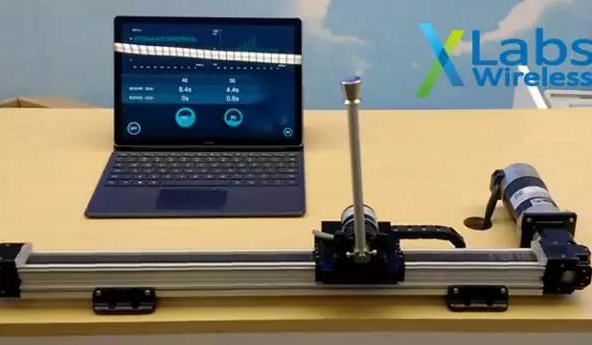
The inverted pendulum serves as a classic test case for automation control. Its control principle is widely adopted in industrial posture control scenarios such as attitude adjustment for robots and docking control of aerospace vehicles. Huawei X Labs leveraged the inverted pendulum experiment to verify the value of ultra-low-latency 5G for automated control. Research results show that under 4G networks, excessive latency prevents rapid execution of control commands for the inverted pendulum, extending the time taken to swing up and stabilize to 13.2 seconds.
By contrast, when operating over 5G with ultra-low latency of 1 ms, control commands are executed instantly, and the pendulum stabilizes after only 4 seconds. This comparison fully demonstrates the tremendous advantages of low-latency 5G networks for automation control: end-to-end network latency is reduced from 50 ms on 4G to merely 1 ms on 5G.
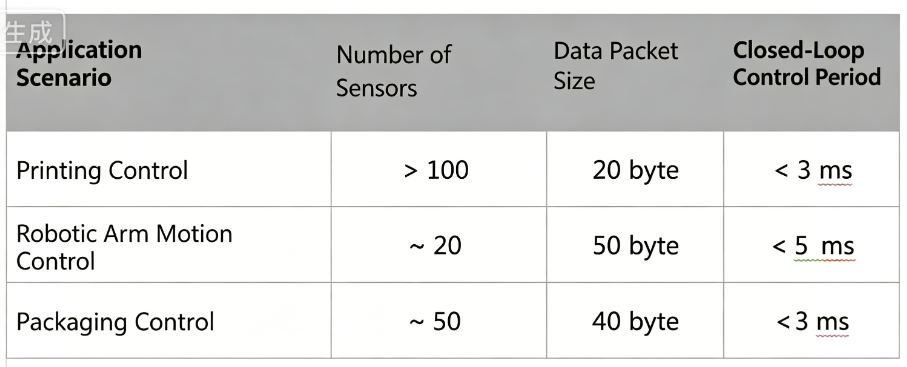
Automation control is the most fundamental application in manufacturing plants, with closed-loop control systems as its core. Within each control cycle of such systems, sensors conduct continuous measurements, and the collected data is transmitted to the controller to drive corresponding actuators. Typical closed-loop control cycles operate on a millisecond timescale. Therefore, network communication latency must be controlled at the millisecond level or below to enable precise control, alongside extremely stringent reliability requirements. Excessively high latency or transmission errors of control signals during production may trigger line shutdowns and incur massive economic losses.
Moreover, mass-production factories deploy automated control across numerous production links, requiring wireless connectivity for dense, massive numbers of controllers, sensors and actuators.
Closed-loop control systems feature varying numbers of sensors, latency thresholds for control cycles and bandwidth requirements across different use cases. Typical reference values for cycle duration and communication bandwidth are listed as follows:
5G network slicing delivers networks featuring ultra-low latency, high reliability and massive connectivity, enabling closed-loop control applications to run over wireless links. Actual measurements on Huawei’s 5G solutions show that the air interface latency can reach 0.4 ms, the downlink throughput per cell hits 20 Gbps, and a single cell supports over 10 million concurrent connections. It is clear that among all mobile communication technologies, only 5G can meet the stringent network requirements of closed-loop control systems.
5G Enables Cloud-Based Industrial Robots in Factories

04 Communication Requirements of Cloud-Based Robots
In smart manufacturing scenarios, robots are required to possess self-organization and collaboration capabilities to facilitate flexible production, which generates demand for robot cloudification. Unlike conventional robots, cloud-based robots connect to cloud control centers via networks. Relying on platforms with ultra-high computing power, they leverage big data and artificial intelligence to conduct real-time computing and control over manufacturing workflows.
Cloud technology offloads most computing and data storage workloads from robots to the cloud, significantly cutting the hardware cost and power consumption of robot terminals. In addition, robots must support free mobility to meet flexible manufacturing demands. Therefore, wireless communication networks with ultra-low latency and high reliability are indispensable for robot cloudification.
5G serves as the ideal communication network and the key enabler for cloud-based robots. 5G network slicing provides customized end-to-end network support for cloud robot applications. 5G delivers end-to-end communication latency as low as 1 ms and connection reliability up to 99.999%. Such robust network performance fully addresses the stringent latency and reliability challenges posed by cloud-based robots.
Huawei has partnered with German manufacturing enterprises in the field of smart manufacturing. One example is the joint cloud robot project with Festo built on 5G network slicing. The project utilizes 5G uRLLC (Ultra-Reliable Low-Latency Communication) network slices to test the system’s capacity to satisfy the high reliability and real-time requirements of cloud robot closed-loop control systems.
Processing robot trajectory and control data on the manufacturing cloud expands overall system computing capacity and reduces energy consumption for robot platforms. The integration of robot production services and manufacturing clouds enables real-time coordination between basic industrial robot functions and high-performance computing systems — a use case fully empowered by 5G network slicing.
05 Communication Requirements Between Robots and Collaborative Equipment
Mobile robots act as core enablers in flexible smart manufacturing. Multi-mobile-robot collaboration and collision-free operation during production rely on real-time data exchange between robots. Mobile robots also need to communicate with peripheral manufacturing equipment such as cranes and other production facilities, requiring continuous real-time data interaction with surrounding collaborative machinery.
With the widespread adoption of smart manufacturing use cases, manufacturing industries have raised clear demands for wireless communication networks. 5G delivers diverse, high-quality communication guarantees for highly modular and flexible production systems. Compared with legacy wireless networks, 5G boasts prominent strengths in ultra-low latency, support for dense massive device connections within factories, high reliability, and seamless network mobility management, making it a core enabler of smart manufacturing.
Source: Information Technology and Software Service Network