






From Lean to Smart Manufacturing
Against the backdrop of prevailing industrial concepts such as Industry 4.0, smart manufacturing and Internet Plus, both smart manufacturing and smart factories come with specific implementation prerequisites and tailored development paths, with no shortcuts available. Development routes vary significantly across different industries and enterprises. In general, there are ten essential paths for China’s industry to evolve from traditional manufacturing to smart manufacturing. While enterprises in different industries differ in market demand models, product processes and management foundations, leading to varied development priorities, all businesses can identify viable transformation routes from these ten directions.
1. Lean Transformation
Originally designed to cater to personalized demands characterized by high-variety and small-batch production, lean manufacturing is underpinned by two core pillars: Just-In-Time (JIT) production and autonomation.
To date, lean philosophy has evolved into a full-value-chain management concept and methodology covering marketing, research and development, supply chain, production, business processes and even entrepreneurship. It has driven industrial transformation worldwide. Spanning manufacturing and service industries, its core principle of “creating value and eliminating waste” and supporting tools and methodologies optimize the allocation of production resources, delivering rapid improvements in product quality, operational efficiency and market response speed.
Based on enterprise consulting experience, most enterprises can achieve efficiency improvements of 50% or even higher by consistently implementing lean practices. Regrettably, lean management has not been effectively deployed in most Chinese enterprises. Many businesses only pay lip service to lean transformation, yet fail to sustain long-term implementation due to short-term profit orientation and insufficient practical experience, resulting in abandoned projects. Such enterprises are plagued by pervasive waste in daily operations, including excessive inventory, repeated material handling, labor-intensive manual operations, fragmented production workflows, substandard product quality and lengthy delivery cycles. In the electronics industry, Chinese enterprises register an average inventory turnover period of 51 days, compared with merely 8 days for U.S. enterprises. In the textile and apparel industry, the average inventory turnover period of Chinese enterprises reaches 120 days. Even with identical profit margins, such gaps lead to far lower return on investment for domestic manufacturers.
Smart manufacturing can never be built on such inefficient production models. Lean transformation serves as an indispensable first step and delivers the highest return on investment among all transformation paths. It requires barely any additional capital investment from enterprises, and remarkable, unexpected benefits can be achieved simply by reconfiguring existing production resources.
Successful lean implementation is not technically difficult; it hinges on resolute leadership commitment and a paradigm shift in management mindsets.
2. Standardization
Standardization lays the foundation for automation and constitutes a prerequisite for smart manufacturing.
Many domestic enterprises wonder why highly complex automotive products support a high degree of automation, while relatively simple home appliance products struggle to achieve automated production. A core reason lies in standardization.
The automotive industry widely adopts shared production platforms and universal parts, which greatly reduce production costs. The industry has shifted its production logic: instead of manufacturing parts based on complete vehicle models, it produces complete vehicles based on standardized mass-produced parts, effectively cutting overall manufacturing costs.
Most domestic enterprises fail to recognize or attach importance to the value of standardization. Even basic components such as screws and packaging cartons have dozens or even hundreds of specifications, driving up inventory pressure and parts costs. Standardization is rarely enforced from the initial R&D and design stage. New parts are arbitrarily added during new product development or staff turnover, with no standardized process or unified product database in place.
Standardization also covers standardized operating procedures and work methods. Only on the basis of standardized workflows can automated technologies such as automatic welding and automatic assembly be developed and deployed. Variable parts specifications and unregulated operating methods will hinder automation implementation or result in exorbitant deployment costs.
3. Modularization
The automotive and computer industries are pioneers in modular transformation, covering modular design, procurement and production. Modularization is the key enabler for smart manufacturing to meet personalized consumer demands at low cost. Full-scale modularization will make truly personalized customized products a reality. For instance, consumers can assemble exclusive mobile phones like building blocks according to their personal preferences.
Modularization simplifies the complexity of product design, procurement and production. Standardized interfaces and connection structures improve component universality, reduce manufacturing costs and shorten production cycles, while facilitating automated production, logistics and information communication. A typical example is mobile phone chargers: in the past, different brands adopted exclusive charger specifications, leading to massive waste whenever users replaced their phones, a problem that has been greatly alleviated by unified modular standards.
Modular transformation is relatively challenging to implement. It relies on unified industrial and enterprise standards and requires joint participation of upstream and downstream enterprises, making it a long-term systematic project. Therefore, building lean strategic partnerships across the industrial chain is particularly critical.
4. Automation
Automation is the most widely discussed segment of smart manufacturing. Many local governments and enterprises vividly refer to automation upgrading as “machine replacement”. Continuous attempts have been made in this field, with both successful practices and problematic failures.
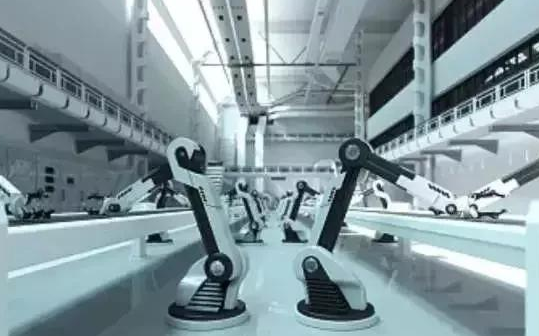
Through independent innovation, enterprises can integrate the discrete processing modes of raw material handling, connect originally independent working procedures via automated production lines, and implement lean continuous production. This eliminates intermediate material loading and unloading, storage and handling links, thereby significantly boosting production speed and operational efficiency.
However, some enterprises have witnessed a sharp rise in overall costs after putting automated lines into operation, rather than cost reduction. Although on-site operators are reduced, the number of equipment maintenance personnel increases. Against the backdrop of economic downturn and sluggish market demand, insufficient capacity leads to soaring depreciation and energy consumption costs, making it difficult to recover investment and exposing enterprises to profit losses.
Automation and informatization represent the largest investment segments in smart manufacturing implementation. Enterprises must exercise extreme caution before carrying out automated transformation. They need to clarify core questions: why pursue automation upgrading? What is the return on investment (a reasonable payback period should be controlled within 5 years)? How reliable is the automated equipment? What potential risks are involved? Can the equipment adapt to iterative product upgrades? Full deliberation is essential to avoid unintended cost escalation. Many enterprises have invested heavily in automated equipment, only to discover immature technology and frequent malfunctions, or find automated systems less flexible and practical than manual operations. As a result, equipment worth hundreds of thousands or millions of dollars is left idle, and such ineffective investment may even jeopardize the enterprise’s sustainable operation.
With technological advancement and rising labor costs, automation has become an irreversible industrial trend. Mature automated solutions are available for some industries and enterprises, while others lack applicable systems. Enterprises must formulate tailored automation plans based on their actual conditions. They should prioritize transformation segments with the highest return on investment and easiest implementation, align upgrades with the aforementioned standardization and modularization frameworks, and comply with lean production requirements to optimize production workflows step by step. Hasty transformation and blind trend-following must be avoided.
5. Servitization
China now has over 600 million internet users and 700 million smart terminals. The vigorous development of mobile internet has accelerated the industrial transformation from traditional manufacturing to service-oriented manufacturing. The U.S.-advocated Industrial Internet connects people, data and machines to build an open, global industrial network. Its connotation extends far beyond individual manufacturing processes and the manufacturing industry itself, covering the full value chain of product lifecycles and diverse industrial fields including aviation, energy, transportation and healthcare.
In addition, manufacturing enterprises can monitor and analyze equipment operational data via connected devices, so as to optimize equipment design and manufacturing processes and improve product reliability and operational efficiency.
Servitization scenarios vary drastically across industries and product categories. Under the Internet Plus model, traditional enterprises must continuously innovate business models and develop customized service systems to enhance customer value and market competitiveness.
6. Personalization
Over the past three decades, market product categories have surged dozens of times or even hundreds of times, ushering in an era of personalized consumption. Individuals can express their unique voices and demands through personal blogs, social media platforms and other channels.
Personalization is not a new concept. Handicraft workshops have provided customized products for over a century. The core challenge of modern personalization lies in achieving low-cost, high-quality mass customized production.
Consumers place orders online or via phone and select preferred product styles, and enterprises manufacture and deliver goods based on customized requirements. This model effectively cuts inventory levels and reduces overall operational costs by more than half.
High-quality and low-cost personalized production relies first on lean manufacturing capabilities, adhering to the lean principle that "value is driven by genuine customer demands". It also depends on standardized and modular product design. Rapidly developing internet and information technologies provide strong technical support, greatly facilitating the implementation of personalized manufacturing.
At the current stage, industrial personalization remains conditional rather than fully customized. Products such as automobiles, computers, mobile phones and apparel only support personalized selection within a fixed framework, without full customization.
Enterprises shall formulate personalized manufacturing models based on their own lean, standardization, modularization and informatization capabilities. Excessive personalization does not equate to better performance, as it is constrained by objective implementation conditions. In the future, advances in 3D printing and artificial intelligence are expected to make full-scale personalized manufacturing possible.
7. Ecosystemization
Industrial competition has evolved gradually from rivalry between individual enterprises to competition between supply chains and even industrial ecosystems. As Kevin Kelly wrote in Out of Control: “The emerging tide of alliances among large enterprises, especially in the information and network industries, is another manifestation of the growing co-evolution of the global economy. Instead of defeating or competing with rivals, enterprises prefer to form symbiotic alliances... The future of control lies in partnerships, collaborative governance, human-machine hybrid control, and shared control between humans and our creations.”
8. Globalization
In an interconnected global economy, enterprises of a certain scale need to deploy global resource allocation to improve operational efficiency and reduce costs. Global resources cover market, design, procurement and production resources.
China’s Belt and Road Initiative aims to explore global market resources and export domestic excess production capacity, including high-speed rail technology. In terms of design resources, enterprises establish overseas R&D centers to develop localized products, compensate for domestic design deficiencies, and realize 24-hour global product development to shorten R&D cycles. Leading Chinese enterprises including Huawei, Haier and Lenovo have all built overseas research institutions.
In terms of procurement and production resources, enterprises seek global suppliers with superior quality and lower costs. Beyond unit procurement and manufacturing costs, they must also comprehensively consider increased transportation expenses, complex supply chain operations, supply chain visibility, extended delivery cycles, higher inventory levels, environmental carbon emissions, quality stability, local labor policies and exchange rate fluctuations.
9. Digitization
Closely interconnected with informatization, digitization is another high-investment segment in smart manufacturing transformation, alongside automation. With the rapid iteration of information technologies, all elements including personnel, products and equipment can be digitized, enabling full connectivity of all industrial elements.
Personnel can be identified via facial recognition technology. In the past, recognition only worked for static subjects, while nowadays people can be identified while moving.
With PLM and ERP software, the entire lifecycle of products — from R&D and design, material procurement to production and delivery — can be digitized. Every product drawing, material record and manufacturing process is digitally linked together.
Equipped with PLCs, sensors and other components, machinery uploads operational data to MES platforms and the internet. For example, GE analyzes data transmitted from aircraft engines to optimize operating parameters and cut fuel costs, while Google leverages such digital connectivity to realize autonomous driving for vehicles.
This means the Industry 4.0 era has made it possible for the first time to digitally interconnect resources, data, physical goods and human operators. This comprehensive communication covers information exchange between human-to-human, human-to-product, human-to-machine, product-to-machine, and machine-to-machine parties.
Envision this scenario of the future: you place a personalized product order through a mobile app. The manufacturer receives the order data via CRM and ERP systems, which is then forwarded to the PLM system to generate a virtual product simulation model. Product and material data flow into ERP and MES systems, triggering suppliers to manufacture corresponding components. Once produced, materials are transported to the factory via the Industrial Internet and fed into automated production lines. Machines carry out processing tasks following instructions issued by the MES system, and completed finished goods are finally delivered to you through the Industrial Internet.
Industry 4.0 refers to the digitization and networking of manufacturing. By integrating information technology with manufacturing technology, smart factories are created to deliver highly flexible and customized production, lifting production efficiency and resource utilization efficiency. German experts claim that it may take around 20 years for Industry 4.0 to fully arrive. For China, the timeline will likely be even longer, as a large number of domestic enterprises are still stuck at Industry 2.0 or 3.0 stages. In my opinion, we need at least 30 years.
Digitization and Industry 4.0 represent an irreversible major trend. At present, only human-to-human information exchange has been widely realized, while other forms of interconnection still rely on multiple prerequisites, such as standardized data transmission protocols and measurement criteria, robust infrastructure, secure data transmission, legal safeguards, and sufficient talent reserves. Nevertheless, the emergence of autonomous vehicles has given us a glimpse of what the future holds.
The priority sequence of digitization varies across industries due to differing industrial characteristics and enterprise foundations. Process manufacturing sectors including food & beverage, papermaking, chemical engineering and power generation can take the lead. Most production steps in these industries are already interconnected with a high level of automation, and equipment data can be automatically collected, making digitization comparatively less challenging.
By contrast, discrete manufacturing sectors such as machinery & equipment, textiles & apparel, electronics & home appliances, and furniture face substantial obstacles to full interconnection. Their production processes and spare parts are widely scattered in huge quantities, and full connectivity would incur exorbitant costs if realized in one go. A viable solution for these industries is phased implementation rather than full-scale rollout at once. Enterprises should first adopt lean continuous production technology to link core working procedures and key materials. To draw an analogy, expressways and high-speed railways always connect first- and second-tier cities before extending to third- and fourth-tier cities. Similarly, digitization access points can be deployed between factories first, then between workshops, critical processes and key materials, and finally expanded to every single procedure and component.
10. Intelligentization
Intelligentization covers two dimensions: intelligent products and intelligent manufacturing processes.
First, intelligent products. Statistics from Credit Suisse’s Global Wealth Report 2015 show that China’s total household wealth reached USD 22.8 trillion in 2015, an increase of USD 1.5 trillion year-on-year. This figure surpassed Japan, ranking second globally only to the United States. China’s middle-class population (households with wealth of USD 100,000) hit 109 million, exceeding America’s 92 million to claim the world’s largest middle class. These data signal an upcoming massive consumption upgrade in China. A typical example is Chinese tourists flocking to Japan to buy smart toilet lids and electric rice cookers. Intelligentization points the way for upgrading both industrial and consumer goods. Furthermore, China is the world’s largest internet market. Coupled with the government’s continuous efforts to boost internet speeds and cut broadband fees, a sound network foundation has been laid for hardware intelligentization.
Everything is ready except the integration of traditional products with intelligent technology. From smart phones, smart TVs, wearables and smart water cups to smart vehicles and intelligent robots, enterprises must pursue continuous technological innovation and invest in product intelligent upgrading. Brands including Haier, Gree and Midea are already pouring resources into smart home appliances.
Compared with consumer goods, industrial products have a more urgent demand for intelligent transformation. All manufacturing equipment needs to be equipped with intelligent control modules to automatically collect, analyze and process production data. Fitted with standardized data interfaces, such equipment can connect to corporate MES or other information systems. Industrial big data processed and analyzed by intelligent software systems helps enterprises improve operational efficiency, cut equipment failures and lower energy consumption.
Intelligentization of manufacturing processes is far more complicated. It requires completing all the transformations mentioned above: lean management, standardization, modularization, automation and digitization, with heavy capital investment required for automation and digitalization construction.
Smart manufacturing constitutes a sophisticated system. Every industry and enterprise needs to explore a transformation model tailored to its own conditions. Full-scale upgrading at one stroke is unnecessary; instead, enterprises can gradually improve their capabilities in lean production, standardization, modularization, automation and digitization. What matters most is clarifying the underlying rationale for each upgrade and securing reasonable returns on investment.
China’s manufacturing sector has enjoyed 30 years of rapid growth and grown into the world’s largest manufacturing power, yet we still lack truly world-class flagship products. Over the next 30 years, Chinese manufacturing must shift its development focus from speed-first growth with insufficient quality control to quality-driven steady development. Sustained innovation across the ten aforementioned dimensions will be essential to complete the transformation from Made in China to Intelligent Manufacturing in China through breakthroughs in business models, core technologies and management systems.
Source: Information Technology and Software Service Network