






Review: The Pitfalls We Have Encountered in Smart Manufacturing
We must return to the essence of manufacturing; IIoT and Industry 4.0 are merely methodologies.
Promising visions do not equal reality.
During exchanges with industry peers, IT practitioners and end customers, I have observed widespread confusion. While the manufacturing sector’s development is overwhelmingly centered on the Industrial Internet and smart manufacturing, a great many doubts and objections persist. The most prevalent concern is as follows:
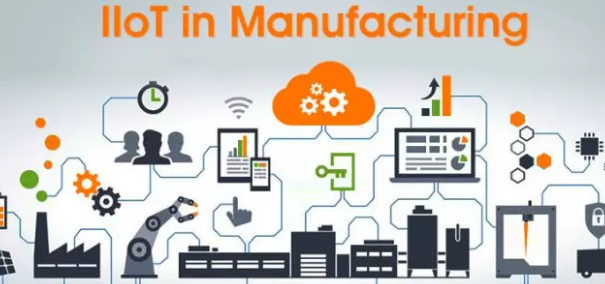
The envisioned bright prospects have failed to materialize. Much is said about the Industrial Internet and collaborative manufacturing, yet mature, valuable practical use cases are hard to come by. What is more, severe obstacles frequently arise at the connectivity stage itself. Those so-called Industrial Internet enterprises that champion the "Internet Plus" initiative barely seem to gain any real commercial benefits from their operations. This has fueled widespread skepticism: does the Industrial Internet of Things (IIoT) and the Industrial Internet as a whole have a sustainable future?
People often wonder whether artificial intelligence can truly transform manufacturing. Everyone is eager to identify viable AI application scenarios in factories, and many vendors claim they have rolled out practical AI solutions. Yet the real-world deployments often end up operating just like manual workflows, draining manpower and causing burnout for all involved.
Why is large-scale implementation so difficult?
Countless superficial buzzwords have been tacked onto products and concepts surrounding Industry 4.0. A great number of enterprises claim to offer complete Industry 4.0 solutions or dedicated products, which in itself strikes me as absurd — it reeks of hollow marketing to ride the trendy wave. But if you press them to explain what these solutions actually entail, you will only get a jumble of popular buzzwords. When put into practice, they cannot even achieve basic data interconnection. I am consistently puzzled by this: so many people discuss Industry 4.0 and smart manufacturing, yet very few have a solid grasp of OPC UA. Worse still, OPC UA has not gained widespread adoption; it is reported that only a small number of domestic automation manufacturers have implemented this standard.
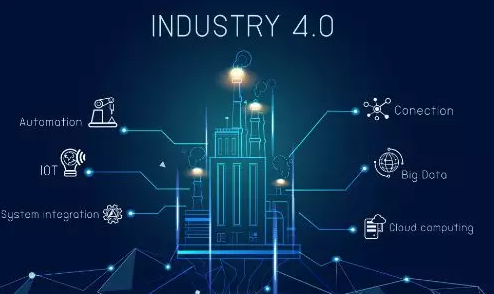
What many Industrial Internet companies are essentially doing nowadays is "data table mapping": sorting out the variable address tables of underlying equipment and accessing such data via upper-level systems. This work becomes extremely tough because most manufacturers refuse to open their equipment data interfaces, turning the whole process into pure manual labor. As a result, end-user enterprises report that upgrading a single piece of equipment for Industrial Internet connectivity costs them 20,000 to 30,000 RMB apiece.
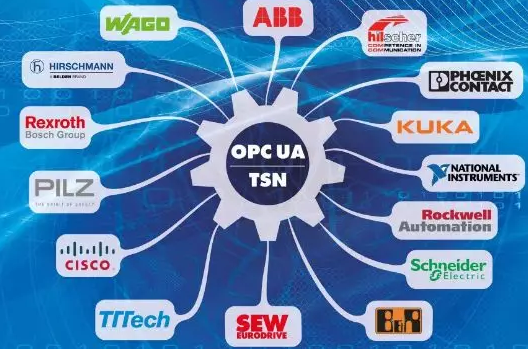
This problem actually stems from the fact that manufacturers chased quick profits during the high-growth era yet never made systematic plans for their industrial data. When they finally attempt digital transformation today, they find their factory equipment comes from countless disparate brands and suppliers across the globe with no unified digital planning in advance. This is quite understandable: concepts such as smart manufacturing and Industry 4.0 have only gained popularity in recent years, and most enterprises hold fragmented, incomplete understandings of them. That explains why so many manufacturers aspire to build industrial interconnection systems yet remain confused about where to start.
What Are the Dilemmas of Internet Plus in the Manufacturing Sector?
IT firms regard the manufacturing industry as a massive new opportunity, yet the business models proven successful in consumer and individual digital markets fail to translate well to manufacturing. Consumer-facing data services like online games, shared bikes and ride-hailing platforms rely on an enormous volume of end users to amortize the high costs of infrastructure and corporate investment. WeChat, for instance, boasts one billion users; its wide array of auxiliary services — including games, e-commerce, government payment services and fintech offerings — spreads out its fixed overhead across a huge user base. This logic, however, is not viable within industrial scenarios.
As a result, IT companies struggle to adapt when entering manufacturing, since their proven profit-making strategies lose effectiveness here. Take artificial intelligence as an example: manufacturing is defined by the paradox of small datasets supporting extensive industrial applications, alongside strict requirements for transparent, interpretable model outputs. The same predicament plagues the Industrial Internet. When projects require developing custom drivers for dozens of different fieldbuses, installing additional network switches, and dispatching on-site staff to manually map device data tables, the entire initiative loses economic viability. Professor Guo Zhaohui has repeatedly emphasized the critical role of economic efficiency in technological advancement and innovation, which perfectly illustrates this point. Without guaranteed economic returns, the traditional profit models of the IT industry cannot be replicated within manufacturing.
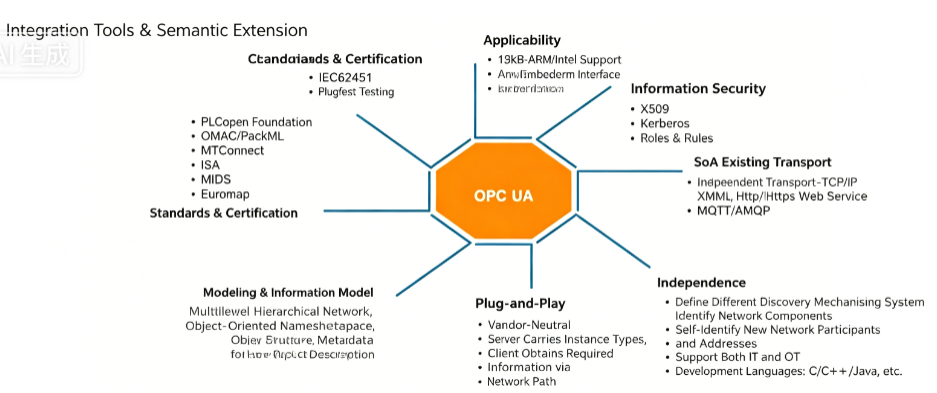
This is where the value of OPC UA TSN lies. When people ask me why TSN is necessary, I joke that it simply lets us cut one communication cable out of the system. Today, real-time industrial networks and standard Ethernet operate separately for distinct applications. TSN, however, enables all data transmission over a single unified network. So what’s the real merit of eliminating that extra cable?
Across all manufacturing shop floors nationwide, the benefit is substantial: wiring workload drops by at least 50%, along with less programming and commissioning work. This translates directly to higher operational efficiency and improved economic viability.
Naturally, that cable analogy is just lighthearted banter. In much the same vein, OPC UA slashes engineering overhead and simplifies data access, delivering an economically sound approach to cross-system data interconnection. Without economic feasibility, no sophisticated digital roadmap can ever be fully realized.
The Core Gap Between German and Chinese Perspectives on Industry 4.0
Back in 2014, when Germany first introduced the Industry 4.0 concept, I found nothing revolutionary about it. At the time, Industry 4.0 was widely discussed everywhere, yet I easily grasped its logic, as many of B&R’s design philosophies and compliant standards aligned closely with its core tenets. I quickly realized that Industry 4.0 was built by encapsulating Europe’s well-established foundations in manufacturing, automation, software and interoperability standards.
Accordingly, standardization stood as Germany’s top priority for advancing Industry 4.0 — and this has proven true in practice. This push birthed standards like OPC UA, which enables end-to-end connectivity between field devices and software applications. Meanwhile, FMU/FMI deliver unified standards for simulation and modeling software ecosystems. Back in 2016, Mr. Peng shared a comprehensive NIST research paper by Professor Lu Yan outlining the full spectrum of smart manufacturing standards, covering the equipment layer, management layer, product design, supply chain and more — an immensely valuable reference document.
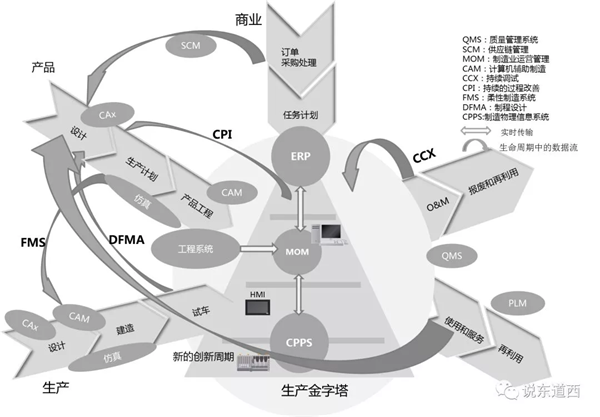
The overall architecture of smart manufacturing relies on a comprehensive set of standards to realize interconnection across all layers.
It was not until I learned about data dictionary standards that I found out that Eclips (presumably the correct spelling of the enterprise name) has developed corresponding SDKs for this specification. Numerous facts prove that Europe’s advancement of Industry 4.0 and smart manufacturing is built upon its mature existing technologies, followed by unified standardization of these technologies.
This constitutes the core gap between China and Europe in smart manufacturing transformation. We tend to draft top-level plans while fundamental underlying tools — including operating systems, development platforms, modeling & simulation software, and management systems — remain immature. By contrast, Europe primarily unifies all data formats and equipment interfaces through widely accepted industry standards.
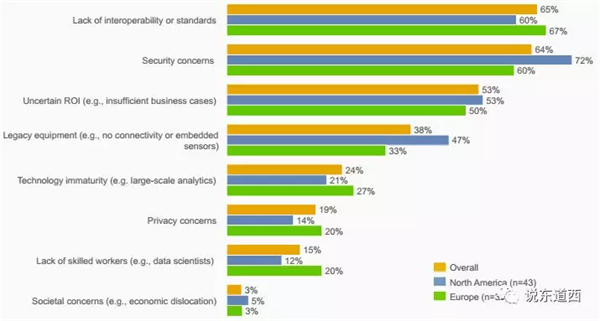
The barriers plaguing IoT — interoperability standards and secure connectivity — are identical to those seen in industrial scenarios.
Much like the smaller Transformers that combine to assemble a larger one in the movie Transformers, you can easily imagine that to pull this off, all individual Transformers must share consistent mechanical specifications, data communication interfaces and semantic definitions, alongside fully modular software. The giant combined Transformer requires a master controller to coordinate all its components so as to guarantee overall combat effectiveness.
The same logic applies to smart manufacturing. Every single production unit must follow unified standards for mechanical fit, electrical connections, software architecture and control strategies to coordinate seamlessly with other units.
We Have to Navigate All These Pitfalls
The day before yesterday, I chatted with IT colleagues in the lobby of InterContinental Hotel, where I chanced to meet Professor Zhao Min, whom I have long admired. We took advantage of his break between meetings to discuss prevalent challenges in smart manufacturing. Professor Zhao fully agreed with Ren Zhengfei’s statement that we must resolutely learn from European and American counterparts. Many foundational manufacturing processes remain unfinished in China, with product quality being the most fundamental gap. He brought up a well-known domestic home appliance manufacturer: its leadership has gained a reputation as management gurus and is eager to push forward smart manufacturing, yet constant complaints persist regarding their product quality.
Manufacturing must return to its core essence: securing reliable product quality comes first. All tools including the Industrial Internet of Things, artificial intelligence and smart manufacturing technologies exist solely to serve this core goal of quality. Once quality issues are resolved, whether you adopt smart manufacturing becomes secondary at best. Smart manufacturing concepts and technologies can act as enablers, but the fundamental pursuit always circles back to three pillars: quality, cost and on-time delivery capability.
When I was reading the Diamond Sutra, a friend pointed out to me: “You may study these texts, yet there is a fundamental flaw in this approach.” The moment he spoke, I instantly grasped his meaning. Coincidentally, I had just reached the opening pages of Nan Huaijin’s How to Cultivate Buddhist Practice. Master Nan told his students that all Buddhist scriptures we study today are merely the end results of Buddha’s enlightenment. Merely reading these outcomes does not bring you the same profound awakening. You must follow Buddha’s example, devoting twelve years to seeking clarity of mind, letting go of distracting thoughts, enduring ascetic practice and putting teachings into action.
Later Chan Buddhism fell into a common trap: practitioners poured all their energy into “meditative riddles”, mistakenly believing there existed a shortcut to enlightenment. Even the great Chan patriarchs — Huike, Daoxin, Huineng — had already attained profound spiritual cultivation; those simple riddles were only a simplified teaching method they devised for their disciples.
Many paths can only be truly understood after you have walked them yourself, only then can you taste their hardships and recognize all the pitfalls that need to be resolved. My understanding of manufacturing aligns with a story from Kazuo Inamori’s The Laws of Life. He and his peers once attended a lecture by Soichiro Honda. They bathed in a hot spring resort and waited on tatami mats for Mr. Honda, who arrived straight from his factory and chided them: “You fools! How can you learn management sitting here? Real learning only happens on the factory floor.” All genuine insight stems from the frontline and hands-on practice, not empty buzzwords and abstract concepts.
After reading several Buddhist texts recently, I have drawn two core takeaways:
1.Physical well-being is indispensable. A healthy body fosters a peaceful mind, laying the groundwork for productive work. This is why Chan practitioners practice seated meditation and enter samadhi, cultivating mindfulness and right faith as the foundation of spiritual cultivation.
2.Thought without action cannot be called true wisdom. Buddhism teaches the Six Perfections: generosity, ethical conduct, patience, diligence, meditation and prajna (transcendent wisdom). Every single practice compels you to act, cast aside wandering thoughts, and act upon genuine kindness. Cultivation is not idle talk or overthinking — it requires doing good deeds to attain ultimate wisdom, prajna.
I have no intention of becoming a Buddhist, yet these lessons left a deep impression. Both Buddhism and Confucianism emphasize taking action. Wang Yangming’s theory of the Unity of Knowledge and Action advocates constant interplay between theory and practice, rejecting rigid dualistic division. This is the essence of systematic thinking, and the core meaning behind Buddhism’s “Non-dual Dharma Gate”.
Start with the Basics
The same principle applies to manufacturing: we cannot chase unrealistic “curve overtaking”. We must steadily start with the most fundamental groundwork, the equivalent of “sweeping the floor”. Many manufacturers constantly complain about heavy government taxes and strict environmental regulations squeezing profits. While I can sometimes sympathize with these grievances, we ought to reflect on the massive costs we have long saved through disregard for intellectual property rights.
Copying foreign machinery eliminates all expenses for independent research, development and verification testing. Social insurance compliance has recently grown stricter, yet we cannot ignore that countless domestic enterprises previously evaded employee social security contributions, artificially slashing labor costs far below European and American standards.
Lean manufacturing is vital — it is now widely recognized as the cornerstone of manufacturing, including the foundation of industrial data. Walk through any factory, and waste can be seen everywhere. I often wonder how such operations remain profitable. Few stop to consider how many decades and enormous resources Western manufacturers, especially Japan’s Toyota, have poured into perfecting lean systems.
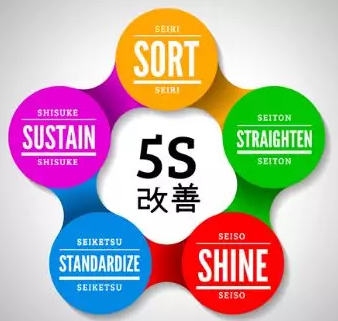
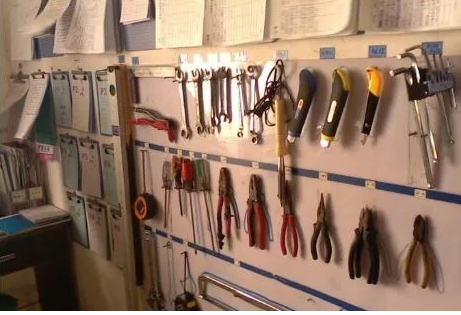
Years ago, I was involved in implementing 5S — a practice often figuratively referred to as "sweeping the floor", covering sorting and straightening on-site. This experience left a deep impression on me. The very first lesson of training stated: "A tidy environment keeps your mind clear", which in turn boosts work efficiency. This was exactly how 5S was explained during my time at OTIS. After extensive trials, the company found that tools must be neatly positioned at construction sites: we drew outlines of spanners, pliers and other tools on tool boards, requiring every tool to be returned to its designated spot after use.
OTIS data revealed that workers at disorganized job sites wasted an extra 30 minutes each day just searching for tools. Each elevator installation requires four technicians, which adds up to 2 wasted man-hours per day. An elevator serving ten floors takes 30 days to install, resulting in a total waste of 60 man-hours per unit. Back in 2000, Xizi Elevator alone installed 11,000 elevators, translating to a staggering waste of 66 million man-hours — and this only accounts for elevator construction sites. Imagine how much waste accumulates across factories, offices, and every single link in manufacturing production.
Our culture has long been rooted in the mentality of "close enough is good enough", which leads to a lack of refined management for factories and manufacturing workflows. By contrast, European and American enterprises boast a century-long development history. Having endured countless rounds of market competition, they have consistently cut waste, eliminated unreasonable procedures and slashed inventory down to the smallest operational details. It is no coincidence that nearly all operational management textbooks originate from Europe and the US: they have gone through full cycles of industrial development, summarized practical experience, and built comprehensive systems of management philosophies, principles, methodologies and tools.
This development path cannot be skipped — it is an indispensable stage. Without going through this groundwork phase, enterprises cannot figure out the core logic of quality improvement via smart manufacturing: what data needs to be collected, what analytical models should be constructed, how to drive continuous improvement, and what conflicting trade-offs must be balanced along the way.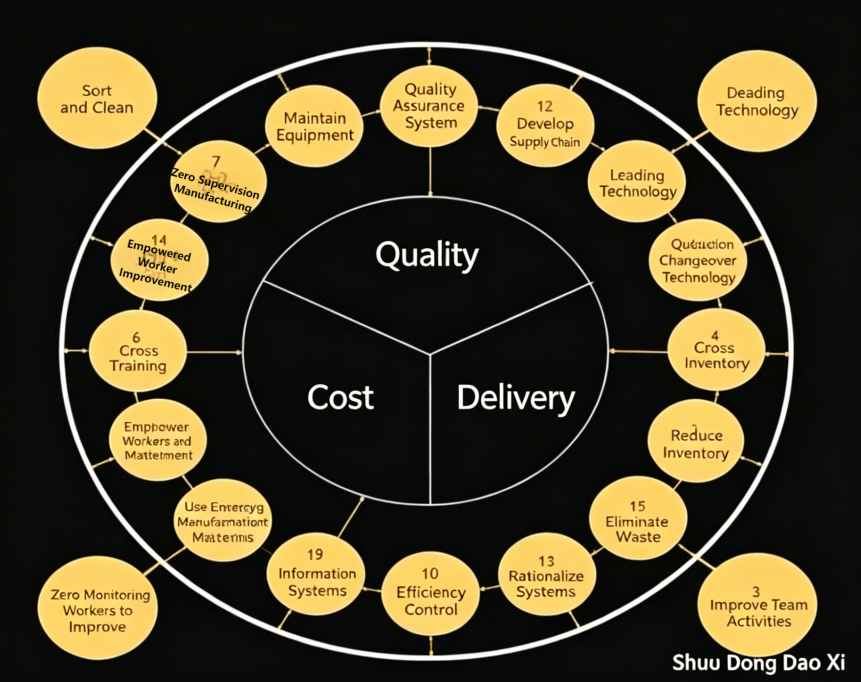
Cost of quality and on-time delivery constitute the core challenges of manufacturing.
How can smart manufacturing production processes achieve observability through digitization? A fundamental tenet of control theory holds that a system must be both observable and controllable. Only by detecting issues and quantifying them with data can you pinpoint root causes. The true core know-how lies in the management philosophies, methodologies, models and tools embedded within digital transformation, while the internet merely serves as an enabling instrument. This aligns with Ren Zhengfei’s remark: “We must not show off our hoes and forget the fundamental work of farming the land.”